Australia — At a Glance
Australia — At a Glance
| Difficulty | Strict — one of the world's most rigorous pet import regimes |
| Quarantine | Yes — mandatory 10 days at the Post Entry Quarantine (PEQ) facility in Mickleham, Victoria |
| Microchip | ISO 11784/11785 compliant 15-digit chip required; must be implanted before rabies vaccination |
| Rabies Vaccine | Required — only inactivated (killed) vaccines accepted; check the DAFF approved list |
| Titer Test | FAVN blood test required — must pass with ≥0.5 IU/mL; 180-day wait starts after successful result |
| Import Permit | Yes — apply via the BICON system at agriculture.gov.au; AUD $160 (approx. USD $105) |
| Health Certificate | Required — issued by an accredited vet and endorsed by the relevant government authority |
| Typical Total Cost | AUD $4,000–$8,000 / USD $2,600–$5,300 all-in (including quarantine and freight) |
| Processing Time | 7–8 months minimum from first microchip to arrival |
| Approved Entry Ports | Melbourne (Tullamarine) only for cats arriving from most countries |
Australia's Department of Agriculture, Fisheries and Forestry (DAFF) administers all live animal imports under the Biosecurity Act 2015. The country's island geography and disease-free status mean its import rules are genuinely non-negotiable — there are no exceptions, no waivers and no fast-track pathways. Every cat arriving in Australia, regardless of the owner's citizenship or residency status, must complete the full protocol described in this guide.
Good to Know
Australia classifies countries into two groups for cat imports: Group 1 (countries considered lower risk, such as the UK, USA, Canada, New Zealand and most of Western Europe) and Group 2 (higher-risk countries with additional requirements). Cats from Group 1 countries complete 10 days of quarantine; cats from Group 2 countries may face up to 30 days. Always verify your origin country's current classification at agriculture.gov.au before planning.
Step-by-Step: Moving to Australia with a Cat
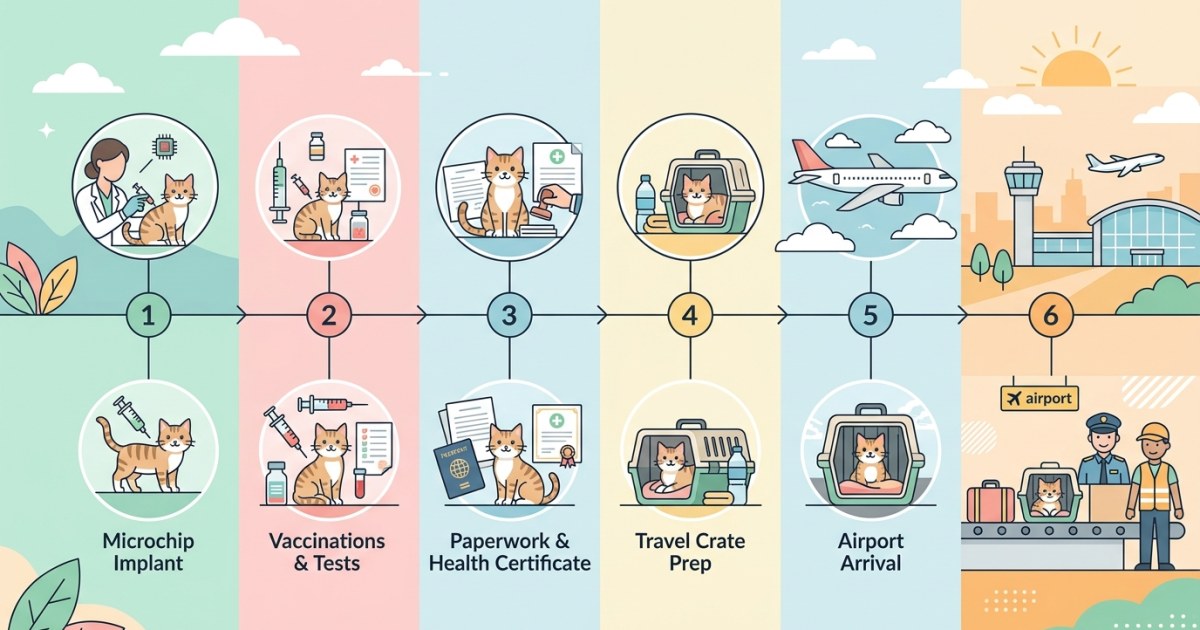
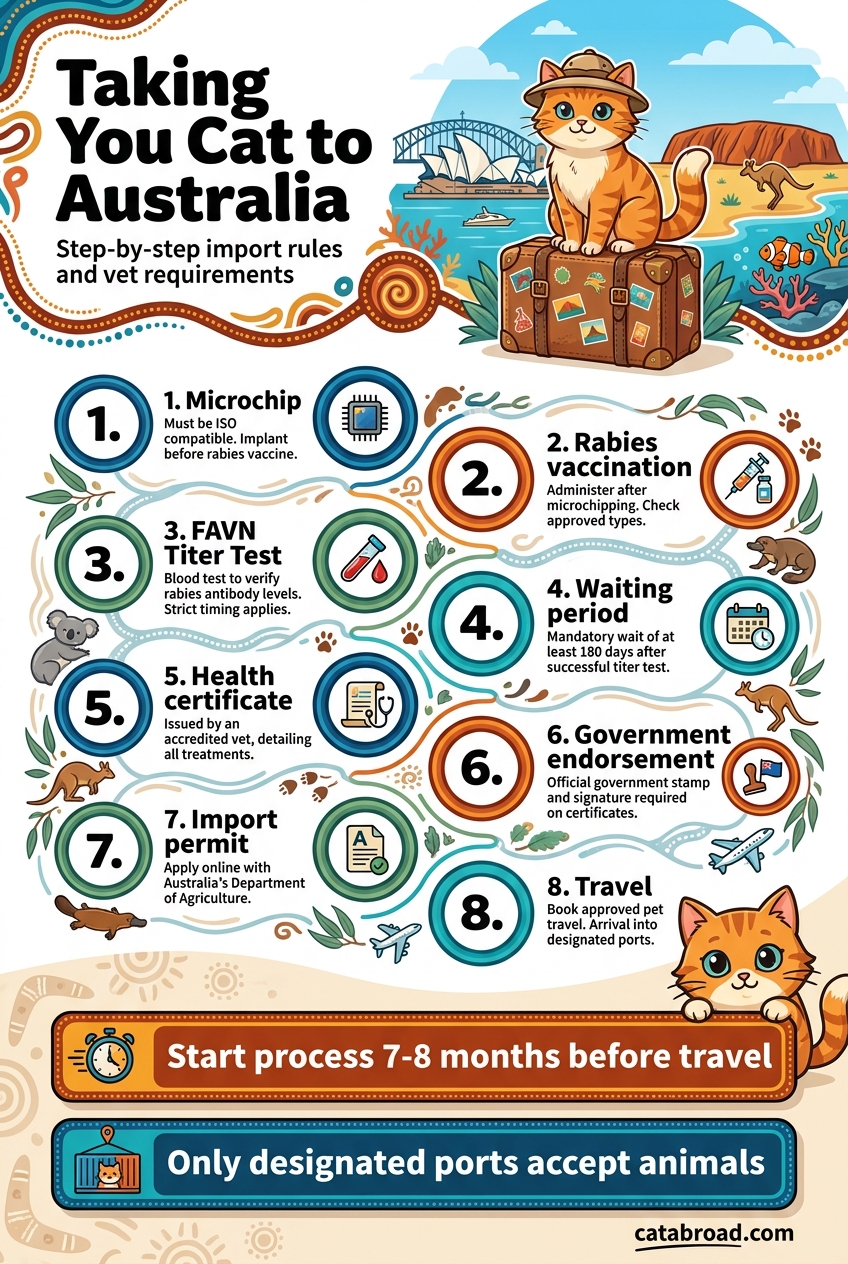
The Australia cat import process follows a strict sequence. Each step must be completed in the correct order — skipping ahead or performing steps out of sequence will invalidate earlier work and may require you to restart. The entire process takes a minimum of 7–8 months, and we recommend allowing 9 months to build in a safety buffer. Below is the complete step-by-step pathway as mandated by DAFF.
Step 1: ISO-Compatible Microchip
Your cat must be implanted with a microchip that complies with ISO standards 11784 and 11785 — the 15-digit FDX-B format. The chip must be implanted before the rabies vaccination is administered. If your cat already has a chip, have your vet confirm it reads at the correct ISO frequency; older 9 or 10-digit chips common in the USA are not acceptable. The microchip number will appear on every subsequent document in the chain, so accuracy at this stage is critical. Keep a written record of the 15-digit number immediately after implantation.
Pro Tip
Ask your vet to scan the microchip immediately after implantation and record the number in writing. Request that this number appears verbatim on every vaccination certificate from day one — even a single transposed digit will cause the entire certificate chain to be rejected at Australian biosecurity.
Step 2: Rabies Vaccination
After microchipping, your vet administers an approved rabies vaccination. Australia only accepts inactivated (killed-virus) rabies vaccines — live attenuated vaccines such as Nobivac Rabies or certain recombinant products may not qualify. Approved vaccines for cats arriving from Group 1 countries include Rabisin, Defensor, Imrab, and Nobivac Rabies (inactivated version). Confirm your specific product against the current DAFF approved list at agriculture.gov.au/biosecurity-trade/cats-dogs/import-conditions before the appointment. The vaccination must be recorded on the certificate with the product name, batch number, and expiry date.
Step 3: FAVN Titer Test (Rabies Antibody Test)
At least 30 days after the rabies vaccination, a blood sample must be drawn and sent to an approved laboratory for a Fluorescent Antibody Virus Neutralisation (FAVN) test. The test verifies that your cat has developed a sufficient antibody response to rabies, with a passing result being ≥0.5 IU/mL. The sample must be processed by an OIE/WOAH-approved laboratory; for cats in the UK this is typically the APHA Weybridge laboratory, for the USA it is Kansas State University Rabies Laboratory (fee: approx. USD $82). Results typically take 10–21 business days. The 180-day waiting period does not begin until the date of blood collection for a passing result.
Warning
If your cat's FAVN result comes back below 0.5 IU/mL, the test is considered a failure. You must re-vaccinate and wait another 30 days before drawing blood again. The 180-day clock only starts from the date of a successful blood draw — a failed test resets the timeline entirely. This single scenario is responsible for most delayed arrivals in Australia.
Step 4: 180-Day Waiting Period
Once your cat has a passing FAVN result, a mandatory waiting period of at least 180 days must elapse before the cat can travel to Australia. This cannot be shortened by any means. During this period, your cat must remain in the approved country of export — if your cat travels to a third country during the wait, the clock may need to restart depending on that country's disease status. Use this time to apply for the import permit and begin gathering other documents. Your cat's rabies vaccination must remain valid throughout this entire period and up to the date of arrival.
Step 5: Health Certificate
In the final 5 days before departure (within 5 days of travel for most Group 1 countries — verify exact timing in your import permit conditions), an accredited vet must issue a health certificate. This document details all treatments your cat has received, confirms the microchip number, states that your cat is clinically healthy and fit to travel, and references the import permit number. The certificate must be issued on official headed paper and include the vet's licence number and contact details. For cats from the UK, the certificate is typically the Export Health Certificate (EHC) issued under APHA guidelines. US cats use the USDA-APHIS Form 7001 (Veterinary Health Certificate).
Step 6: Government Endorsement
The health certificate must be officially endorsed by the relevant government veterinary authority in your country of export — this is a mandatory stamp and signature confirming the issuing vet's credentials and the document's authenticity. In the UK, endorsement is provided by the Animal and Plant Health Agency (APHA). In the USA, it is the USDA-APHIS National Veterinary Accreditation Program (NVAP) office. In New Zealand, it is the Ministry for Primary Industries (MPI). Processing times vary: APHA typically takes 1–5 working days; USDA APHIS endorsement can take 3–10 working days depending on your regional office. Factor this into your pre-departure scheduling — do not book your flight until you have confirmed how long endorsement takes in your country.
Pro Tip
In the US, you can use the USDA APHIS e-Endorsement system for faster processing. Submit your vet's health certificate electronically and your endorsed certificate can be returned within 1–2 business days rather than the standard 3–10. Register your accredited vet at aphis.usda.gov/pet-travel.
Step 7: Import Permit
An import permit is mandatory for all cats entering Australia. Applications are submitted through Australia's Biosecurity Import Conditions (BICON) database at bicon.agriculture.gov.au. You will need to create a free account, select the case for importing a cat, and complete the online application. The current fee is AUD $160 (approximately USD $105) per permit. Processing typically takes 10–15 business days. The permit specifies your approved entry point, the required health and treatment conditions, and the quarantine facility your cat must attend. Keep a printed and digital copy — the permit number must appear on all subsequent documents.
Step 8: Book Travel & Quarantine
Once all documents are in order, book your cat's travel using an IATA-approved airline and pet freight agent. Cats must arrive into designated ports only (see the Approved Entry Points section below). Simultaneously, you must book your cat's place at the Post Entry Quarantine (PEQ) facility in Mickleham, Victoria — quarantine places are limited and must be reserved in advance through the DAFF booking portal. Quarantine fees are payable upon booking. Most cats travel as manifest cargo (accompanied excess baggage is generally not accepted on international routes to Australia) — work with your airline's cargo division or a specialist pet relocation company to confirm routing and in-transit requirements.
Microchip & Vaccination Requirements for Moving to Australia with a Cat
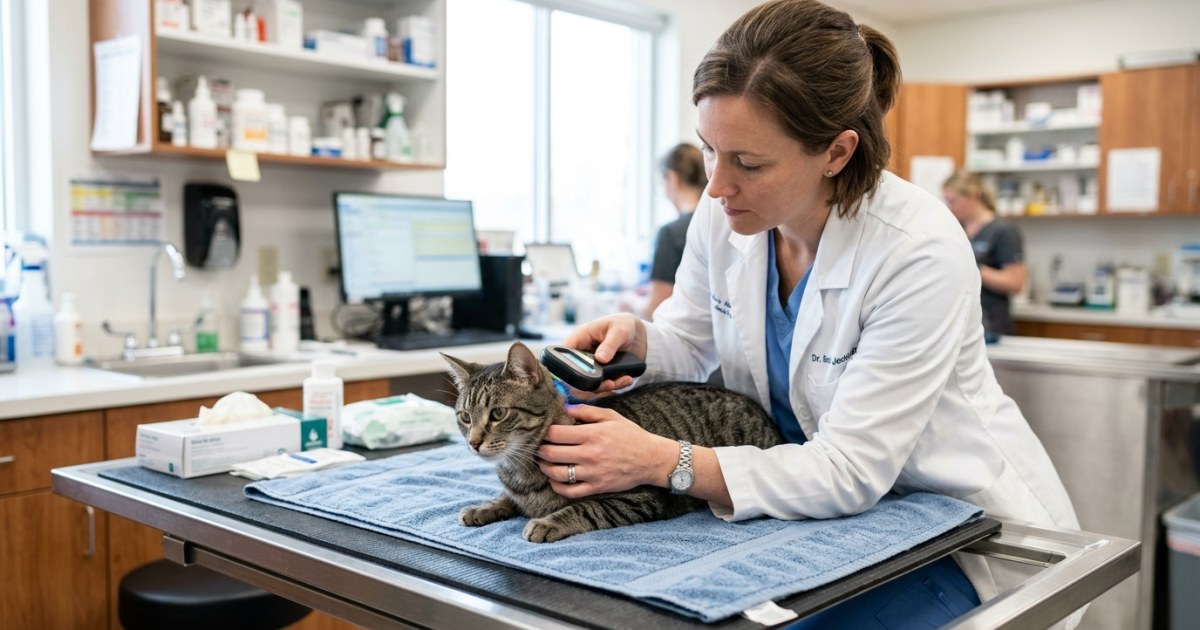
The microchip and vaccination requirements for Australia cat import are the foundation of the entire process. Get these wrong and every subsequent step is invalidated. Here is everything you need to know.
Microchip Standards
Australia mandates an ISO 11784/11785 compliant microchip — a 15-digit, FDX-B frequency chip operating at 134.2 kHz. The chip must be implanted by a registered veterinary professional and must be readable using a standard ISO-compatible scanner. Chips operating at 125 kHz (common in older North American implants, often 10 digits) are not accepted. If your cat already carries a non-compliant chip, a second compliant chip must be implanted; the non-compliant chip number should still be noted on documentation for continuity. The 15-digit chip number serves as your cat's unique identifier and must appear verbatim on the health certificate, import permit, vaccination records, and titer test results.
Accepted Rabies Vaccines
Australia only accepts inactivated (killed) rabies vaccines. The vaccine must be a commercially manufactured, licensed product. Common accepted vaccines include:
- Rabisin (Boehringer Ingelheim) — widely used in the UK and Europe
- Defensor 1 / Defensor 3 (Zoetis) — commonly used in the USA
- Imrab 1 / Imrab 3 (Boehringer Ingelheim) — USA
- Nobivac Rabies (MSD Animal Health, inactivated formulation)
- Quantum Rabies and Rabdomun — accepted in some contexts
Always cross-reference your specific vaccine brand and batch against the current DAFF approved vaccine list, as this is updated periodically. The vaccination certificate must record the product name, batch/lot number, expiry date, and date of administration. Booster vaccinations must not lapse — if the vaccine expires before your cat reaches Australia, the entire titer test process may need to be repeated.
Good News
If your cat already has a valid ISO microchip and an up-to-date inactivated rabies vaccination with a passing FAVN result on record, the 180-day waiting period may already be running. Check the date of your cat's last successful blood draw — you may be closer to the travel window than you think. See our full Australia guide for worked timeline examples.
Other Required Vaccinations
In addition to rabies, your cat must be vaccinated against feline enteritis (panleukopenia), feline rhinotracheitis (herpesvirus), and feline calicivirus — collectively referred to as the F3 core vaccination. These must be current at the time of import. Some cats will also need to have been treated for parasites: depending on your country of origin, a veterinary-prescribed treatment for internal parasites (such as praziquantel for tapeworms) and external parasites may be required within a specified window before travel. Your import permit will specify exact treatment requirements for your origin country.
Import Permit & Health Certificate for Australia Cat Import
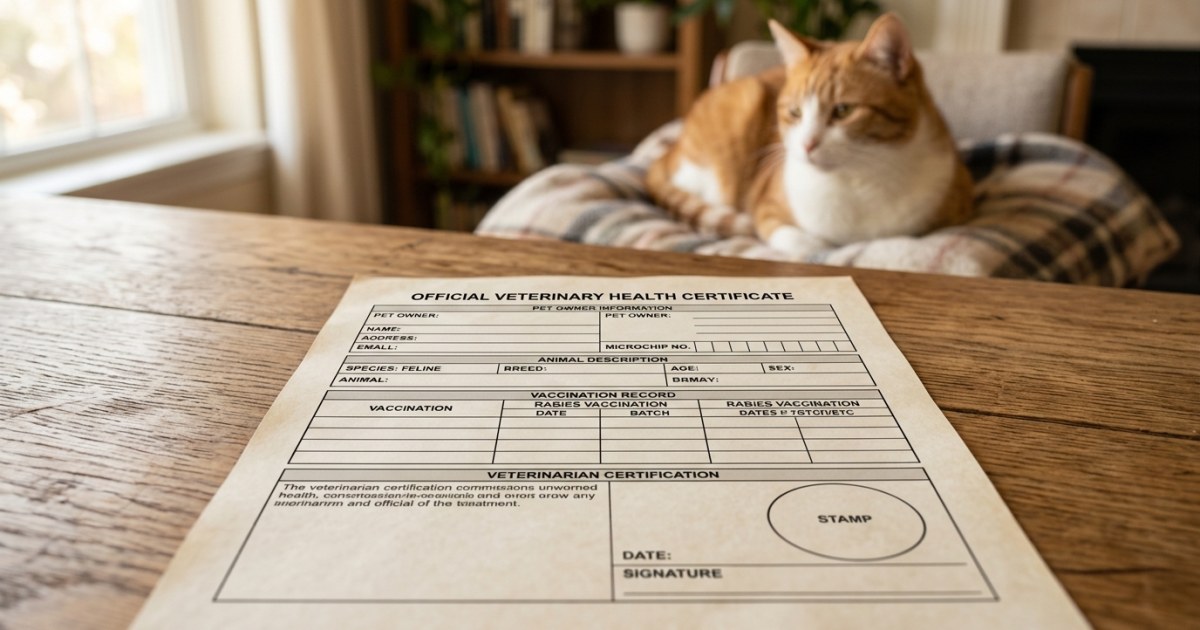
Two critical documents link every other element of the Australia cat import process together: the import permit and the health certificate. Neither can be left to the last minute.
Applying for an Import Permit via BICON
The BICON (Biosecurity Import Conditions) system is Australia's official online portal for all live animal import permits. Access it at bicon.agriculture.gov.au. After creating a free account, navigate to: Live Animals → Cats → Domestic cat (Felis catus). Select your country of export and the system will generate a tailored set of import conditions — your personalised checklist of everything your specific cat needs based on its origin country.
Once you have confirmed all pre-export conditions are or will be met, submit the permit application. The fee is currently AUD $160 (approximately USD $105 / £82). Payment is made by credit card during the online application. DAFF typically processes permits within 10–15 business days, though this can extend to 20 business days during peak periods (particularly January–March). Apply as early as possible — ideally 5–6 months before your intended travel date.
Pro Tip
Your import permit specifies your cat's approved port of entry and the quarantine facility assignment. Do not book flights or quarantine until you have received the permit — the port listed on your permit is legally binding, and arriving at any other port risks your cat being detained or refused entry entirely.
Health Certificate Requirements
The health certificate must be issued by an officially accredited veterinarian — in the UK this means a Local Veterinary Inspector (LVI) or Official Veterinarian (OV) authorised by APHA; in the USA it must be a USDA-NVAP accredited vet. The certificate must be issued within the time window specified in your import permit — for most Group 1 countries this is within 5 days before departure, but always confirm the exact window stated in your specific permit conditions, as it varies.
The health certificate must include:
- Cat's full description (breed, sex, age, colour, markings)
- 15-digit ISO microchip number
- Owner's full name and address in Australia
- Import permit number
- Full vaccination history with batch numbers
- FAVN test date, result, and laboratory reference number
- All parasite treatments administered (product name, dose, date)
- Declaration of clinical health and fitness to travel
- Issuing vet's signature, licence number, practice address
Following veterinary signing, the certificate must receive government endorsement (official stamp and countersignature) from APHA (UK), USDA-APHIS (USA), or the equivalent authority in your country, before it becomes valid for Australian biosecurity. For an overview of how this fits into the broader Australia cat import process, see our full Australia guide.
Good to Know
APHA endorsement in the UK costs £64 per certificate (as of 2026) and can be submitted by post or in person at Carlisle Animal Health Office. Express processing (same-day) is available for an additional £173 but must be booked in advance. Allow a minimum of 5 working days for standard postal processing.
Cat Quarantine Australia: Rules, Costs & What to Expect
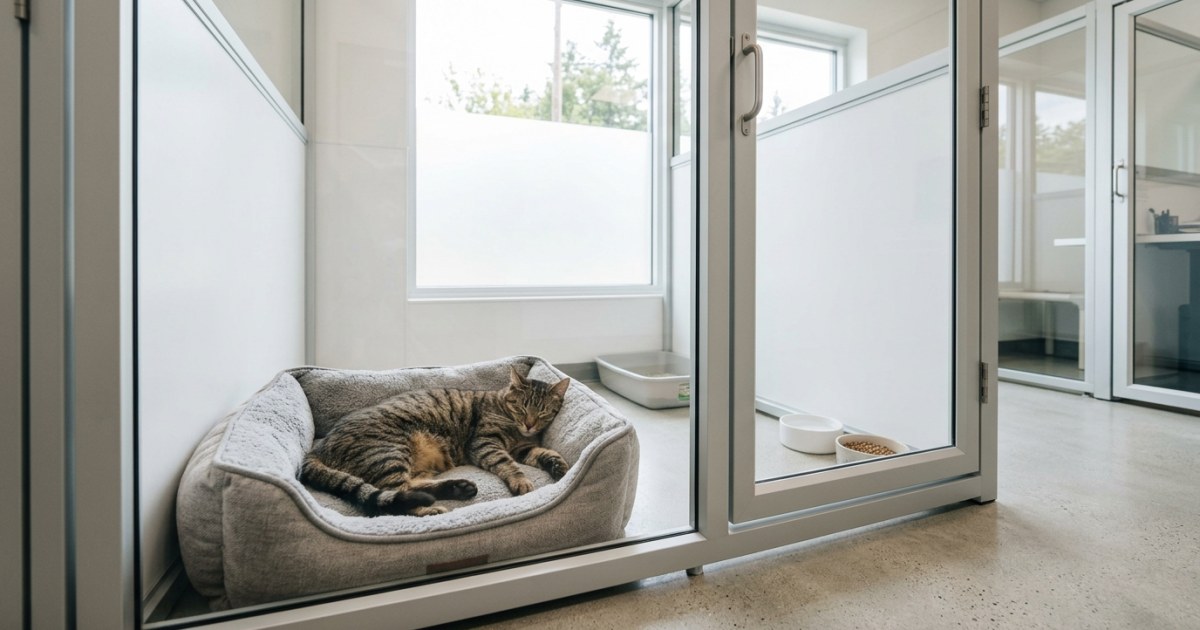
Cat quarantine in Australia is mandatory for all cats, regardless of origin country, vaccination status, or owner circumstances. There are no exemptions. Understanding what quarantine involves — and budgeting for it properly — is essential when moving to Australia with a cat.
The Post Entry Quarantine (PEQ) Facility
All cats entering Australia undergo quarantine at the Australian Government Post Entry Quarantine (PEQ) facility located at Mickleham, Victoria — approximately 30 km north of Melbourne's CBD. This is the only facility in Australia approved for post-entry quarantine of imported cats and dogs. The facility opened in 2015 and operates under DAFF oversight.
Cats from Group 1 countries (UK, USA, Canada, Ireland, New Zealand, most EU countries, Japan, Singapore and others) complete a minimum of 10 days of quarantine at Mickleham. Cats from Group 2 countries face a longer period of up to 30 days. The quarantine period begins on the day of arrival at the facility, not the day of landing at the airport.
Good to Know
The Mickleham facility is purpose-built and considered one of the most modern pet quarantine facilities in the world. Cats are housed in individual climate-controlled suites with enrichment items. DAFF provides a webcam viewing service for some enclosures, allowing owners to check on their cat remotely during the quarantine period. Contact the facility directly at agriculture.gov.au to enquire about remote viewing access.
Quarantine Costs
Quarantine fees are paid directly to DAFF and must be paid in full before your cat is released. The standard fee structure for a single cat undergoing 10 days of quarantine at Mickleham is:
- Accommodation fee: AUD $79–$88 per day (approximately USD $52–$58)
- Assessment and processing fee: AUD $300–$400 on arrival (approximately USD $197–$263)
- Total estimated quarantine cost for 10 days: AUD $1,090–$1,280 (approximately USD $715–$840)
These figures are based on 2025–2026 DAFF fee schedules. Fees are subject to annual indexation. Visit agriculture.gov.au for the current fee schedule before budgeting.
Booking Quarantine
Quarantine places must be booked in advance through DAFF's online booking system. Spaces are limited — particularly during peak relocation periods (December–February and June–August). Book your quarantine place at the same time as you book your cat's flights, or as soon as your import permit is approved. Failure to secure a quarantine booking before arrival can result in your cat being held in airport biosecurity facilities at your own expense until a place becomes available.
Warning
Do not assume a quarantine place is automatically allocated with your import permit. The permit approval and the quarantine booking are two separate processes. DAFF has turned away cats at the border whose owners had valid import permits but no quarantine booking — resulting in mandatory return to origin at the owner's cost, which can exceed AUD $5,000.
Approved Entry Points for Australia Cat Import
One of the most misunderstood aspects of bringing a cat to Australia is that cats cannot land at any Australian airport. Only specific designated ports are authorised to receive imported live cats, and your cat's import permit will specify the exact port of entry.
Melbourne (Tullamarine) — The Primary Entry Point
For the overwhelming majority of international cat arrivals, the approved and designated port is Melbourne Airport (Tullamarine), IATA code MEL. This is because the Post Entry Quarantine facility at Mickleham is located close to Melbourne — ground transport from Tullamarine to Mickleham takes approximately 20–30 minutes. DAFF-approved transport contractors collect cats from the airport cargo facility and deliver them directly to the PEQ facility under biosecurity supervision.
Cats arriving from New Zealand (which has a bilateral agreement with Australia and a unique quarantine arrangement) may have different entry point options — check BICON for current NZ-specific conditions.
Warning
Attempting to route your cat through Sydney (SYD), Brisbane (BNE), Perth (PER) or any other Australian airport without explicit DAFF authorisation will result in your cat being detained and potentially refused entry or returned to origin. Always confirm your entry port against the wording of your specific import permit — do not rely on general online advice, as port permissions can change.
Air Routing Considerations
Because cats entering Australia travel as manifest cargo (not as cabin baggage or checked excess baggage on passenger flights), you will need to work with the airline's dedicated cargo division or a specialist pet freight agent to arrange routing. Not all cargo routes fly direct to Melbourne — common routing for UK-origin cats includes London Heathrow (LHR) to Melbourne via Singapore Changi (SIN) or Dubai (DXB) on airlines such as Singapore Airlines Cargo, Emirates SkyCargo, or Qantas Freight. Transit time and in-transit animal welfare rules vary by airline; confirm your cat's welfare requirements — including maximum journey times, water access, and temperature — with your freight agent before booking.
Pro Tip
Some airlines enforce an embargoed period for live animals during northern hemisphere summer (typically June–August) due to heat restrictions. Plan your cat's travel between September and May where possible to maximise airline options and reduce transit welfare risks. Your pet relocation company will know which carriers are currently accepting cat cargo to Melbourne.
Cost Breakdown: Moving to Australia with a Cat in 2026
Bringing a cat to Australia is one of the more expensive international pet relocations — the combination of titer testing, import permits, quarantine fees, and international cargo freight adds up considerably. Below is a detailed cost breakdown based on a single cat relocating from the UK or USA in 2026. All AUD figures use an exchange rate of AUD 1 = USD 0.66 / £0.51.
Cost Breakdown — Single Cat, Group 1 Country (e.g. UK or USA)
| Item | Cost (AUD) | Cost (USD) |
|---|---|---|
| ISO microchip implantation | AUD $65–$90 | USD $43–$59 |
| Rabies vaccination (inactivated) | AUD $55–$110 | USD $36–$73 |
| FAVN titer test (lab fee) | AUD $185–$250 | USD $82–$165 (KSU) / £95–£130 (APHA) |
| Vet blood draw fee | AUD $75–$120 | USD $50–$80 |
| F3 core vaccination booster | AUD $55–$90 | USD $36–$59 |
| Parasite treatments (internal/external) | AUD $55–$110 | USD $36–$73 |
| Health certificate (vet fee) | AUD $150–$350 | USD $99–$231 |
| Government endorsement (APHA / USDA-APHIS) | AUD $125–$500 | USD $60–$330 (varies by country/service) |
| BICON import permit fee | AUD $160 | USD $105 |
| IATA-approved travel crate | AUD $90–$250 | USD $59–$165 |
| International air cargo freight (UK/USA to MEL) | AUD $1,200–$3,000 | USD $790–$1,980 |
| Post Entry Quarantine — 10 days at Mickleham | AUD $1,090–$1,280 | USD $715–$840 |
| DAFF-approved airport-to-quarantine transport | AUD $180–$300 | USD $119–$198 |
| Pet relocation agent fees (optional but recommended) | AUD $500–$1,500 | USD $330–$990 |
| Total Estimated Range | AUD $4,000–$8,000 | USD $2,600–$5,300 |
Good to Know
The largest single variable in the cost calculation is international air cargo freight, which varies significantly based on your cat's combined weight (cat plus crate), origin airport, routing, airline, and time of year. Route quotes from a freight specialist early — some routes from the US west coast cost considerably less than routes from the UK due to more direct flight options to Melbourne. The Mickleham quarantine fee is fixed by the government and is non-negotiable.
Document Checklist for Bringing Your Cat to Australia
Use this checklist to confirm every document is in order before your cat travels. Australian biosecurity officers will inspect all paperwork on arrival — any missing or incorrect document can result in extended quarantine or refusal of entry. We recommend carrying both printed originals and digital backups (PDF on phone and cloud storage) for every item listed.
📋 Document Checklist — Cats Importing to Australia
- ☐Microchip certificate: Confirms ISO 11784/11785 compliant 15-digit chip, implant date, and vet details
- ☐Rabies vaccination certificate: Product name, batch/lot number, expiry date, date administered — post-microchip
- ☐FAVN titer test results: Official laboratory report showing result ≥0.5 IU/mL, blood collection date, lab reference number
- ☐F3 core vaccination certificate: Current feline enteritis, rhinotracheitis and calicivirus vaccination, not expired
- ☐Parasite treatment records: Internal and external parasite treatments as specified in your import permit, with product names and dates
- ☐Official health certificate: Issued by accredited/official vet within the required window before departure (verify exact days in permit)
- ☐Government endorsement stamp: APHA (UK), USDA-APHIS (USA), or equivalent authority countersignature and official stamp on health certificate
- ☐DAFF import permit: Original or certified copy, permit number referenced on health certificate
- ☐Quarantine booking confirmation: DAFF Mickleham PEQ reservation with booking reference number and confirmed dates
- ☐IATA-approved travel crate: Correct size, ventilation, absorbent bedding, live animal labels, water/food access per IATA Live Animals Regulations
- ☐Airline cargo airway bill: Live animal shipment booking confirmation from airline cargo division
- ☐Owner identification & contact details: Passport copy, Australian address, emergency contact number — attach to crate documentation
Pro Tip
Create a single PDF document bundle containing scanned copies of every item on this checklist, numbered in the order listed. Email this bundle to yourself, your vet, your pet relocation agent, and the quarantine facility at Mickleham at least 48 hours before your cat's scheduled departure. DAFF biosecurity officers can then pre-clear paperwork and flag any issues before the cat is in transit.
Choosing a Pet Relocation Company for Moving to Australia with a Cat
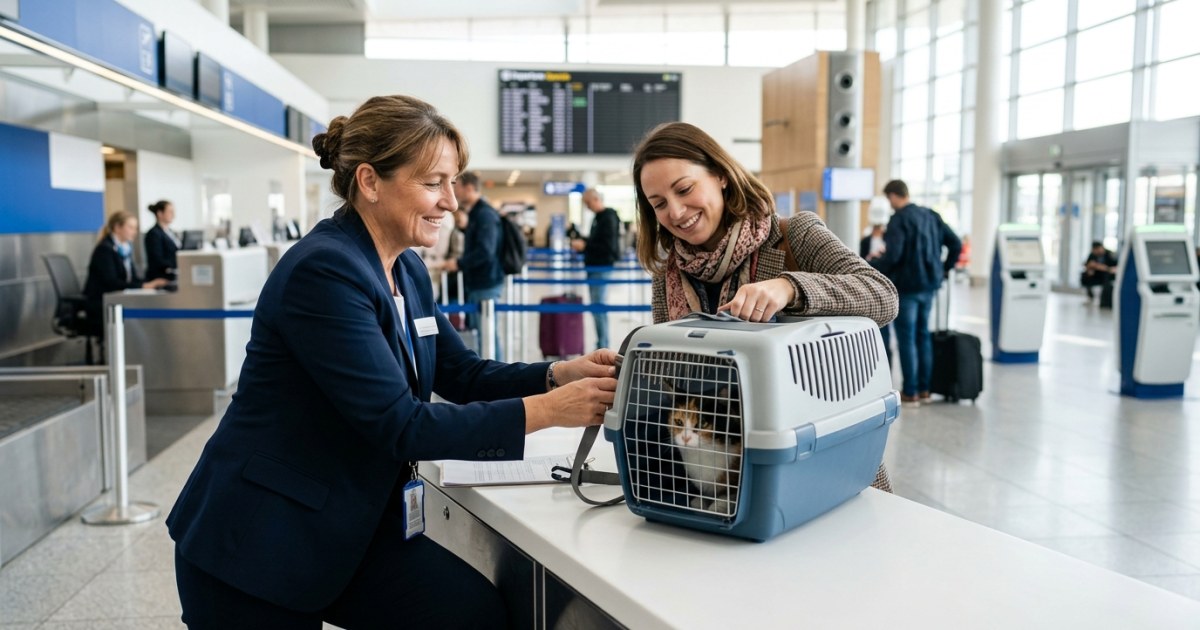
Given the complexity of Australia's cat import requirements — eight sequential steps, multiple government authorities, strict timing rules, mandatory quarantine, and a single approved entry port — the decision to use a specialist pet relocation company is one of the most cost-effective choices you can make. A single document error can mean your cat is denied entry and returned to origin on a flight costing AUD $3,000–$5,000, compared to relocation agent fees of AUD $500–$1,500.
What a Good Pet Relocation Agent Does
A reputable IATA-accredited pet relocation specialist handling Australia-bound cats will typically manage:
- BICON import permit application and liaison with DAFF
- Coordinating your vet's documentation to DAFF requirements
- Booking and confirming the quarantine place at Mickleham
- Selecting appropriate airline routing to Melbourne Tullamarine
- Booking manifest cargo space with the airline's cargo division
- Arranging government health certificate endorsement
- Organising DAFF-approved ground transport from MEL to Mickleham
- Document pre-clearance and liaising with Australian biosecurity on arrival
What to Look for in an Agent
When evaluating pet relocation companies for an Australia move, look for: IATA Live Animals accreditation (ask for their IATA Cargo Agent number); demonstrated experience with Australian DAFF paperwork specifically; membership of the International Pet and Animal Transportation Association (IPATA); and verifiable client reviews from people who have successfully relocated cats to Australia within the past 18 months. Avoid companies that cannot provide specific references for Australian cat relocations — this route is specialised enough that generalist pet shippers with no Australia-specific experience represent a meaningful risk.
Good News
Most specialist pet relocation agents offer a free initial consultation and quote. Use this call not just to get a price, but to test their knowledge — ask them specifically about the BICON import permit process, approved vaccines for your country, and Mickleham quarantine booking procedures. An agent who can answer these fluently without hesitation is one who has done this route many times.
Common Mistakes to Avoid When Moving to Australia with a Cat
Australia's biosecurity system is unforgiving — the following are the most common and costly mistakes owners make when attempting to bring a cat to Australia. Each one can add weeks or months to your timeline, or result in your cat being refused entry.
Warning
Vaccinating before microchipping: This is the single most common mistake, and it invalidates the entire vaccination certificate chain. Australia's import conditions are explicit: the ISO microchip must be implanted and verified before the rabies vaccination is administered. If a vet vaccinates first, the FAVN test and the 180-day wait must be restarted after a compliant re-vaccination — adding up to 7 months to your timeline.
Warning
Choosing a live or recombinant rabies vaccine: Only inactivated (killed-virus) rabies vaccines are accepted by Australia. Some popular combination vaccines contain a modified live rabies component — using one of these means the vaccination does not count and the process must restart. Always confirm the exact product name and formulation with your vet before the appointment, checking against the current DAFF approved vaccine list.
Warning
Booking flights before receiving the import permit: The import permit specifies your approved entry port and exact travel conditions. Owners who book flights to Sydney or Brisbane before receiving their permit have had to cancel and rebook at significant expense when the permit specifies Melbourne as the only approved entry point. Never commit to flight bookings until the BICON permit is in hand.
Warning
Letting the rabies vaccination lapse during the 180-day wait: If your cat's rabies vaccine expires during the 180-day waiting period, you must re-vaccinate. Depending on timing, this can restart the titer test requirement and the 180-day countdown entirely. Track your cat's vaccine expiry date in your calendar and schedule a booster at least 30 days before expiry to ensure continuous coverage throughout the waiting period and up to the date of arrival in Australia.
Warning
Travelling with your cat through a third country mid-process: If your cat travels to a country not on Australia's approved Group 1 list during the 180-day wait — even for a brief transit or stopover of more than 24 hours — Australia may reclassify your cat under the rules of that third country, potentially requiring a restart of the titer test. Always check with DAFF before any travel during the waiting period, and keep your cat's BICON permit country of origin status clean.
For more detail on the complete process and to avoid these pitfalls, consult our Australia cat import overview — it includes worked timelines for cats coming from the UK, USA, and Europe with country-specific notes on vet accreditation and government endorsement procedures.
At a Glance: Australia Cat Import Requirements
Frequently Asked Questions
How long does it take to move a cat to Australia?
The minimum timeline for moving a cat to Australia is 7–8 months from the date of microchipping. This accounts for the 30-day post-vaccination waiting period before the FAVN titer test, the titer test processing time of 10–21 business days, and the mandatory 180-day waiting period after a successful titer result. DAFF and specialist relocation agents recommend allowing 9 months to include a safety buffer for document processing, import permit approval, and quarantine booking.
Do cats have to go into quarantine when entering Australia?
Yes — all cats entering Australia must complete mandatory quarantine at the Post Entry Quarantine (PEQ) facility in Mickleham, Victoria, regardless of origin country or vaccination status. Cats from Group 1 countries (UK, USA, Canada, most of Western Europe, Japan, Singapore) serve 10 days of quarantine. Cats from Group 2 countries serve up to 30 days. There are no exemptions and no possibility of home quarantine — Australia's Biosecurity Act 2015 does not permit alternatives to facility quarantine for cats.
What vaccinations does my cat need to enter Australia?
Your cat requires an inactivated (killed-virus) rabies vaccination administered after ISO microchipping, a FAVN rabies antibody titer test showing ≥0.5 IU/mL, and current F3 core vaccinations (feline enteritis, rhinotracheitis, and calicivirus). The rabies vaccine must be from DAFF's approved list — only inactivated formulations are accepted. Depending on your country of origin, additional parasite treatments may be required as specified in your BICON import permit.
How much does it cost to bring a cat to Australia?
The total cost to bring a cat to Australia from the UK or USA typically ranges from AUD $4,000–$8,000 (approximately USD $2,600–$5,300). This includes the BICON import permit (AUD $160), FAVN titer test (AUD $185–$250 in lab fees), health certificate and government endorsement (AUD $275–$850 combined), international air cargo freight to Melbourne (AUD $1,200–$3,000), post-entry quarantine fees (AUD $1,090–$1,280 for 10 days), and DAFF-approved airport-to-quarantine transport (AUD $180–$300). Optional pet relocation agent fees add AUD $500–$1,500.
Can I fly my cat into Sydney or Brisbane instead of Melbourne?
No — for the vast majority of international cat arrivals, Melbourne Airport (Tullamarine, MEL) is the only approved port of entry, as it is the closest airport to the Mickleham PEQ quarantine facility in Victoria. Your BICON import permit will specify the approved port, and arriving at an unauthorised port risks your cat being detained or returned to origin. Cats arriving from New Zealand may have different arrangements — check your specific permit conditions carefully.
What is the FAVN titer test and where can I get it done?
The FAVN (Fluorescent Antibody Virus Neutralisation) test is a blood test that measures your cat's rabies antibody levels following vaccination. Australia requires a result of ≥0.5 IU/mL, and the test must be performed at an OIE/WOAH-approved laboratory. In the USA, the primary approved laboratory is Kansas State University Veterinary Diagnostic Laboratory (fee: approx. USD $82). In the UK, the test is conducted by APHA Weybridge (fee: approx. £95–£130). The blood must be drawn at least 30 days after the rabies vaccination, and the 180-day Australian waiting period begins on the date of a passing blood collection.
Can I take my cat to Australia as cabin baggage on a passenger flight?
No — Australia does not permit cats to enter as cabin baggage or as checked excess baggage on passenger flights. All imported cats must travel as manifest cargo through an airline's dedicated cargo division, with full documentation submitted in advance to the airline cargo handler and to DAFF biosecurity. This means you and your cat will travel separately on different bookings, and your cat will be collected from the airport cargo facility by a DAFF-approved transport contractor who delivers them directly to the Mickleham PEQ facility.
What happens if my cat fails the FAVN titer test?
If your cat's FAVN result comes back below the required 0.5 IU/mL threshold, the test is considered a failure and the 180-day waiting period does not begin. You must consult your vet, typically re-administer an approved inactivated rabies booster vaccination, wait at least 30 days, then draw another blood sample for a new FAVN test. If the second test passes, the 180-day clock starts from the date of that second successful blood draw. This scenario can add 5–7 months to your overall timeline, which is why it is critical to use a high-quality approved vaccine from the outset.
 New Zealand
 United Kingdom
 United States
 Singapore
 Canada