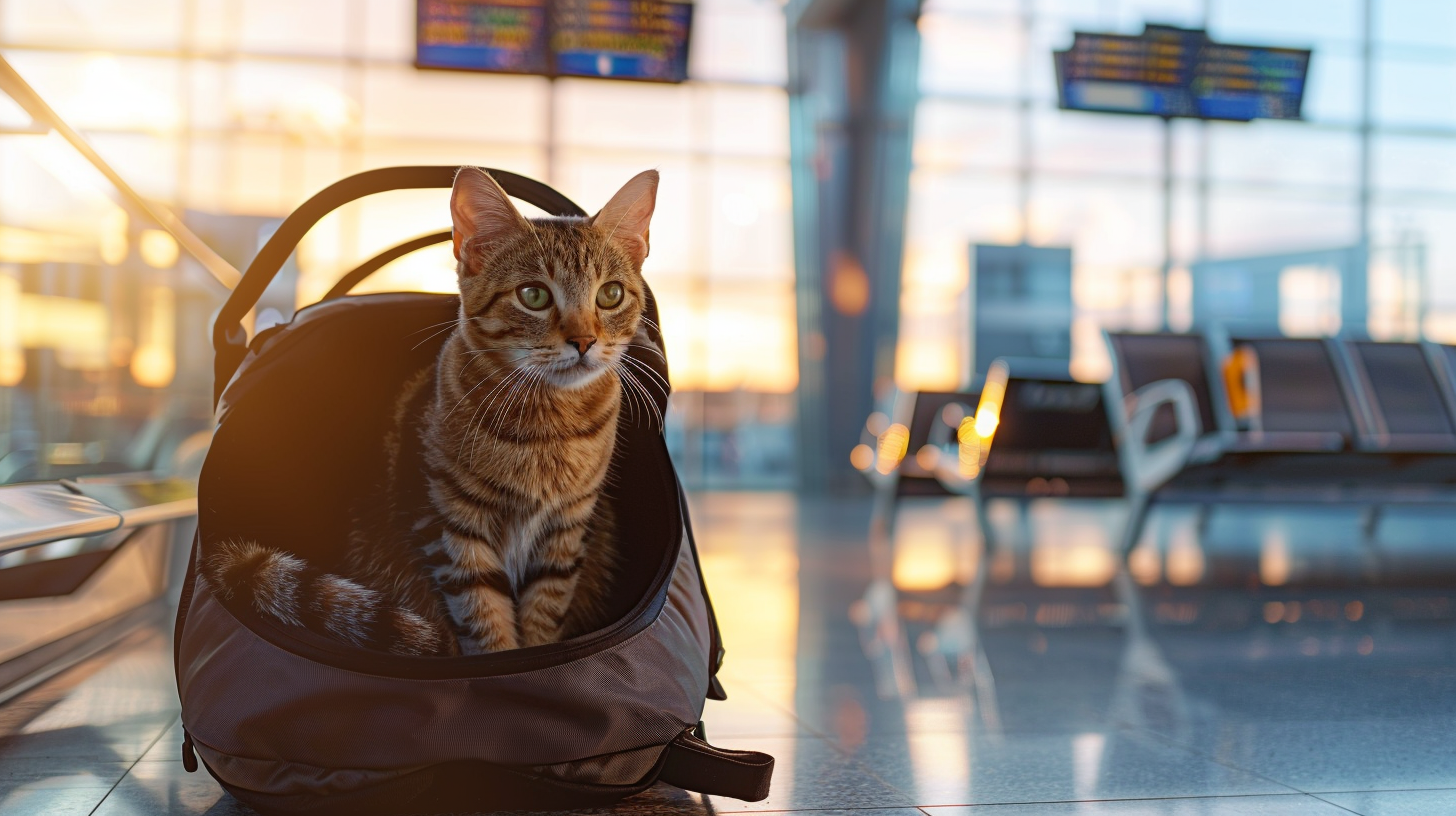
Not all airlines treat your cat the same way. Some allow them in the cabin beside you for a modest fee. Others refuse to board them at all without a specialist cargo booking weeks in advance. And a handful operate world-class animal transit lounges that put some hotels to shame. This guide cuts through the confusion — every major airline, rated honestly, with everything you need to know before you book.
What You Need to Know Before You Book
Airline pet policies are more varied — and more consequential — than most owners expect. The single biggest mistake cat owners make is assuming that because one airline allowed cabin travel on one route, all airlines on all routes will too. They won't. Airlines impose route-specific restrictions, aircraft-specific restrictions, seasonal restrictions for flat-faced breeds, and country-specific restrictions based on destination import laws.
Before booking any flight with your cat, confirm three things directly with the airline: (1) that cabin or cargo pet travel is available on your specific route and aircraft, (2) that your carrier's dimensions comply with the specific aircraft operating your flight, and (3) that availability exists — cabin pet slots are almost universally capped per flight and fill up fast.
The 5 Questions to Ask Every Airline
The Complete Airline Comparison Table
Use the filters below to narrow by what matters most. All fees are one-way per cat. Weight limits are for cabin travel only (cat + carrier combined) unless otherwise stated.
| Airline | Cabin | Cabin Fee | Weight Limit | Max Carrier Size |
|---|---|---|---|---|
AA American Airlines US Carrier |
Yes | $150 | 20 lbs cat+carrier | 19×13×9 in |
DL Delta Air Lines US Carrier |
Yes | $150 / $200 intl | No limit under-seat | 18×11×11 in |
UA United Airlines US Carrier |
Yes | $150 +layover fee | No limit under-seat | Soft: 18×11×11 in |
WN Southwest Airlines US Carrier |
Yes | $125 | No strict limit | 18.5×8.5×13.5 in |
B6 JetBlue US Carrier |
Yes | $125 | 20 lbs / 9 kg cat+carrier | Soft: 18×11×11 in |
F9 Frontier Airlines US Carrier |
Yes | $99 | No strict limit | 18×14×8 in soft only |
AC Air Canada Canada |
Yes | From CAD $67 | 10 kg / 22 lbs cat+carrier | Soft: 55×40×23 cm |
LH Lufthansa Germany · Star Alliance |
Yes | €60–€110 | 8 kg cat+carrier | 55×40×23 cm |
AF Air France France · SkyTeam |
Yes | €70–€200 | 8 kg cat+carrier | 46×28×24 cm soft |
KL KLM Royal Dutch Netherlands · SkyTeam |
Yes | €60–€200 | 8 kg cat+carrier | 46×28×24 cm |
BA British Airways UK · Oneworld |
No | From £800+ | N/A cargo crate limits | 68×50×48 cm+ |
IB Iberia Spain · Oneworld |
Yes | €50–€150 | 8 kg cat+carrier | 45×35×25 cm |
LX SWISS Switzerland · Lufthansa Group |
Yes | CHF 80–200 | 8 kg cat+carrier | 55×40×23 cm |
AY Finnair Finland · Oneworld |
Yes | €40–€300 | 8 kg cabin / 75 kg hold | 55×40×23 cm cabin |
EK Emirates UAE · Dubai Hub |
No | From $500+ | N/A IATA crate limits | IATA crate |
QR Qatar Airways Qatar · Oneworld |
No | $300–$1,500+ | N/A IATA crate limits | IATA crate |
EY Etihad Airways UAE · Abu Dhabi Hub |
No | Baggage rate | Varies by route | IATA crate |
TK Turkish Airlines Turkey · Star Alliance |
Yes | $15–$320 | 8 kg cat+carrier cabin | 40×30×23 cm cabin |
SQ Singapore Airlines Singapore · Star Alliance |
No | Baggage rate | 32 kg max pet+crate | IATA crate |
QF Qantas Australia · Oneworld |
No | AUD $395+ | 48 kg max domestic checked | IATA crate |
Table last updated March 2026. Policies change — always verify directly with your airline before booking. Fees are one-way, per cat.

US Carriers: The Honest Verdict
American, Delta, and United dominate US cat travel but have meaningfully different strengths. Delta and United both have no weight limit for cabin pets — a huge advantage for owners of larger breeds like Maine Coons, Ragdolls, or Norwegian Forest Cats who would exceed the strict 8 kg limits imposed by European carriers. The catch: neither offers cargo to civilian passengers anymore, so if your cat physically can't fit under an aircraft seat, American Airlines is your only major US option.
American Airlines remains the most versatile of the three. It's the only US megacarrier still operating a civilian cargo pet programme through AA Cargo, and it's one of the few airlines that allows cabin pets in First Class — useful if you're flying premium. The 20 lb combined weight limit is, however, stricter than Delta and United, so weigh your carrier carefully at home.
For budget-conscious US domestic travel, Frontier's $99 fee is hard to beat, and JetBlue's 20-lb weight limit ties with American for the highest in the industry while costing just $125. Southwest's flexibility (no-change-fee policy) suits owners whose vet appointment timing might shift.
Quick Pick: US Carriers
European Carriers: A Different World
European airlines are more uniformly pet-friendly in the cabin than their US counterparts, but they operate under stricter weight limits. The near-universal standard across Air France, KLM, Lufthansa, Iberia, Finnair, and SWISS is 8 kg combined (cat + carrier) — a figure that catches many owners off guard. A large Ragdoll weighing 7 kg leaves essentially no room for a carrier, so always weigh everything together before arriving at the airport.
The Brachycephalic Rule
Snub-nosed breeds — Persians, Exotic Shorthairs, Himalayans, Burmese, Scottish Folds, British Shorthairs — face restrictions on virtually every airline's cargo/hold service due to respiratory risks at altitude. Most airlines still accept them in the cabin provided they meet weight limits. Singapore Airlines is the notable exception: they completely ban British Shorthairs, Persians, Exotic Shorthairs, Himalayans, Burmese, and Scottish Folds from all flights. If you have a flat-faced cat, always verify breed policy before booking.
Gulf & Asian Carriers: Cargo-Only Territory
Emirates, Qatar Airways, and Etihad all operate a strict cargo-only policy for cats — no exceptions, no cabin travel. This is partly airline policy and partly driven by the destination regulations for UAE, Qatar, and Bahrain themselves. The silver lining: all three operate genuinely world-class animal cargo facilities. Emirates' DXB facility, Qatar's DOH Animal Reception Centre, and Etihad's PetE service at Abu Dhabi are professionally staffed, climate-controlled, and considered among the best in the industry.
The practical implication: if you're flying to Dubai, Doha, or Abu Dhabi, budget for a specialist pet shipping agent in addition to the cargo fee. The documentation for Gulf destinations (import permits, titer tests, government endorsements) is complex enough that most owners are better off using professionals.
The Three World-Class Pet Transit Facilities
If your cat is traveling cargo — particularly on a long-haul route with a connection — where they transit matters enormously. Three facilities are in a league of their own:
- 1.Frankfurt Animal Lounge (FRA) — Lufthansa: The global benchmark. Individual climate-controlled suites, veterinary station, enclosed tarmac vehicles. Operates 24/7. The professional pet shipping industry's first choice. Frankfurt Airport guide →
- 2.Istanbul Pet Lounge (IST) — Turkish Airlines: Opened late 2024. Soundproofed, 2,700 sq ft, separate cat and dog areas with an indoor and outdoor terrace. 36-cat capacity. A genuine game-changer for Middle East and Central Asia routing. Istanbul Airport guide →
- 3.Amsterdam Animal Hotel (AMS) — KLM: Overnight boarding available, exercise areas, veterinary care, trained handlers. The only facility offering overnight pet care as standard for transit animals. Amsterdam Schiphol guide →
If you have any flexibility in routing, prioritising a connection through one of these three hubs is strongly recommended for long-haul cargo travel.
Documents Every Airline Requires
Regardless of which airline you fly, you will need a minimum set of documents. Beyond this baseline, each destination country may require additional permits, titer tests, or endorsements — check your destination's country page on CatAbroad for the specifics.
Universal Documentation Checklist
Carrier Sizing: The Most Common Mistake
Carrier dimensions are the single most common reason cats are turned away at the gate. Airlines publish maximum dimensions, but the real test is whether the carrier fits completely under the seat in front of you on the specific aircraft operating your flight. Under-seat clearances vary from as little as 7 inches on some A321neo configurations to over 11 inches on wide-body aircraft.
Before buying a carrier or checking in for a flight, look up your specific aircraft type and seat row on SeatGuru.com, which publishes under-seat dimensions for most commercial aircraft. Select an aisle or window seat with the greatest under-seat clearance. Avoid bulkhead seats (no seat in front, so no under-seat space) and exit rows (prohibited for pets on most airlines).
Common Mistakes at the Airport
Planning a Professional Relocation?
For moves to Australia, New Zealand, the UK, Singapore, or Japan — where mandatory quarantine, cargo-only import, or 180-day preparation timelines are involved — the complexity of managing airline logistics, documentation, and quarantine bookings simultaneously makes a professional pet relocation service worth serious consideration.
 Australia
 United Kingdom
 Japan
Japan Singapore
 New Zealand
 UAE
UAE