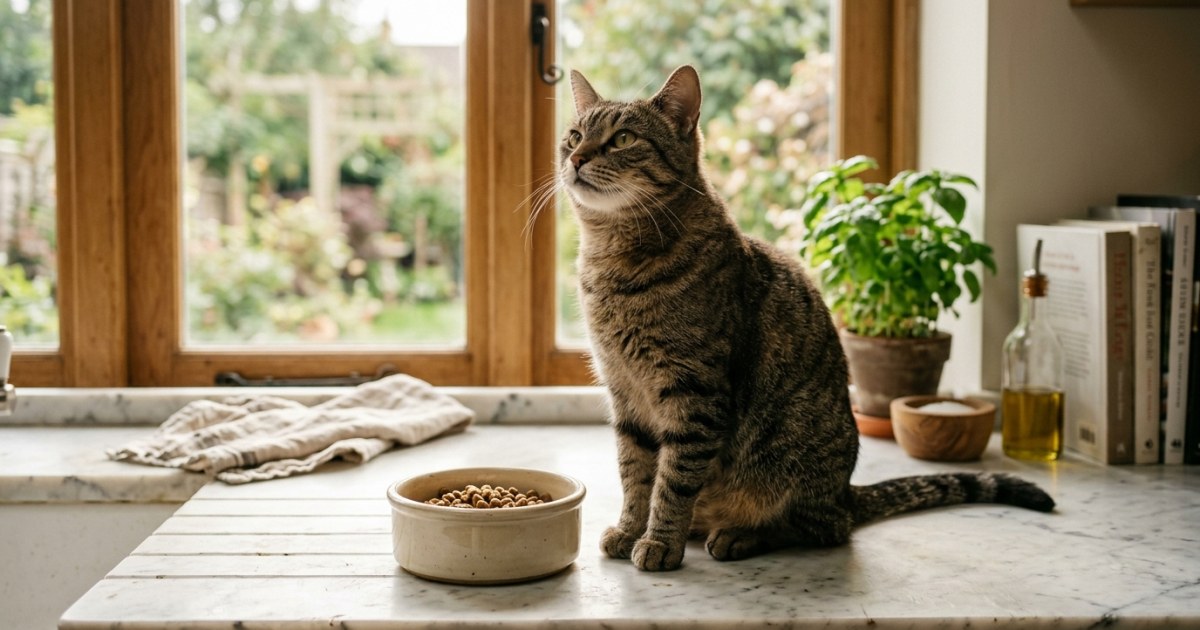
If your cat has ever turned its nose up at perfectly good food, stared at you with apparent disdain, and walked away from a bowl that was only half-eaten, you are far from alone. Feline fussiness at mealtimes is one of the most universally shared frustrations among cat owners — and for years, it has baffled both pet owners and researchers alike. Now, a landmark study published in the journal Physiology & Behavior offers a compelling scientific explanation: your cat isn't necessarily being difficult — it's simply bored of the smell.
THE PICKY EATER PROBLEM: WHY YOUR CAT LEAVES FOOD BEHIND
Ask any cat owner to describe their pet's relationship with food and you'll hear a remarkably consistent story. The cat approaches the bowl with enthusiasm, takes a few bites, and then — for no discernible reason — stops eating and wanders off. The food is fresh, the bowl is clean, and the cat is not visibly unwell. Yet somehow, half the meal remains untouched.
This pattern is so common it has become a defining characteristic of domestic cats in popular culture. Dogs, by contrast, tend to inhale their meals with barely a pause for breath. Why are cats so different? And more importantly, what can owners actually do about it?
For a long time, the working assumption was that cats were simply behaving according to instinct — grazing little and often, as their wild ancestors did. While that explanation is partially true, it has always felt incomplete. It doesn't account for why a cat will eat enthusiastically from a new pouch of food but leave the same food untouched an hour later. It doesn't explain why some cats seem to go off a food they previously loved, seemingly overnight. And it doesn't tell us what, precisely, is happening in the cat's brain when it loses interest mid-meal.
The new research from Iwate University in Japan goes further than any previous study in answering these questions — and the findings are both illuminating and surprisingly practical.
Good to Know
The study, led by animal behaviour researcher Masao Miyazaki at Iwate University, was published on 31 March in the peer-reviewed journal Physiology & Behavior. It focused specifically on the role of smell — not taste, texture, or hunger — in driving feline feeding motivation.
THE SCIENCE BEHIND FELINE FUSSINESS: WHAT THE NEW RESEARCH FOUND
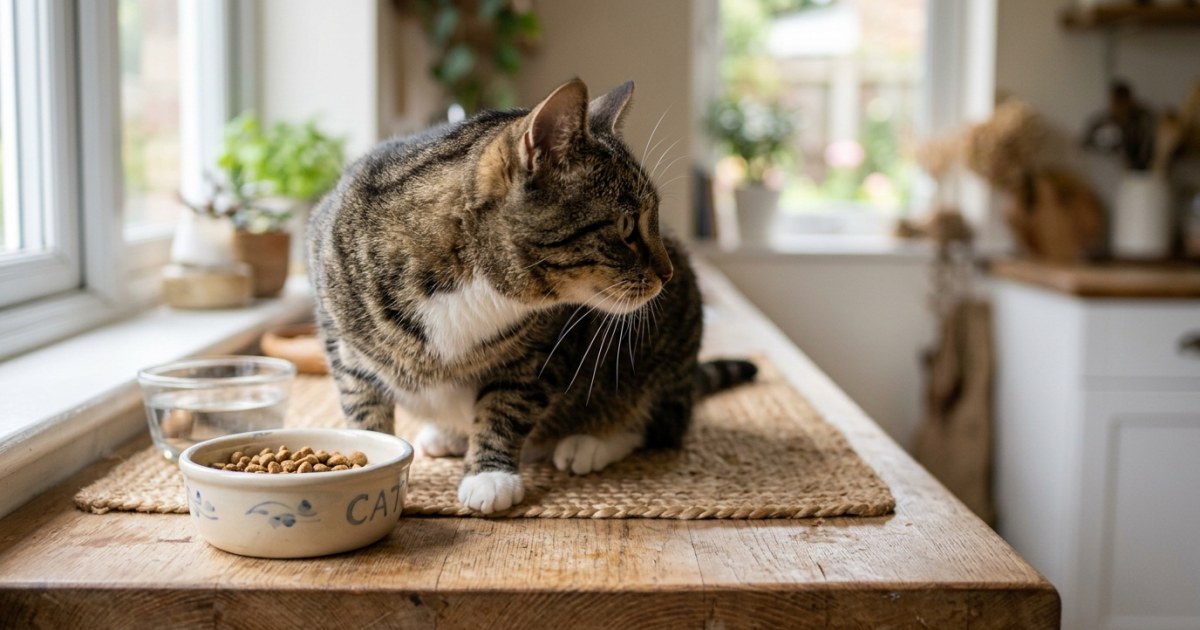
The study's lead researcher, Masao Miyazaki, was motivated by a simple personal observation. "I keep five dogs at home, and they tend to eat their food very quickly," he has explained. "In contrast, when I feed the cats used in our research, they eat slowly and often leave some food behind. At one point, I became very curious about this difference, which led me to start this research."
To investigate, Miyazaki and his colleagues designed a series of carefully controlled feeding experiments involving 12 domestic cats. The experimental setup was straightforward but revealing: cats were fasted for 16 hours, then presented with food in cycles — ten minutes of access to food, followed by a ten-minute interval with an empty bowl. This was repeated six times per session.
Experiment one — same food, declining appetite: When cats were offered the same commercially available dry food across all six feeding cycles, their food intake decreased progressively with each round. The cats ate well in the first cycle, noticeably less in the second, and continued declining thereafter. By the final cycle, intake had dropped substantially — despite the fact that the food was identical and perfectly palatable.
Experiment two — variety restores appetite: When cats were offered a different food in each of the six cycles, they ate considerably more total food across all sessions compared to the same-food condition. Variety, it turned out, was not merely preferable — it was meaningfully motivating.
Experiment three — novelty as a reset: In a third experiment, cats were given the same food for the first five cycles, during which their intake steadily declined. In the sixth cycle, they were switched to a different food. Even when that new food was objectively less palatable than the repeated one, the switch partially restored their appetite. This strongly suggested that the renewal of interest was not primarily about the quality or taste of the food — it was about its novelty.
Experiment four — smell alone is enough: Perhaps the most striking finding came from the final experiment. Cats were again given the same food across all six cycles. During the empty-bowl intervals, researchers exposed the cats to a scent. When the scent matched the food being served, the cats ate even less overall. But when they were exposed to the smell of a different food during those intervals — even though they were still eating the same repetitive meal — their appetite improved noticeably.
Pro Tip
You don't necessarily need to change what you're feeding your cat to stimulate appetite. Simply introducing a novel scent near mealtime — such as briefly opening a different food pouch nearby — may help reactivate your cat's interest in the same meal.
The conclusion Miyazaki and his team drew from these experiments was clear: "Cats do not stop eating simply because they are full. Rather, their feeding motivation decreases as they become accustomed to the smell of the food, and it can be restored by introducing a new odour. Sensory novelty, especially olfactory novelty, can reactivate feeding motivation in cats."
Study Summary
| Published | 31 March, Physiology & Behavior |
| Lead Researcher | Masao Miyazaki, Iwate University, Japan |
| Cats in Study | 12 domestic cats |
| Key Finding | Cats lose feeding motivation due to olfactory habituation, not satiety |
| Practical Implication | Varying food smells — or actual food — can restore appetite |
EVOLUTIONARY ROOTS: WHY CATS EAT THE WAY THEY DO
To fully understand why cats respond so strongly to olfactory novelty, it helps to understand where they came from. Domestic cats (Felis catus) are descended from the African wildcat (Felis lybica), a solitary hunter that subsisted almost entirely on small prey — mice, voles, birds, lizards, and insects. A typical African wildcat might make eight to twelve hunting attempts per day, catching and consuming small meals each time.
This is radically different from the ancestral feeding strategy of dogs, which descended from wolves — social pack hunters capable of bringing down large prey and gorging on a single massive meal before potentially going without food for days. That evolutionary heritage is precisely why dogs tend to bolt their food without ceremony: their instinct is to eat as much as possible, as fast as possible, before competitors can take it.
Cats never developed that urgency. Each meal was small, and there was always, in theory, another small creature nearby. What cats did develop was an exquisitely sensitive nose — one that could detect the freshness, species, and safety of prey. A dead mouse that had been sitting in the sun smelled different from a freshly caught one. In the wild, a cat that lost interest in a familiar-smelling, stationary food source and went in search of something new was simply behaving adaptively. That instinct appears to have survived domestication remarkably intact.
Good to Know
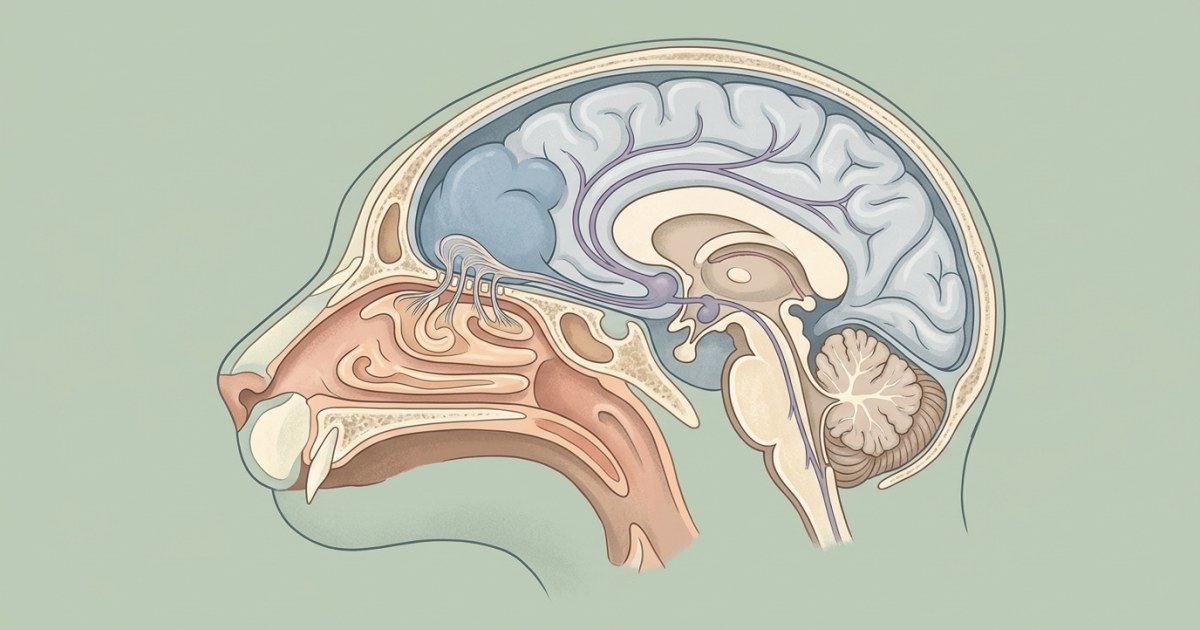
A cat's sense of smell is estimated to be 14 times stronger than a human's. They have roughly 200 million odour-sensitive cells in their noses, compared to around 5 million in humans. Smell is, quite literally, how cats experience and evaluate the world around them — including their food.
The concept at work in the Iwate University study is known as olfactory habituation — the neurological process by which repeated exposure to the same smell causes the brain to tune it out. This is a universal feature of mammalian neurology. Humans experience it too: walk into a room with a strong smell and you'll barely notice it after a few minutes. For cats, whose feeding motivation is so tightly bound to their sense of smell, habituation to a food's odour appears to be enough to switch off their appetite entirely — even if they are not physically full.
This also explains a frustrating phenomenon many cat owners will recognise: the cat that eats enthusiastically from a newly opened tin, but loses interest halfway through — not because the food has changed, but because its smell is no longer novel. The olfactory signal that said "interesting, fresh, worth investigating" has faded into background noise.
HUNGER VERSUS HABITUATION: IT'S NOT ABOUT BEING FULL
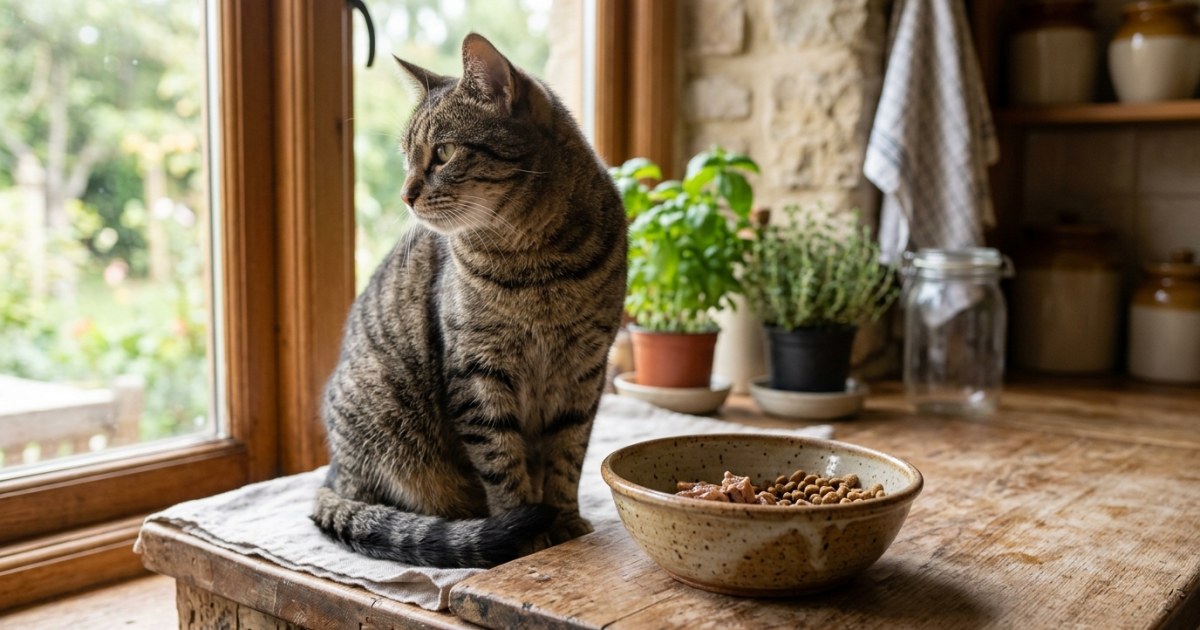
One of the most important takeaways from this research — and one with real practical consequences for cat owners — is the distinction between satiety and olfactory habituation. These are two entirely different reasons a cat might stop eating, and confusing them can lead to misguided responses.
Satiety is straightforward: the cat has consumed enough calories and its body signals that it is full. This is the same mechanism that makes you push away a plate of food you've been thoroughly enjoying. It is a normal, healthy physiological response, and there is nothing to be done about it except respect it.
Olfactory habituation is different. The cat's body may still need more calories, but its brain has become desensitised to the smell of the food and has consequently downgraded its feeding motivation. The food hasn't changed. The cat's hunger level hasn't necessarily changed. What's changed is the neurological response to a familiar olfactory signal.
Previous research had already established that cats with unlimited food access eat in a grazing pattern regardless of caloric density or whether food is wet or dry — suggesting that hunger alone was never the primary driver of their feeding behaviour. The new study adds an important layer to this understanding: smell is not just an appetiser for cats. It is, in a very real sense, the primary switch for appetite itself.
Warning
A cat that consistently refuses food entirely — rather than eating a partial meal — may be unwell. Olfactory habituation explains reduced enthusiasm for familiar food, not complete food refusal. If your cat is not eating at all for more than 24 hours, contact your vet. Hepatic lipidosis (fatty liver disease) can develop in cats that go without food for even short periods.
Scott McGrane, a pet food researcher at the Waltham Petcare Science Institute in England, who was not involved in the study, has noted that the findings align with what the industry has long observed anecdotally. "I have both professional and personal experience of just how finicky eaters cats can be," he told New Scientist. "This paper provides interesting insights into the role food aroma plays on eating behaviour. Feeding different wet food flavours and also a mixed wet and dry food feeding regime can help to provide flavour variety and maintain food intake for cats."
For cat owners, the distinction matters enormously. If your cat is walking away from food because it is full, trying to encourage more eating is not only unnecessary but potentially harmful — obesity is a serious health concern in domestic cats. But if your cat is walking away because it has become habituated to a familiar smell, there are practical and simple interventions available.
PRACTICAL SOLUTIONS: HOW TO KEEP YOUR CAT INTERESTED IN MEALTIMES
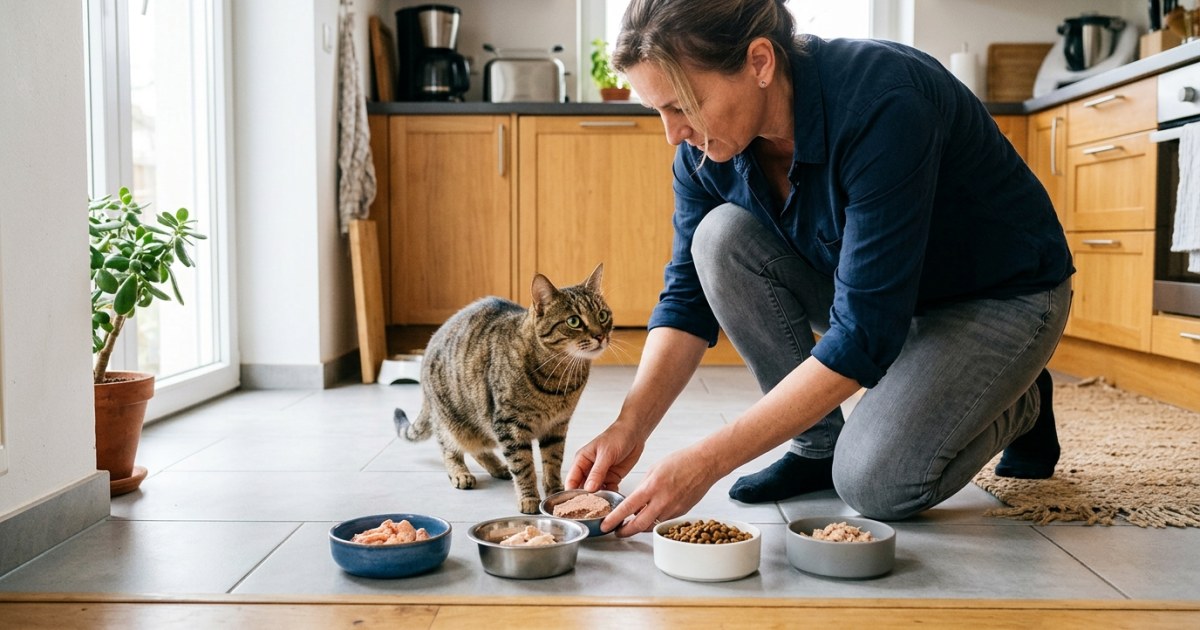
The good news from this research is that the solutions it suggests are genuinely simple, low-cost, and do not require significant changes to your cat's diet or routine. Here is a breakdown of the most practical approaches, grounded in what the science actually supports.
Rotate food flavours regularly: The most direct application of the study's findings is to vary your cat's food. This doesn't mean buying a different brand every week — it means rotating between flavours or protein sources on a regular basis. If you normally feed chicken, introduce salmon, turkey, or duck. If your cat eats only one flavour of wet food, try stocking two or three and alternating between them across the week. The goal is to ensure that no single olfactory signature becomes so familiar that it triggers habituation.
Mix wet and dry food: Multiple pet food researchers, including Scott McGrane at Waltham, recommend a mixed feeding regime combining wet and dry food. Beyond the obvious nutritional and hydration benefits of wet food, mixing formats means the olfactory experience of each meal varies considerably. Wet food tends to have a much stronger aroma than dry kibble, and alternating between the two provides a form of sensory rotation even within a consistent nutritional framework.
Pro Tip
When introducing a new food, do so gradually over five to seven days by mixing increasing amounts of the new food with decreasing amounts of the old. This reduces the risk of gastrointestinal upset while still providing the olfactory novelty that keeps your cat engaged.
Use scent as an appetite stimulant: One of the most surprising findings in the study was that simply exposing cats to the smell of a novel food — without actually changing what they were eating — was enough to partially restore their appetite. You can apply this practically by briefly opening a different food pouch or tin near your cat's bowl before mealtime, then serving the usual food. The novel scent stimulus may reactivate feeding motivation even if the food itself remains the same.
Serve food at room temperature or slightly warm: A warm meal releases more aromatic compounds than food served cold straight from the fridge. Warming wet food gently — either by leaving it out for 20 minutes before serving or warming it briefly in the microwave (always check for hot spots and allow it to cool slightly) — intensifies the aroma and can make it more enticing. This is especially useful if you're trying to re-engage a cat that has gone off a particular food.
Keep bowls scrupulously clean: Old food residue in a bowl creates a persistent background odour that can contribute to olfactory saturation. A clean bowl means each meal smells as fresh and novel as possible. Wash food bowls after every meal with hot water and a small amount of unscented washing-up liquid, then rinse thoroughly.
Consider puzzle feeders and food enrichment: Puzzle feeders slow eating and introduce an element of novelty to the feeding experience. While the Iwate University study focused specifically on olfactory novelty, behavioural enrichment in general is known to stimulate cats' natural hunting instincts and can make mealtimes more engaging. A puzzle feeder doesn't change the smell of the food, but it changes the experience of eating it — and for a curious, stimulus-seeking animal like a cat, that may be enough to maintain interest.
📋 Keeping Your Cat Interested in Mealtimes
- ☐Rotate between at least two or three different food flavours or protein sources each week
- ☐Combine wet and dry food formats to vary olfactory experience at mealtimes
- ☐Try briefly opening a different food pouch near mealtime to introduce a novel scent stimulus
- ☐Serve wet food at room temperature or slightly warm to maximise aroma release
- ☐Wash food bowls thoroughly after every single meal
- ☐Introduce any new food gradually over five to seven days to avoid digestive upset
- ☐Consider puzzle feeders to add behavioural novelty to mealtimes
- ☐Monitor actual food intake — if your cat stops eating entirely for more than 24 hours, contact your vet
FOOD NEOPHILIA: WHY CATS ARE HARDWIRED TO SEEK NOVELTY
The phenomenon at the heart of this research has a name: food neophilia. It refers to an animal's tendency to seek out and prefer novel food sources, and it appears to be deeply embedded in feline neurology.
While many animals exhibit some degree of food neophilia, cats seem to display it to an unusually pronounced degree — and the reasons for this likely trace back, once again, to their evolutionary history as solitary small-prey hunters. For a cat in the wild, dietary variety wasn't just pleasant; it was nutritionally essential. Relying on a single prey species in a single location left a cat vulnerable to food scarcity if that prey became unavailable. A cat that actively sought novelty in its diet was a cat that maintained a broader, more resilient nutritional base.
Interestingly, food neophilia in cats appears to operate largely through the olfactory system rather than through taste. This is significant because cats are obligate carnivores with relatively limited taste receptors compared to omnivores — they cannot taste sweetness at all, for instance. Their palate is considerably less nuanced than a human's. But their nose is extraordinary. It makes sense, then, that the primary trigger for both interest and disinterest in food would be olfactory rather than gustatory.
Good to Know
Cats are one of the few mammals known to lack functional taste receptors for sweetness. They have approximately 470 taste buds, compared to roughly 9,000 in humans. Their primary food evaluation tool is not their tongue — it's their nose. This makes olfactory novelty uniquely powerful as an appetite driver.
The Iwate University study adds important empirical weight to what many experienced cat owners and feline behaviourists have long suspected: that a cat's apparent fussiness is not random or capricious. It is a behavioural expression of a deep neurological system that evolved to ensure dietary variety. When we feed a cat the same food from the same bowl at the same time every day, we are, in effect, working against millions of years of evolutionary programming.
This doesn't mean domestic cats need to hunt for their meals. But it does suggest that introducing variety — even modest, manageable variety — into their feeding routine is not indulging bad behaviour. It is respecting and working with their biology.
WHEN PICKY EATING IS A HEALTH CONCERN, NOT JUST A HABIT
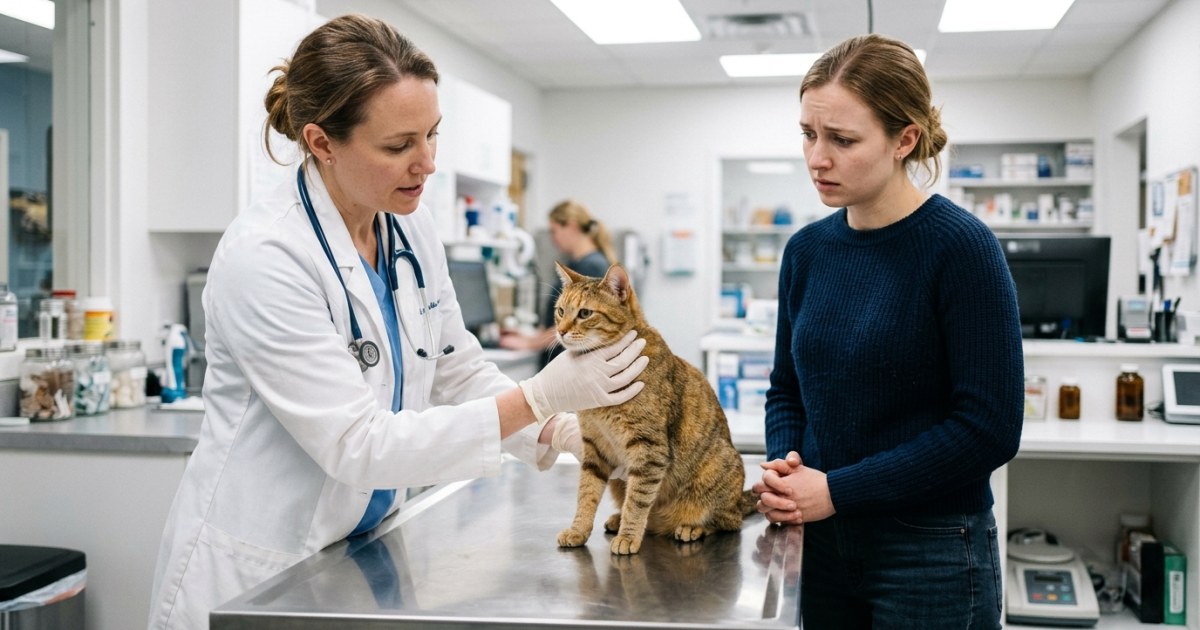
It is important to draw a clear line between the kind of selective, preference-driven eating that this research illuminates and the kind of food refusal that signals an underlying health problem. Olfactory habituation explains a cat that eats enthusiastically at first, then loses interest partway through a meal. It does not explain a cat that stops eating altogether, shows signs of distress, or loses weight significantly over a short period.
Dental and oral pain is one of the most common and underdiagnosed reasons cats reduce food intake. Periodontal disease affects the majority of cats over three years old, and a cat with sore gums or a painful tooth may appear fussy when it is actually eating less because eating hurts. If your cat approaches its bowl eagerly but then flinches away or drops food from its mouth, a dental examination is warranted.
Nausea can cause cats to appear disinterested in food without any other obvious symptoms. Nausea in cats may be caused by kidney disease, liver disease, hyperthyroidism, inflammatory bowel disease, or reactions to medications. If your cat's appetite has changed gradually over weeks or months rather than varying meal to meal, this pattern deserves veterinary attention.
Upper respiratory infections can temporarily impair a cat's sense of smell, effectively removing the primary driver of its appetite. A cat with a blocked or runny nose may appear to refuse food when it is actually simply unable to smell it. This is usually temporary and resolves as the infection clears, but supportive care — including warming food to release more aroma — can help during recovery.
Warning
Never starve a cat into eating an unfamiliar food, and never leave a cat without food for more than 24 hours in the hope that hunger will overcome fussiness. Cats that go without food can develop hepatic lipidosis — a life-threatening form of fatty liver disease — remarkably quickly, especially if they are overweight. Always consult your vet before making significant changes to a cat's feeding regime.
Stress and environmental changes are also significant drivers of appetite changes in cats. A new pet in the household, a house move, building work nearby, changes to the owner's schedule, or even rearranging furniture can cause enough stress to suppress appetite. In these situations, the priority is addressing the source of stress rather than the eating behaviour itself.
Food texture aversions can develop over time, particularly in older cats or cats that have had negative experiences associated with a particular food type. A cat that ate wet food happily for years but suddenly refuses it may have developed a texture aversion, possibly associated with nausea or gastrointestinal discomfort. Switching textures — from pâté to chunks in jelly, for example — can help identify whether texture is a factor.
Habit vs. Health: How to Tell the Difference
| Pattern | Likely Explanation |
| Eats some, then loses interest mid-meal | Olfactory habituation (behavioural) |
| Eats new food eagerly, ignores old food | Olfactory novelty preference (behavioural) |
| Completely stops eating for 24+ hours | Possible health concern — vet review needed |
| Approaches bowl then flinches away | Possible dental pain — vet review needed |
| Gradual reduction over weeks or months | Possible systemic illness — vet review needed |
| Sniffs food, walks away, returns to sniff again | Olfactory assessment in progress — normal behaviour |
CATS AND FOOD WHILE TRAVELLING: WHAT THIS RESEARCH MEANS FOR OWNERS ON THE MOVE
For those of us at CatAbroad, the implications of this research extend naturally into the context of cat travel. If your cat is already a selective eater at home, a journey — whether across town to a cattery or across continents to a new home — adds significant additional complexity to the feeding picture.
Travel stress suppresses appetite independently: Cats are creatures of routine, and travel disrupts almost every routine they have. The sounds, smells, and movement associated with car journeys, flights, and new environments trigger a stress response that can suppress appetite entirely. Combine this with olfactory habituation to familiar food, and you have a recipe for a cat that arrives at its destination significantly underfed.
New environments introduce competing smells: A new home, hotel room, or holiday rental is awash in unfamiliar scents. While this olfactory novelty is stimulating in some ways, it can also be overwhelming, and a stressed cat may be too preoccupied with processing new environmental smells to focus on food. Ironically, in a genuinely novel environment, a familiar-smelling food may actually be more comforting and appetite-stimulating than an unfamiliar one — the opposite of what the study suggests in a stable home setting.
Pro Tip
When travelling with a cat, maintain their regular food brand and flavour for the first few days in a new environment. Once they have settled and begun eating normally, you can reintroduce the rotational variety that prevents olfactory habituation at home. The goal is familiarity during the stressful transition period, and novelty thereafter.
International travel and food availability: If you're relocating internationally with your cat, be aware that your cat's regular food brand may not be available at your destination. Research local equivalents in advance, and carry enough of the familiar food to bridge the transition period — ideally a two to four week supply. Introduce the new local food gradually, mixing it with the familiar food, once your cat has settled into the new home and is eating normally.
Cattery and pet-sitting arrangements: If your cat will be cared for by someone else during your travels, provide that carer with a rotation of your cat's usual foods rather than a single option. Brief them on the olfactory habituation phenomenon so they understand why a cat that ignores its food halfway through isn't necessarily unwell — and so they know that offering a slightly different food (within the same nutritional bracket) may help restore interest.
📋 Feeding Your Cat Well While Travelling
- ☐Pack familiar food for the transition period — aim for at least two to four weeks' supply for international moves
- ☐Research food availability at your destination before you travel
- ☐Maintain familiar food during the first few days in a new environment, then reintroduce variety
- ☐Provide cattery carers with a rotation of foods and instructions on olfactory novelty
- ☐Monitor food intake closely in the first 48 hours after arrival — contact a vet if your cat refuses all food
- ☐Warm wet food slightly in new environments to maximise scent appeal
WHAT THIS MEANS FOR THE PET FOOD INDUSTRY AND FUTURE RESEARCH
The findings from Iwate University are not just interesting for individual cat owners — they have significant implications for the pet food industry as a whole. Globally, the pet food market is worth hundreds of billions of pounds, and a substantial portion of that market is driven by premium cat food products that promise to satisfy even the most discerning feline palates. This research provides, for the first time, a rigorous scientific basis for what premium manufacturers have long promoted on intuitive grounds: that variety matters.
The study's emphasis on olfactory novelty over taste or texture novelty is particularly significant for product development. It suggests that the aromatic compounds in cat food — the volatile molecules that cats detect with their noses before they take a single bite — may be just as important as any other ingredient in determining whether a cat will eat a meal. Pet food formulators who understand this may be able to design products that maintain olfactory freshness for longer, or that contain scent profiles specifically calibrated to remain novel across repeated exposures.
The implication for packaging: If olfactory novelty is what drives appetite, then the rate at which a food's aroma escapes its packaging is commercially relevant. Packaging that preserves scent freshness until the moment of serving — rather than allowing gradual aroma leakage in the cupboard — could become a meaningful differentiator. Some premium brands already use vacuum-sealed and nitrogen-flushed packaging partly for this reason, though olfactory novelty specifically has not previously been identified as a driver.
Limitations of the current research: The study involved 12 cats, all fed commercially available dry food, in controlled laboratory conditions. Real-world domestic feeding is considerably messier and more variable. The study didn't examine whether cats that were accustomed to dietary variety from kittenhood showed different habituation patterns to those that had always eaten a single food. It also didn't examine the role of texture, temperature, or individual personality differences — all of which anecdotally influence feline feeding behaviour considerably.
Good to Know
Researchers at the Waltham Petcare Science Institute — the scientific arm of Mars Petcare and one of the world's leading centres for companion animal nutrition research — have acknowledged the study's findings as "interesting insights" that align with established industry knowledge. Given Waltham's significant investment in feline nutrition research, further studies exploring the practical applications of olfactory novelty in cat food design are likely to follow.
Future research could usefully examine whether habituation rates vary by breed, age, or individual personality — some cats are notably more neophilic than others, and understanding why could help owners tailor their feeding strategies more precisely. Research into whether early dietary variety in kittenhood produces more adventurous adult eaters would also be practically valuable.
For now, the most important takeaway for cat owners is simpler than any of these future directions: your cat is not trying to make your life difficult. It is operating on a neurological system shaped by millions of years of evolution, one that reliably loses interest in any food it has smelled too many times. Work with that system, not against it — and mealtimes may become considerably less of a battle of wills.
Frequently Asked Questions
Why does my cat stop eating halfway through its meal?
According to new research published in Physiology & Behavior, cats most likely stop eating mid-meal not because they're full, but because they've become habituated to the smell of their food. Repeated exposure to the same olfactory stimulus reduces feeding motivation — a process called olfactory habituation. Introducing a novel scent or a different food can help restore their appetite.
Why is my cat so fussy about food all of a sudden?
Sudden fussiness can have several causes. If your cat has been eating the same food for a while, olfactory habituation — where the brain tunes out a familiar smell — may be reducing its appetite. However, sudden food refusal can also indicate dental pain, illness, stress, or an environmental change. If your cat has stopped eating almost entirely or is losing weight, consult your vet.
Is it OK to feed my cat different foods every day?
Yes, rotating between different flavours and food formats is actually beneficial for cats. New research supports the idea that variety prevents olfactory habituation and maintains feeding motivation. Introduce any new food gradually over five to seven days to avoid digestive upset, and ensure all foods you rotate between are nutritionally complete and appropriate for your cat's age and health status.
Why does my cat eat a new food but then refuse it after a few days?
This is classic olfactory habituation in action. The first time your cat encounters a new food, the novel smell is stimulating and motivating. After repeated exposure to the same aroma, the brain begins to tune it out, and feeding motivation drops. The solution is to rotate between several food flavours on a regular basis so that no single scent becomes too familiar.
Do cats get bored of the same food?
In a meaningful neurological sense, yes. Research shows that cats become olfactorily habituated to repetitive food smells, which suppresses their appetite even when they are not full. This is distinct from boredom in a human sense, but the practical effect is similar — the same food, served repeatedly, loses its appeal. Rotating flavours and food types prevents this.
How can I get my cat to eat more at mealtimes?
The most evidence-based approach is to introduce olfactory novelty. Rotate between at least two or three different food flavours each week, mix wet and dry food, and try serving wet food slightly warm to enhance aroma. You can also try briefly opening a different food pouch near the bowl before mealtime as a scent stimulus. Always rule out health issues if your cat's appetite has dropped significantly.
Why do cats eat little and often instead of big meals?
Domestic cats descended from African wildcats, which were solitary hunters of small prey like mice and birds. Their natural feeding pattern was to catch and consume many small meals throughout the day rather than one large one. This grazing instinct has persisted through domestication, which is why cats typically prefer smaller, more frequent meals rather than a single large daily feeding.
Can a cat's sense of smell affect how much it eats?
Absolutely — and far more profoundly than most owners realise. A cat's sense of smell is approximately 14 times stronger than a human's, and research now confirms that olfactory stimulation is the primary driver of feline feeding motivation. A cat with a blocked nose due to a respiratory infection may stop eating almost entirely because it cannot smell its food. Equally, habituation to a familiar food smell is now understood to be a key reason cats lose interest mid-meal.