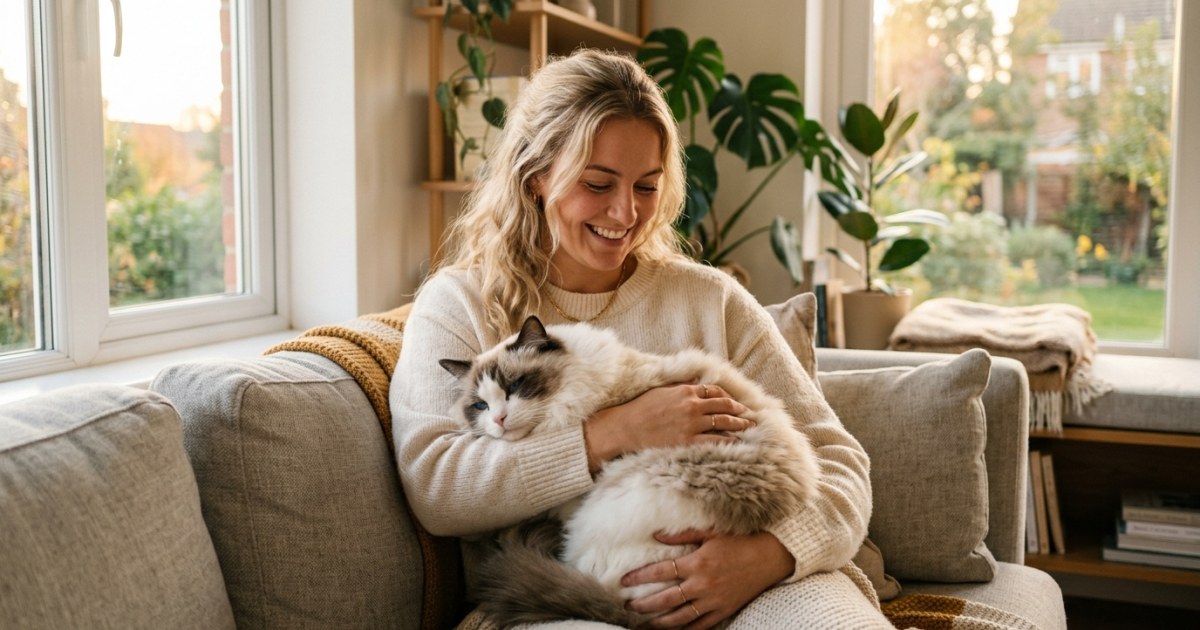
If you have ever met a Ragdoll cat, you will know there is something almost uncanny about how calm, trusting, and affectionate they are — even with complete strangers. Unlike many cats that tolerate human company on their own terms, Ragdolls actively seek out people, go limp with pleasure when held, and follow their owners from room to room like a devoted shadow. So what is actually behind this remarkable friendliness, and is it nature, nurture, or a bit of both?
THE ORIGINS OF THE RAGDOLL BREED AND HOW FRIENDLINESS WAS BRED IN
The Ragdoll breed has one of the more colourful origin stories in the cat fancy world. The breed was developed in the early 1960s in Riverside, California, by a woman named Ann Baker. She selectively bred cats from a white domestic longhair called Josephine — known for producing unusually calm, placid kittens — with other cats she felt displayed ideal temperament and appearance. Baker trademarked the name 'Ragdoll' in 1971, and the breed's defining characteristic from the very beginning was its extraordinary docility and tendency to go limp and relaxed when picked up, much like a child's ragdoll toy.
What Baker did — whether fully intentionally or not — was apply strong selective pressure for temperament over many generations. Each breeding decision prioritised cats that were gentle, tolerant of handling, and comfortable around humans. This is the foundational reason Ragdolls are so friendly today: the trait was deliberately selected for across decades of careful breeding. When temperament is the primary selection criterion generation after generation, the resulting population reliably expresses that trait.
Good to Know
Ragdolls were officially recognised by the Cat Fanciers' Association (CFA) in 2000 and are now consistently ranked among the most popular pedigree cat breeds in the UK, USA, and Australia — largely because of their famously gentle nature.
Modern Ragdoll breeders continue this tradition. Reputable UK breeders registered with the Governing Council of the Cat Fancy (GCCF) or The International Cat Association (TICA) are required to breed responsibly, and most prioritise sociability and temperament as core breed standards alongside physical traits. This ongoing selective pressure means that friendliness remains deeply embedded in the breed's genetic makeup.
THE GENETICS BEHIND RAGDOLL TEMPERAMENT: WHAT SCIENCE TELLS US
The idea that a cat's personality could be largely genetic was once dismissed by many animal behaviourists, but the science has shifted considerably. Studies on cat domestication and breed differences now confirm that temperament is substantially heritable — meaning it passes reliably from parents to offspring. Ragdolls sit at an interesting intersection of this research.
Serotonin and dopamine pathways: Research into feline neurobiology suggests that variations in serotonin transporter genes and dopamine receptor genes can significantly affect how fearful or sociable a cat is. Breeds like the Ragdoll, which have been selectively bred for low fear responses and high affiliative (social bonding) behaviour, are thought to carry gene variants that predispose them to calmer neurochemistry. In simple terms, their brains are wired to find human interaction rewarding rather than threatening.
The 'tame fox' parallel: The famous Russian silver fox experiment, in which foxes were selectively bred purely for tameness over 40 generations, produced animals with fundamentally altered stress hormone profiles and more juvenile, playful behaviour well into adulthood. Many animal geneticists believe something broadly similar has occurred with Ragdolls — that generations of selection for docility have produced genuine neurological and hormonal differences compared to less selectively bred cats.
Pro Tip
If you are buying a Ragdoll kitten, always ask to meet both parents if possible. A friendly, confident dam and sire are one of the strongest predictors of a kitten that will grow into a sociable, people-oriented adult cat.
Low cortisol reactivity: Anecdotal evidence from veterinary professionals and cat behaviourists consistently notes that Ragdolls tend to show lower fear and stress responses during handling than most other breeds. This maps onto findings in domestic animal genetics that affiliative traits and reduced cortisol reactivity are often inherited together. Essentially, Ragdolls appear to have a lower baseline anxiety level, making them more open to social interaction by default.
KEY PERSONALITY TRAITS THAT MAKE RAGDOLLS EXCEPTIONALLY SOCIABLE
Understanding why Ragdolls are friendly also means understanding the specific behavioural traits that express that friendliness day to day. It is not a single behaviour but a cluster of consistent traits that together create the impression of an unusually warm, dog-like cat.
Ragdoll Personality Traits at a Glance
| Trait | What It Looks Like in Practice |
| Floppy tolerance | Goes limp and relaxed when picked up, rarely struggles |
| Dog-like following | Trails owners between rooms, greets them at the door |
| Low aggression | Rarely scratches or bites even when overstimulated |
| Gentle vocalisation | Quiet, soft chirps and meows rather than demanding yowls |
| Stranger acceptance | Approaches unfamiliar visitors with curiosity, not fear |
| High lap tolerance | Content to sit with people for extended periods |
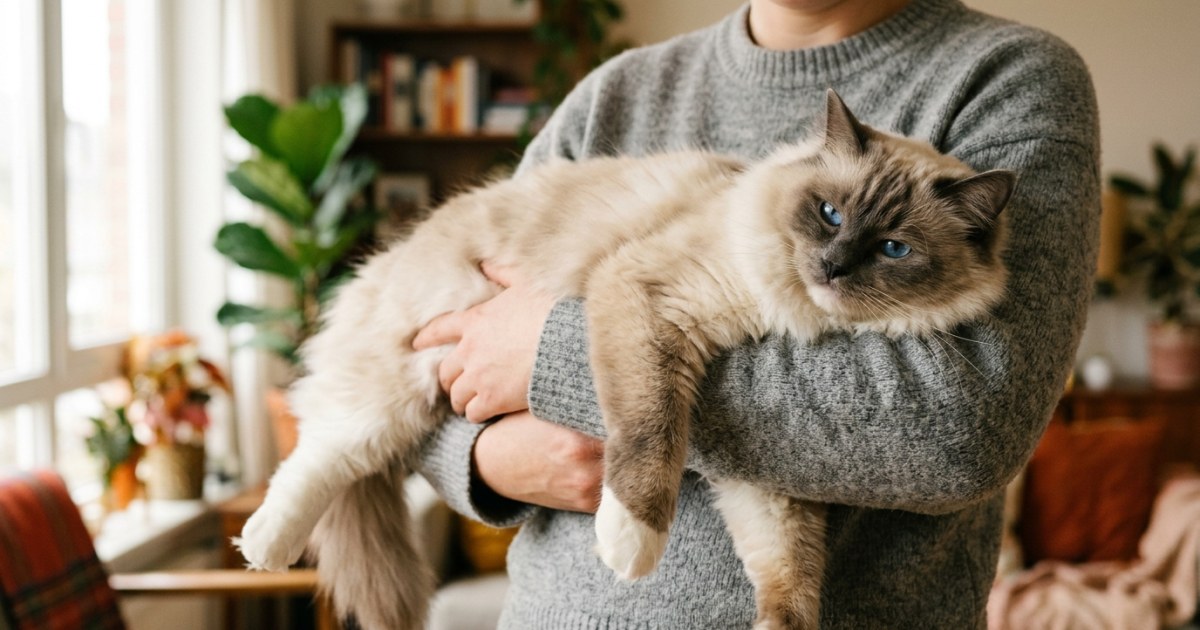
The 'flop' behaviour: Perhaps the most iconic Ragdoll trait is the tendency to go completely limp when lifted. This is not passivity — it is a sign of profound trust. In feline body language, exposing the belly and going soft in someone's arms is a significant vulnerability signal. That Ragdolls do this routinely speaks to how fundamentally non-threatened they feel around humans.
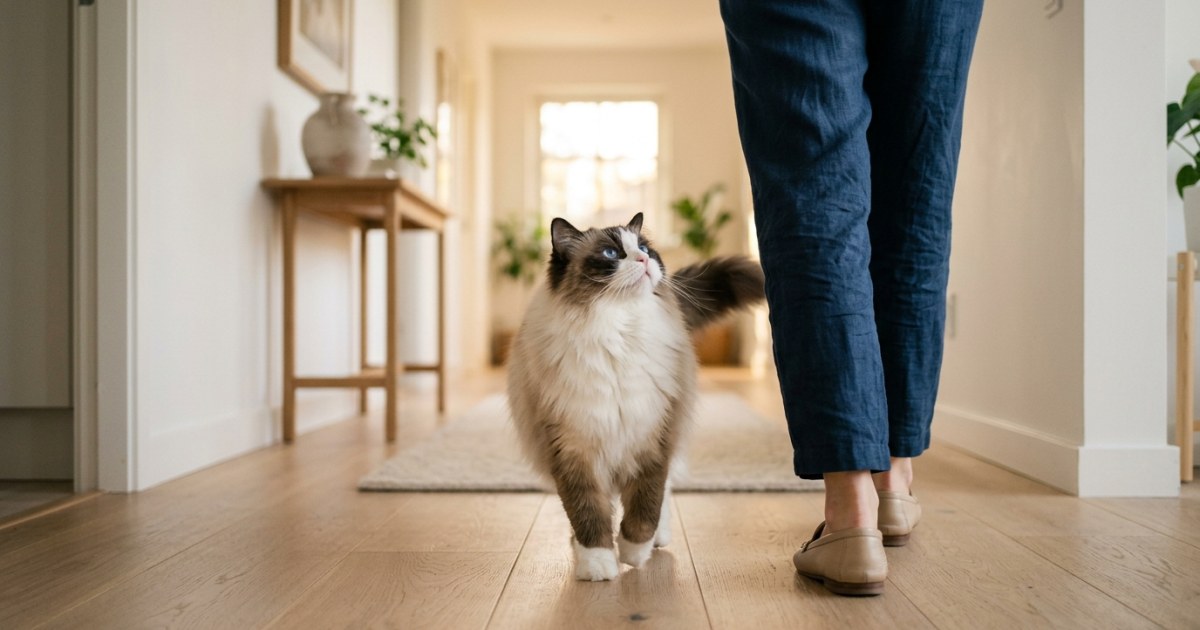
Seeking proximity: Ragdolls are one of the few cat breeds that genuinely appear to crave human company rather than merely tolerating it. Many owners describe their Ragdolls sitting outside bathroom doors, sleeping at the foot of the bed without being encouraged, and positioning themselves in whatever room the household activity is happening in. This is a social orientation that is unusual in cats and far more reminiscent of pack-animal behaviour.
Good to Know
Ragdolls are consistently ranked as one of the least aggressive cat breeds by veterinary behaviourists. This makes them particularly well suited to households with children, elderly family members, or other pets — including dogs.
Patience and tolerance: Ragdolls are known for a patience that is genuinely remarkable among cats. They tend to tolerate being dressed up, carried around by children, handled by unfamiliar vets, and introduced to new environments with a calmness that other breeds simply do not share. This is not blankness or shutdown behaviour — Ragdolls are alert and engaged — it is a genuine ease with the world.
HOW EARLY SOCIALISATION SHAPES A RAGDOLL'S FRIENDLINESS
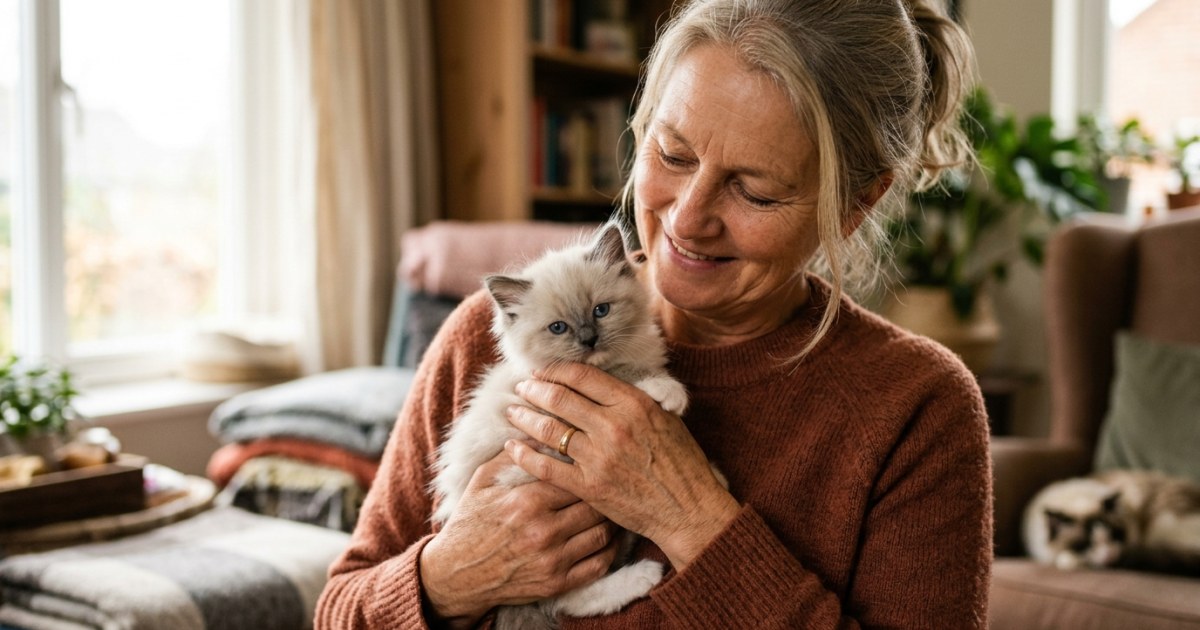
Genetics may lay the foundation, but early socialisation is the builder. Even the most genetically predisposed Ragdoll kitten needs appropriate human contact during the critical socialisation window — roughly between two and seven weeks of age — to fulfil its friendly potential. This period is when a kitten's brain is most plastic, and positive experiences with humans during this window create lasting neural pathways that associate people with safety and reward.
The breeder's role is enormous: A responsible Ragdoll breeder will handle kittens daily from birth, introduce them to a variety of sounds, people, ages, and gentle experiences before they ever leave for their new home. Kittens raised in a busy household environment — where they hear the hoover, meet visitors, are handled by children, and experience gentle play — are dramatically more confident and sociable than those raised in isolation.
📋 What Good Early Socialisation Looks Like for a Ragdoll Kitten
- ☐Daily gentle handling by multiple people from the first week of life
- ☐Exposure to children, men, and women of different ages and appearances
- ☐Introduction to normal household sounds (hoovers, televisions, doorbells)
- ☐Positive experiences with being lifted, held, and cradled on the back
- ☐Meeting other cats, and ideally a friendly dog, before 8 weeks
- ☐Kitten remains with the litter until at least 12–13 weeks (GCCF recommendation)
- ☐Breeder provides written socialisation history and advice for new owners
Warning
Avoid purchasing a Ragdoll kitten from a breeder who cannot demonstrate that the kittens have been raised in a home environment with regular human contact. 'Cattery-only' kittens — particularly those kept in separate rooms away from household activity — frequently develop fear-based behaviours that undermine even the best genetic temperament.
Once a Ragdoll arrives in its new home, owners also play a crucial role in reinforcing friendly behaviour. Consistent positive interaction, gentle handling, reward-based play, and calm responses to the kitten's exploratory behaviour all consolidate the social confidence that was started by the breeder. A Ragdoll raised with patience and affection is almost certain to become an extraordinarily friendly adult cat.
RAGDOLLS COMPARED TO OTHER FRIENDLY CAT BREEDS: HOW DO THEY STACK UP?
Ragdolls are frequently cited as the friendliest cat breed, but they are not the only affectionate option. Understanding how they compare to other breeds helps clarify what specifically makes their friendliness distinctive — and whether a Ragdoll is the right fit for your household.
Ragdoll vs Maine Coon: Maine Coons are also famously friendly, playful, and dog-like in their social behaviour. The key difference is energy level. Maine Coons are more boisterous, physically active, and independent. Ragdolls tend to be softer, more placid, and more physically cuddly — they are lap cats in a way that many Maine Coons are not.
Ragdoll vs Birman: Birmans share Ragdolls' gentle temperament and are equally affectionate with family members. However, Birmans tend to be slightly more selective about who they bond with, whereas Ragdolls have a broader social openness that extends to strangers and visitors.
Ragdoll vs British Shorthair: British Shorthairs are calm, loyal, and affectionate on their own terms, but they are typically less demonstrative than Ragdolls. They tend to prefer sitting nearby to sitting on you, and they are less likely to follow their owners around or greet them at the door.
Friendliness Comparison: Ragdoll vs Other Breeds
| Breed | Friendliness to Strangers |
| Ragdoll | ⭐⭐⭐⭐⭐ — Actively approaches new people |
| Maine Coon | ⭐⭐⭐⭐ — Curious but on own terms |
| Birman | ⭐⭐⭐⭐ — Warm but more selective |
| British Shorthair | ⭐⭐⭐ — Tolerant but reserved |
| Siamese | ⭐⭐⭐⭐ — Demanding and vocal but very bonded |
| Scottish Fold | ⭐⭐⭐ — Gentle but quiet and observant |
What sets Ragdolls apart is the combination of high social openness, physical affection seeking, and consistently low aggression. Most friendly breeds tick two of these three boxes. Ragdolls reliably tick all three, which is why they occupy a unique position in the cat fancy as the go-to recommendation for households that genuinely want a cat with something close to canine social behaviour.
WHY RAGDOLLS MAKE EXCEPTIONAL COMPANIONS FOR CHILDREN, DOGS, AND MULTI-PET HOUSEHOLDS
One of the most practical expressions of a Ragdoll's friendliness is how well they integrate into complex households. For families with young children, other cats, or dogs, a Ragdoll's low aggression and high social tolerance can make an enormous difference to how smoothly a multi-pet home functions.
With children: Ragdolls are widely regarded as one of the safest cat breeds around children precisely because they are slow to scratch and bite even when overstimulated or handled clumsily. This does not mean they should ever be treated roughly — all cats have limits — but Ragdolls have a higher threshold than most, and they tend to disengage (walk away) rather than retaliate when they have had enough. They also enjoy the warmth and play that children provide, making the relationship genuinely mutual.
Pro Tip
Teach children to hold a Ragdoll with both arms supporting the hindquarters, not dangling. Ragdolls tolerate a great deal, but supporting their weight properly makes the experience comfortable for them and builds deeper trust with younger family members.
With dogs: Ragdolls are one of the few cat breeds that cat-behaviour specialists regularly recommend for dog-owning households. Their relaxed confidence means they are far less likely to trigger a dog's chase instinct by fleeing in panic, and they are curious enough to investigate a new canine housemate rather than hiding for weeks. Many Ragdoll owners report their cats and dogs sleeping together within the first month of introduction.
With other cats: Ragdolls are generally non-territorial and non-confrontational with other cats. They can certainly form strong bonds with feline housemates, and their gentle disposition means that introductions to resident cats tend to be smoother than with more assertive breeds. That said, even the most laid-back Ragdoll benefits from a gradual, scent-first introduction process rather than being thrust into a room with an unfamiliar cat.
📋 Introducing a Ragdoll to a Multi-Pet Household
- ☐Set up a separate safe room for the Ragdoll for the first 1–2 weeks
- ☐Swap bedding between pets to build scent familiarity before visual introductions
- ☐Allow supervised visual access through a baby gate or cracked door first
- ☐Ensure the Ragdoll always has escape routes and high spaces to retreat to
- ☐Feed pets on opposite sides of a closed door to build positive associations
- ☐Never force interaction — allow the Ragdoll to set the pace
HOW TO NURTURE AND MAINTAIN YOUR RAGDOLL'S FRIENDLY NATURE
Even the most genetically gifted, perfectly socialised Ragdoll can develop insecurity and withdrawal if their environment and daily experience do not support their social needs. Understanding what Ragdolls need to stay emotionally healthy is the key to maintaining the warm, trusting personality that makes them so special.
Consistency and routine: Ragdolls thrive on predictability. Regular feeding times, consistent sleep spaces, and a stable household routine help them feel safe. Major disruptions — house moves, new family members, building work — can temporarily unsettle even the most confident Ragdoll, so providing extra one-on-one time during transitions is important.
Social stimulation: Because Ragdolls are so people-oriented, they can become anxious and withdrawn if left alone for very long periods. If you work long hours, a second cat (ideally another Ragdoll or similarly gentle breed) can provide the social contact they need. Puzzle feeders, window perches with outdoor views, and interactive toys help keep their minds engaged when humans are not available.
Warning
Ragdolls are one of the breeds most at risk of separation anxiety due to their high social orientation. If your Ragdoll begins over-grooming, not eating, or vocalising excessively when you leave, consult a veterinary behaviourist. These behaviours signal genuine distress, not just a preference for company.
Positive reinforcement only: Ragdolls are sensitive to tone and emotion. Harsh corrections, raised voices, or punitive responses to unwanted behaviour can damage their trust and undermine their social confidence over time. Positive reinforcement — rewarding the behaviours you want with treats, praise, and play — is far more effective and keeps the bond strong.
Health directly affects temperament: A Ragdoll in chronic pain or discomfort — whether from dental disease, joint pain (they are prone to hypertrophic cardiomyopathy and should be screened regularly), or urinary issues — will become less sociable and more withdrawn as a protective response. Annual veterinary check-ups, dental care, and monitoring for breed-specific conditions are not optional extras; they are part of maintaining the lovely personality you fell in love with.
Pro Tip
Ragdolls are slow to mature — they do not reach full physical and emotional adulthood until around three to four years of age. During the kitten and juvenile phase, patient, consistent handling and socialisation continues to shape their adult personality, so keep up the effort well beyond the first year.
MYTHS AND MISCONCEPTIONS ABOUT RAGDOLL FRIENDLINESS
The Ragdoll's reputation for extreme friendliness has generated a few persistent myths that are worth addressing directly, both for accuracy and for the welfare of the cats themselves.
Myth: Ragdolls feel no pain and can be handled as roughly as you like. This is dangerously false and appears to stem from their high pain tolerance and reluctance to react aggressively. Ragdolls can absolutely be injured, and their tendency not to protest loudly means that rough handling can cause real harm before any visible distress signal appears. Always treat them gently.
Myth: Ragdolls are 'stupid' because they are so calm. Ragdolls are not unintelligent — they are emotionally regulated. They learn routines quickly, can be taught tricks using positive reinforcement, and show clear problem-solving behaviour with puzzle feeders. Their calmness is a reflection of low anxiety, not cognitive deficit.
Myth: All Ragdolls are equally friendly regardless of background. As explored throughout this article, genetics provides the potential but socialisation and environment determine expression. A Ragdoll from a poorly socialised background, or one that has experienced trauma, can be reserved or fearful. The breed predisposition towards friendliness is strong, but it is not immune to negative experience.
Good to Know
Rescue Ragdolls can absolutely develop the warm, trusting personality the breed is known for with patient rehabilitation. Ragdoll-specific rescues across the UK report that even cats with difficult backgrounds often blossom remarkably with consistent, gentle care — testament to how deeply the friendly disposition is embedded in the breed.
Myth: Their friendliness means they are suited to any environment. Ragdolls' social nature is actually a specific need, not a universal adaptability. They are not well suited to being left alone for twelve hours a day, to very chaotic or unpredictable environments, or to households where nobody has time for meaningful interaction. Their friendliness should be matched by an equally engaged and present owner.
Planning Travel With This Cat?
Turn this reading into a route-specific checklist: documents, airline constraints, vaccines, timing and arrival rules.
Open the Cat Travel PlannerFrequently Asked Questions
Why do Ragdoll cats go limp when you pick them up?
Ragdolls go limp when held because of a deeply ingrained genetic predisposition towards relaxation and trust in human company — a trait selectively bred into the breed from its origins. Going limp is a sign of profound comfort and the absence of fear; in feline body language, it represents a willingness to be completely vulnerable with the person holding them. It is one of the most distinctive expressions of the Ragdoll's famously docile temperament.
Are Ragdoll cats the friendliest cat breed?
Ragdolls are consistently ranked among the very friendliest cat breeds and are often cited as the top choice for households wanting a genuinely affectionate, people-oriented cat. What distinguishes them is the combination of high social openness towards strangers, a strong desire for physical contact, and very low aggression — a trio of traits that few other breeds match simultaneously. Birmans, Maine Coons, and Siamese are also very friendly but tend to excel in one or two of these areas rather than all three.
Do Ragdoll cats get lonely when left alone?
Yes — Ragdolls are one of the breeds most susceptible to loneliness and separation anxiety because of their high social orientation. They genuinely crave human company and can become anxious, withdrawn, or develop stress-related behaviours if left alone for extended periods regularly. If you work full-time, providing a companion animal (ideally another Ragdoll or gentle breed) and environmental enrichment can significantly reduce the risk of separation distress.
Are Ragdoll cats good with children?
Ragdolls are widely regarded as one of the best cat breeds for families with children due to their high tolerance for handling, low tendency to scratch or bite when overstimulated, and genuine enjoyment of play and warmth that children provide. They have a higher threshold for accidental rough handling than most cats, though all interactions between young children and cats should still be supervised and children should always be taught to handle cats respectfully.
Are male or female Ragdolls friendlier?
Both male and female Ragdolls are friendly, but many owners and breeders report that neutered males tend to be slightly more consistently affectionate and cuddly, while females can be a little more independent and selective about when they seek attention. That said, individual personality variation within the breed is significant, and a well-socialised female Ragdoll will often be just as warm and demonstrative as any male. Neutering or spaying both sexes is strongly recommended and tends to reduce any hormonal influence on behaviour.
Can a Ragdoll cat be trained like a dog?
Ragdolls are more trainable than the average cat and respond particularly well to positive reinforcement techniques using treats and praise. Many owners successfully teach their Ragdolls to come when called, sit, fetch small toys, walk on a harness, and perform simple tricks. Their intelligence combined with their desire to interact with and please their owners makes them among the most receptive cats to training — though their dog-like sociability means they often learn household routines without any deliberate training at all.
Why is my Ragdoll not as friendly as I expected?
If your Ragdoll seems less friendly than the breed reputation suggests, the most likely causes are insufficient early socialisation during the critical window (2–7 weeks), an unsettled or stressful environment, an underlying health issue causing discomfort, or simply that the cat needs more time to build trust in a new home. Rescue Ragdolls or those from less reputable breeders may need patient rehabilitation. With consistent gentle interaction, a predictable routine, and a health check from your vet to rule out pain, most Ragdolls gradually reveal their characteristically warm nature.
Do Ragdoll cats like being held and cuddled?
Yes — Ragdolls are one of the few cat breeds that genuinely enjoy being held, cradled, and cuddled for extended periods. Their willingness to go limp in their owner's arms is a breed-defining characteristic that reflects a deep comfort with close physical contact. Most Ragdolls will actively seek out laps, drape themselves across their owners, and choose to sleep in close physical proximity to their favourite people. Proper support of their body weight (particularly supporting the hindquarters) ensures cuddling is comfortable for them.