
Planning to move or travel internationally with your beloved cat? It's an exciting prospect, but one crucial detail often catches US cat owners by surprise at European borders: their cat's microchip. Millions of cats in the United States carry microchips that are simply not recognised by standard scanners in the EU, UK, and many other international destinations. This guide will demystify the ISO microchip standard, explain why it's so important, and provide you with all the information you need to ensure your cat's journey is as smooth and stress-free as possible.
THE ISO MICROCHIP STANDARD EXPLAINED: WHY IT MATTERS FOR INTERNATIONAL CAT TRAVEL
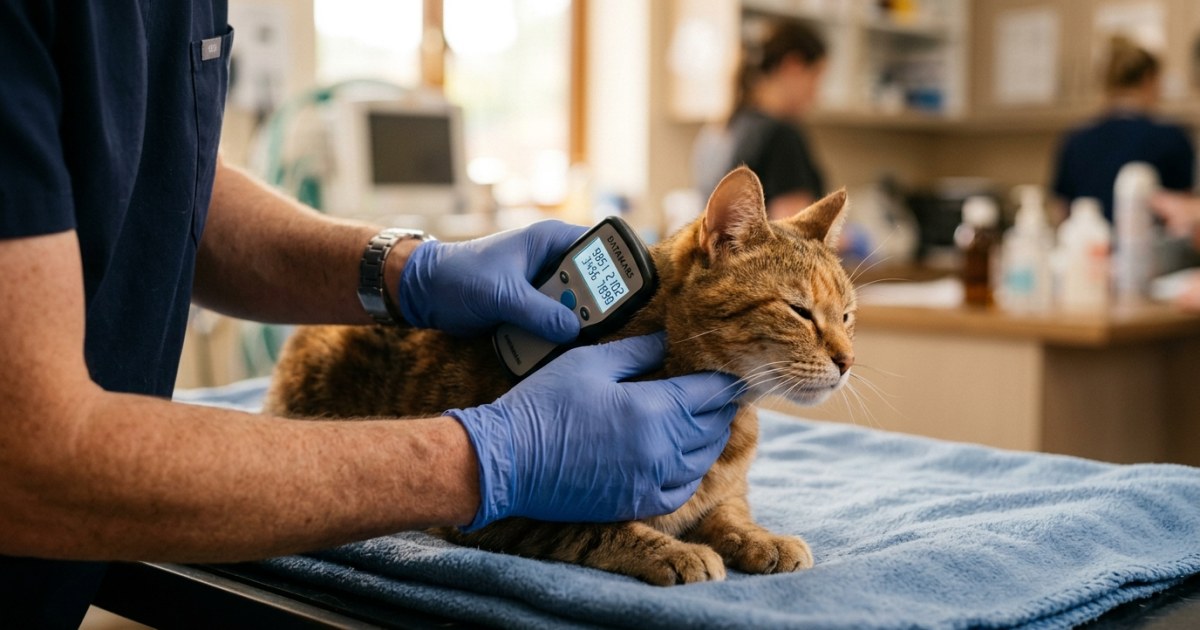
When it comes to international pet travel, the microchip isn't just a good idea for identification; it's a legal requirement. Specifically, most countries, including all member states of the European Union, the United Kingdom, and many others, mandate that your cat's microchip must comply with the International Organisation for Standardisation (ISO) standards 11784 and 11785. But what exactly does this mean, and why is it so critical?
What is ISO 11784/11785?
The ISO 11784 and 11785 standards define the technical specifications for pet microchips and the corresponding scanning devices. In simple terms, they ensure that a microchip implanted in one country can be read by a scanner in another. This interoperability is vital for international pet identification and, crucially, for verifying your cat's identity against their health certificates and vaccination records.
ISO 11784: This standard specifies the structure of the microchip's code. It dictates that the microchip must contain a 15-digit number, with the first three digits typically indicating the country code or the manufacturer's code, followed by a unique identification number for your pet. This 15-digit format is universally recognised by compliant scanners.
ISO 11785: This standard defines the technical requirements for the transponders (the microchips themselves) and the reading devices (scanners). It ensures that scanners can correctly read the data transmitted by an ISO-compliant microchip, regardless of the manufacturer.
Good to Know
The ISO standard uses a specific frequency (134.2 kHz) for communication between the microchip and the scanner. This standardised frequency is key to ensuring universal readability.
Why does it matter for your cat's travel?
The ISO standard is the backbone of international pet identification. Without it, border officials would have no reliable way to verify your cat's identity, which is a fundamental requirement for entry into most countries. A non-compliant microchip is essentially an unreadable microchip at the border, and an unreadable microchip means your cat cannot be identified. This can lead to serious complications, from immediate refusal of entry to lengthy quarantines, or even, in the worst-case scenario, re-exportation back to your country of origin. The stakes are incredibly high, making microchip compliance a non-negotiable aspect of your pre-travel preparations.
THE US MICROCHIP DILEMMA: AVID, HOMEAGAIN, AND THE ISO GAP
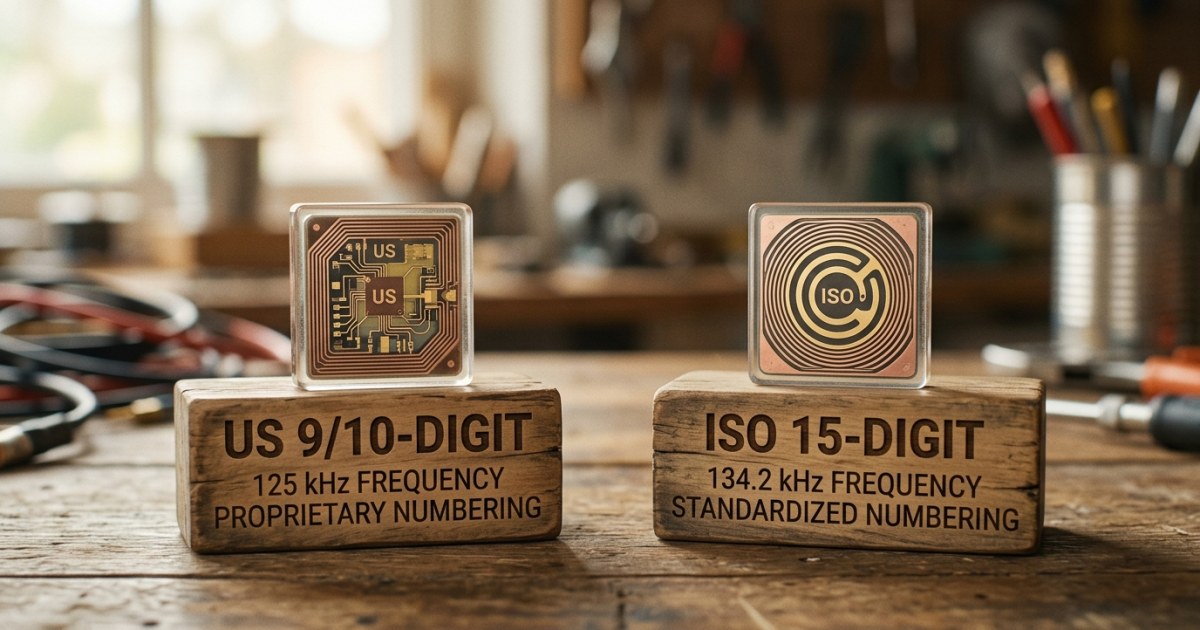
While microchipping is widespread in the United States, the historical adoption of different microchip standards has created a significant hurdle for US cat owners travelling abroad. Unlike many other parts of the world that adopted the ISO standard early on, the US market saw the proliferation of proprietary microchip systems that do not fully comply with ISO 11784/11785.
The Non-Compliant Chips: AVID and HomeAgain
The two most common non-compliant microchip types found in US cats are those from AVID (American Veterinary Identification Devices) and HomeAgain. While both are excellent for domestic identification and pet recovery within the US, their technical specifications differ from the ISO standard:
- AVID Chips: Many older AVID chips are 9-digit chips. These chips operate on a different frequency (125 kHz) and have a different numbering structure than the ISO 15-digit standard. Standard ISO scanners in Europe and the UK will not be able to read these chips.
- HomeAgain Chips: HomeAgain chips are typically 10-digit chips. Like AVID, they often operate on a different frequency (125 kHz) and do not conform to the 15-digit ISO numbering scheme. While some newer HomeAgain chips might be 'universal' or 'ISO-compatible,' many older ones are not, and relying on this without verification is a significant risk.
The ISO-Compliant 15-Digit Chips
In contrast, an ISO-compliant microchip will always be a 15-digit number. These chips operate on the universally recognised 134.2 kHz frequency and follow the specific numbering format required by ISO 11784. When you get a microchip implanted specifically for international travel, your vet should ensure it is an ISO 15-digit chip.
Pro Tip
Even if your cat's microchip is from a US company, it might still be ISO-compliant if it's a newer chip designed for international use. The key is the 15-digit number and the 134.2 kHz frequency. Always verify!
Why the US is Different
The reason for this discrepancy lies in the lack of a single, mandated microchip standard in the US for many years. Different manufacturers developed their own systems, and while efforts have been made to introduce universal scanners, the underlying chip technology often remains incompatible with international standards. This means that millions of perfectly functional US microchips are essentially 'invisible' to standard scanners outside of North America.
Warning
Do not assume your cat's microchip is ISO-compliant just because it was implanted by a vet. Many vets in the US still use non-ISO chips for domestic purposes. Always confirm the 15-digit ISO standard explicitly.
WHAT HAPPENS AT THE BORDER WHEN YOUR CAT'S CHIP FAILS TO SCAN?
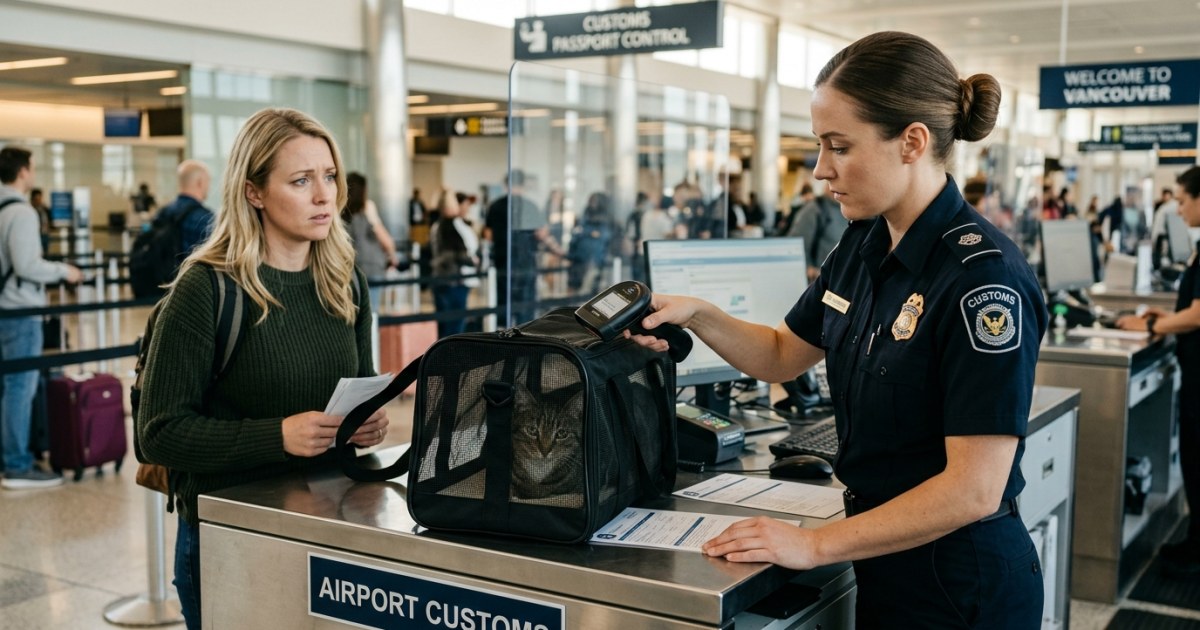
This is the scenario every international pet owner dreads: arriving at your destination country, exhausted from travel, only for a border official to inform you that your cat's microchip cannot be read. The consequences of a non-compliant or unreadable microchip can range from inconvenient delays to truly heartbreaking outcomes.
The Initial Check:
Upon arrival in the EU, UK, or other countries requiring ISO microchips, your cat will undergo a routine check by border officials. This involves scanning your cat for a microchip and verifying the number against their pet passport or official health certificate. This is the moment of truth.
If the Chip Fails to Scan: Immediate Problems
If the border official's standard ISO scanner cannot read your cat's microchip, your cat is, in the eyes of the law, unidentified. This immediately puts your travel plans in jeopardy. The specific actions taken by border authorities can vary depending on the country, the individual official, and the circumstances, but none of the options are pleasant:
- Refusal of Entry: This is a common outcome. Your cat will be denied entry into the country. You may be required to arrange for your cat to be immediately re-exported back to your country of origin at your own expense. This means an immediate, unplanned return journey for your cat, often without you.
- Quarantine: In some cases, authorities may allow your cat to enter but mandate a period of quarantine. This can be a lengthy and expensive process, with your cat housed in an approved quarantine facility for weeks or even months, completely separated from you. The cost of quarantine is entirely your responsibility and can run into thousands of pounds or euros.
- Emergency Microchip Implant (if available and permitted): In very rare circumstances, and only if deemed possible and legal by the specific border authority, an emergency ISO microchip might be implanted at the border. However, this is not a reliable solution and is often not an option. Furthermore, the timing of vaccinations relative to the new chip would be incorrect, potentially invalidating previous health certifications.
- Administrative Delays and Fines: Even if a solution is found, you will almost certainly face significant administrative delays, stress, and potentially hefty fines for non-compliance.
Potential Consequences of Non-Compliant Microchip
| Outcome | Description |
| Refusal of Entry | Cat denied entry and must be re-exported immediately, often at owner's expense. |
| Mandatory Quarantine | Cat placed in an approved quarantine facility for weeks/months, at significant owner cost. |
| Administrative Delays | Lengthy processing times at the border, causing stress and missed connections. |
| Fines & Penalties | Monetary penalties for failing to meet import requirements. |
| Emotional Distress | Significant stress and anxiety for both pet and owner. |
The key takeaway here is that you absolutely cannot risk arriving at the border with an unreadable microchip. The consequences are too severe and can completely derail your travel plans and cause immense distress to you and your cat.
HOW TO CHECK YOUR CAT'S MICROCHIP COMPLIANCE BEFORE TRAVEL
The good news is that verifying your cat's microchip compliance is a straightforward process that can be done well in advance of your travel date. This proactive step is one of the most important things you can do to prevent issues at the border.
Step 1: Locate Your Cat's Microchip Number
You should have received documentation with your cat's microchip number when it was implanted. This number is typically found on adoption papers, vet records, or registration certificates. If you can't find it, your vet can scan your cat and provide the number.
Step 2: Examine the Microchip Number for 15 Digits
The quickest initial check is to simply count the digits. An ISO-compliant microchip will always have 15 digits. If your cat's microchip number has 9 or 10 digits, it is almost certainly not ISO-compliant and will not be readable by standard international scanners.
Step 3: Confirm with Your Veterinarian
Even if the number is 15 digits, it's crucial to confirm with your veterinarian that the chip is indeed ISO 11784/11785 compliant and operates on the 134.2 kHz frequency. Ask your vet specifically: “Is my cat’s microchip an ISO 11784/11785 compliant 15-digit microchip that operates at 134.2 kHz?”
Pro Tip
Ask your vet to scan your cat's microchip with an ISO-compliant scanner and verify that it reads correctly. This provides an extra layer of assurance.
Step 4: Check Online Databases (with caution)
Some microchip registries allow you to enter your cat's microchip number to check its type. However, rely primarily on your vet's confirmation, as these databases may not always be up-to-date or explicitly state ISO compliance. The most reliable source of information is your veterinarian, especially one experienced in international pet travel.
Good to Know
The microchip number must be recorded on all official travel documents, including the EU pet health certificate or UK health certificate. Ensure the number on your documents exactly matches the number on your cat's chip.
By following these steps, you can confidently determine whether your cat's microchip meets the necessary international standards long before your departure date, giving you ample time to address any issues.
SOLUTIONS FOR A NON-COMPLIANT MICROCHIP: TWO OPTIONS
If you discover that your cat's existing microchip is not ISO-compliant, don't panic! You have two primary options to ensure your cat meets the requirements for international travel. One is highly recommended, and the other carries significant risks.
Option 1: Implant a Second, ISO-Compliant Microchip (Recommended)
This is by far the safest, simplest, and most widely accepted solution. Your veterinarian can implant a brand-new, ISO 11784/11785 compliant 15-digit microchip alongside your cat's existing non-compliant chip. It's perfectly safe for a cat to have two microchips.
- The Process: The procedure is quick, minimally invasive, and typically no more uncomfortable than a routine vaccination. The new chip is injected under the skin, usually between the shoulder blades.
- Documentation: Once the new ISO chip is implanted, this 15-digit number becomes the official identification for all your cat's international travel documentation, including their rabies vaccination certificate and the EU or UK health certificate. It's crucial that all subsequent veterinary procedures (especially rabies vaccination) are documented with this new ISO chip number.
- Timing: The ISO microchip must be implanted before or on the same day as your cat's rabies vaccination. If your cat has already had a rabies vaccination with the non-compliant chip, they will need to be re-vaccinated after the ISO chip is implanted to ensure the correct chip number is associated with the vaccination. This is a critical point for EU and UK entry.
Good to Know
Many countries require a waiting period (typically 21 days) after the primary rabies vaccination before your cat can travel. If you need to re-vaccinate due to a new ISO chip, this waiting period will reset.
Option 2: Bring Your Own Universal Microchip Scanner (Risky)
Some countries' regulations state that if your cat's microchip is not ISO-compliant, you must bring your own scanner that can read it. While this might seem like a viable workaround, it comes with significant risks and is generally not recommended by CatAbroad.com.
- The Risk of Scanner Failure: Scanners can malfunction, run out of battery, or simply fail to read a chip for various reasons. If your personal scanner fails at the border, you are back to square one with an unidentifiable cat.
- Border Official Discretion: Even if your scanner works, border officials may not be familiar with it, or they may simply refuse to use it. They are primarily trained to use their own standard ISO scanners. Relying on their willingness to use your equipment is a gamble.
- Logistical Burden: You would be responsible for purchasing, maintaining, and carrying a dedicated scanner throughout your journey, adding another layer of complexity to already stressful travel.
- Not Universally Accepted: While some regulations mention this option, it is often a theoretical allowance rather than a practical, smoothly functioning process. Many officials will simply not entertain it.
Warning
Relying on bringing your own scanner is a high-risk strategy. The potential for refusal of entry or quarantine far outweighs the minor inconvenience and cost of implanting a second, compliant microchip.
For peace of mind and guaranteed compliance, implanting a second ISO-compliant microchip is the unequivocally superior choice.
COST AND SIMPLICITY OF GETTING A COMPLIANT CHIP FITTED
One of the most reassuring aspects of addressing a non-compliant microchip is how simple and inexpensive the solution typically is. Many cat owners worry about complex procedures or exorbitant costs, but getting an ISO-compliant microchip fitted is generally a straightforward process.
The Procedure:
As mentioned, implanting a microchip is a very quick and minimally invasive procedure. It involves a single injection, similar to a vaccination, usually performed during a routine vet visit. Most cats tolerate it extremely well, experiencing only a momentary pinch. There's no need for anaesthesia or extensive recovery time.
The Cost:
The cost of implanting an ISO-compliant microchip in the US typically ranges from $25 to $75. This is a one-time fee and represents a very small investment when compared to the overall cost of international travel, let alone the potential financial and emotional cost of border complications. Consider it an essential part of your travel budget, akin to a passport fee.
Estimated Cost of ISO Microchip (US)
| Item | Estimated Cost Range |
| Microchip Implant | $25 - $75 |
| Vet Consultation (if separate) | $50 - $100 |
| Total (approx.) | $25 - $175 |
Why it's a Small Price for Peace of Mind:
When you weigh this modest cost against the potential expenses of quarantine (hundreds or thousands of dollars/euros), re-exportation (hundreds or thousands of dollars/euros for airfare), or the emotional toll of separation and uncertainty, the decision to get a compliant chip is a clear one. It's an investment in your cat's safety, your peace of mind, and the smooth execution of your international travel plans.
Don't let the fear of an unknown process deter you. Speak to your vet, explain your international travel plans, and they will guide you through the simple steps to ensure your cat is properly chipped for their journey abroad.
ISO MICROCHIP REQUIREMENTS FOR EU, UK, AND OTHER DESTINATIONS
The ISO microchip standard is not just a suggestion; it's a fundamental legal requirement for entry into many popular international destinations. Understanding where and why it applies will help you navigate the specific regulations for your chosen destination.
European Union (EU) Entry:
All 27 member states of the European Union strictly adhere to the ISO 11784/11785 microchip standard. For your cat to enter any EU country from the US, they must have an ISO-compliant 15-digit microchip. This microchip must be implanted before or at the time of their rabies vaccination. The microchip number will be recorded on their EU pet health certificate, which is a mandatory document for entry. Failure to meet this microchip requirement will result in refusal of entry, quarantine, or re-exportation.
United Kingdom (UK) Entry:
The UK also mandates an ISO 11784/11785 compliant microchip for all cats entering from the US. Similar to the EU, the microchip must be implanted before or at the time of the rabies vaccination. The 15-digit microchip number will be a key identifier on their official UK health certificate. The UK's pet travel scheme is rigorous, and non-compliance with the microchip standard is a common reason for entry issues.
Other International Destinations:
Beyond the EU and UK, many other countries around the world have adopted the ISO microchip standard as a requirement for pet imports. These often include:
- Australia
- New Zealand
- Japan
- Singapore
- United Arab Emirates (UAE)
- Many countries in South America and Asia
Pro Tip
Always check the specific pet import requirements for your exact destination country well in advance. While many follow the ISO standard, there might be additional unique requirements.
The universal adoption of the ISO standard by these countries underscores its importance in facilitating safe and verifiable international pet travel. It's the global language of pet identification, and ensuring your cat speaks it is paramount for a smooth journey.
PRE-TRAVEL CHECKLIST: MICROCHIP VERIFICATION AND DOCUMENTATION
Preparing for international cat travel involves a multitude of steps, and microchip compliance is at the very top of the list. Use this comprehensive checklist to ensure you've covered all bases related to your cat's microchip before you even think about booking flights.
📋 Microchip & Documentation Pre-Travel Checklist
- ☐Verify Microchip Type: Confirm your cat's microchip is a 15-digit ISO 11784/11785 compliant chip (134.2 kHz frequency).
- ☐Vet Confirmation: Have your veterinarian scan the chip and confirm its readability and ISO compliance.
- ☐Second Chip Implanted (if needed): If non-compliant, arrange for an ISO-compliant 15-digit chip to be implanted.
- ☐Rabies Vaccination Timing: Ensure the ISO microchip was implanted BEFORE or ON THE SAME DAY as the current rabies vaccination. If not, re-vaccinate.
- ☐Rabies Vaccination Waiting Period: Account for the mandatory waiting period (e.g., 21 days for EU/UK) after the primary rabies vaccination (or re-vaccination).
- ☐Official Health Certificate: Ensure the correct 15-digit ISO microchip number is accurately recorded on your cat's official EU or UK health certificate.
- ☐All Other Documentation: Double-check that the microchip number matches across all other relevant documents (e.g., rabies certificate, vet records, import permits).
- ☐Vet Sign-Off: Ensure your USDA-accredited veterinarian has signed off on all necessary sections of the health certificate, including microchip verification.
- ☐USDA Endorsement: Confirm that your health certificate will be endorsed by the USDA within the required timeframe (typically 10 days before travel).
- ☐Emergency Contact: Ensure your microchip registration is up-to-date with your current contact information, including international numbers if applicable.
By diligently working through this checklist, you'll significantly reduce the risk of microchip-related issues and ensure a much smoother journey for your cat and yourself.
PEACE OF MIND: THE SIMPLE FIX FOR MOST CATS
It's easy to feel overwhelmed when faced with complex international travel regulations, especially when your beloved cat's well-being is at stake. However, when it comes to the microchip dilemma, the most important thing to remember is that for the vast majority of US cats, the fix is incredibly simple and inexpensive.
The danger isn't that your cat has an unfixable problem; the danger is simply not knowing about the ISO standard until you're standing at a European border, facing potential refusal of entry or quarantine. By reading this guide, you've already taken the most crucial step: becoming informed.
Don't Procrastinate, Don't Guess:
The key to a stress-free journey is early preparation. As soon as you begin contemplating international travel or relocation with your cat, make checking their microchip compliance a top priority. Don't guess, don't assume, and don't put it off until the last minute.
A Small Step for a Big Journey:
Getting a second, ISO-compliant microchip implanted is a minor procedure with a minimal cost, but it provides immense peace of mind. It ensures that your cat's identity is universally readable, their vaccinations are correctly linked, and their entry into your destination country is as smooth as possible. This small step is a foundational element of responsible international pet travel.
Pro Tip
Start your pet travel preparations at least 6 months in advance, especially if you anticipate needing a new microchip and subsequent re-vaccination, to allow for all waiting periods.
At CatAbroad.com, our goal is to empower you with the knowledge to make your international journey with your cat a success. The microchip requirement, while often overlooked by US owners, is one of the most straightforward hurdles to overcome. With a little planning and a quick vet visit, you can ensure your feline companion is ready for their grand adventure abroad.
Frequently Asked Questions
Why won't my US cat's microchip work in Europe?
Many US cat microchips are older 9-digit AVID or 10-digit HomeAgain chips that do not meet the ISO 11784/11785 standard, which requires a 15-digit chip operating at 134.2 kHz. European scanners are designed to read only ISO-compliant chips.
What is an ISO compliant microchip for cats?
An ISO compliant microchip is a 15-digit microchip that adheres to ISO standards 11784 and 11785, operating at a frequency of 134.2 kHz. This standard ensures universal readability by scanners worldwide, crucial for international pet travel.
What happens if my cat's microchip can't be read at the border?
If your cat's microchip cannot be read at a European or UK border, your cat may be refused entry, placed in mandatory quarantine at your expense, or even re-exported to your country of origin. This can lead to significant stress, delays, and costs.
How can I check if my cat's microchip is ISO compliant?
First, check if your cat's microchip number is 15 digits. Then, ask your veterinarian to confirm that it is an ISO 11784/11785 compliant chip operating at 134.2 kHz. They can also scan it with an ISO-compliant scanner to verify readability.
Can my cat have two microchips?
Yes, it is perfectly safe for a cat to have two microchips. If your existing chip is not ISO-compliant, your veterinarian can implant a second, ISO-compliant 15-digit chip alongside the first. The new ISO chip number will be used for all international travel documentation.
Does the microchip need to be implanted before rabies vaccination?
Yes, for entry into the EU and UK, the ISO-compliant microchip must be implanted before or on the same day as your cat's primary rabies vaccination. If you implant a new ISO chip after a previous rabies shot, your cat will need to be re-vaccinated.
How much does an ISO microchip cost for a cat?
The cost of implanting an ISO-compliant microchip in the US typically ranges from $25 to $75. This is a small, one-time investment compared to the potential costs and stress of border issues.
Is bringing my own microchip scanner a good idea for international travel?
No, bringing your own scanner is a high-risk strategy. Scanners can fail, and border officials may refuse to use your equipment. It's much safer and more reliable to implant a second, ISO-compliant microchip to ensure universal readability.