
If you're planning to travel internationally with your cat from the United States, one document sits at the very centre of the process: the export health certificate. Without it — correctly completed, signed by an accredited vet, and endorsed by the USDA — your cat simply will not be allowed to board or enter your destination country. This guide walks you through every step of the process, from understanding what an export health certificate actually is to getting it endorsed in time for your flight.
WHAT IS A CAT EXPORT HEALTH CERTIFICATE AND WHY DO YOU NEED ONE?
An export health certificate (EHC) is an official veterinary document that certifies your cat is healthy, free from specified diseases, and meets all the entry requirements of the country you are travelling to. It is issued by a USDA-accredited veterinarian and, critically, must then be endorsed — essentially countersigned and authenticated — by the United States Department of Agriculture (USDA) Animal and Plant Health Inspection Service (APHIS) before it is considered valid for international travel.
The certificate serves two key purposes. First, it protects the destination country's animal population from the introduction of disease. Second, it gives border control and customs officials at your destination a standardised, government-verified document they can trust. Attempting to enter almost any country with nothing more than a domestic vet wellness record will result in your cat being denied entry or placed into quarantine at your expense.
Good to Know
The USDA APHIS endorsement is what distinguishes an export health certificate from an ordinary veterinary health certificate. The APHIS stamp and signature confirms to foreign governments that the issuing vet is officially accredited and that the document is genuine.
It is worth being clear about what an EHC is not. It is not the same as a pet passport (which is a concept used in the EU and UK for resident pets travelling between member countries). It is not a microchip record, a vaccination card, or an import permit. All of those may also be required — but separately. The EHC is its own distinct document, and it needs to be treated as such in your planning timeline.
FINDING A USDA-ACCREDITED VETERINARIAN FOR YOUR CAT'S HEALTH CERTIFICATE
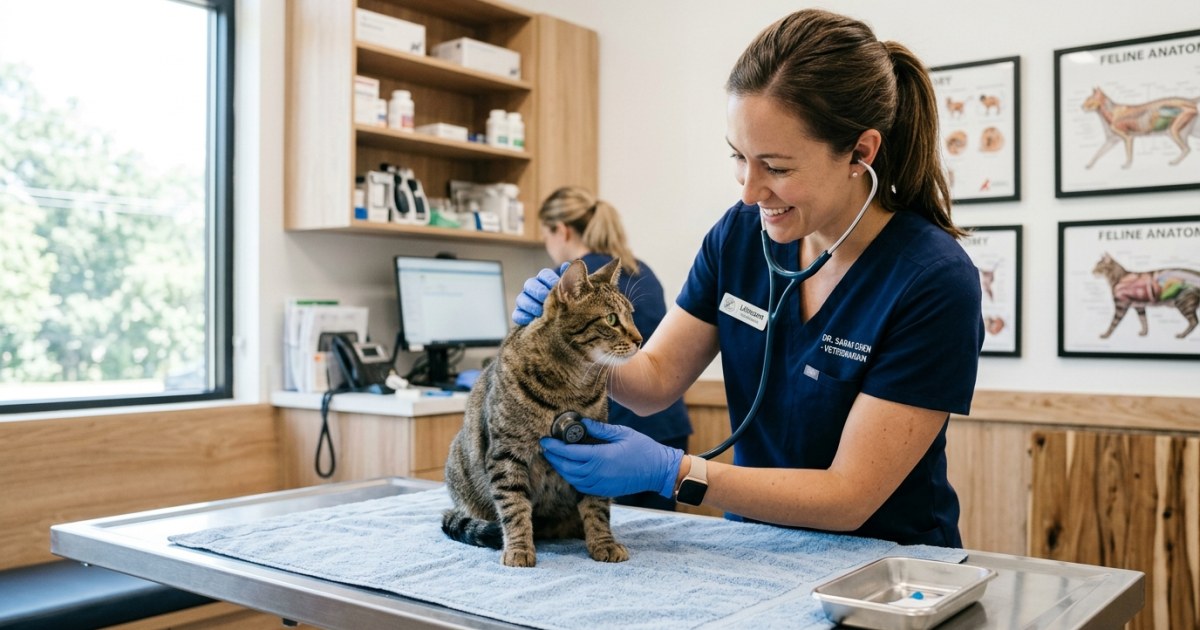
Not every licensed veterinarian in the United States can issue an export health certificate. The vet must hold USDA accreditation — a specific federal certification that allows them to issue official health documents for international travel. Many vets in urban areas and near major airports hold this accreditation, but it is not universal, so you should not assume your regular vet qualifies.
How to find an accredited vet: The USDA APHIS website provides a searchable directory of accredited veterinarians by state. You can access this at the USDA APHIS Veterinary Accreditation portal. Search by your zip code or county, and always call ahead to confirm the vet has current experience with export health certificates for cats specifically — the paperwork and destination-specific requirements can be complex, and you want someone who does this regularly.
Pro Tip
Ask any prospective vet how many international cat health certificates they have completed in the past six months, and specifically whether they have experience with your destination country. Requirements vary significantly — a vet who routinely does certificates for Canada may not be fully up to date on the requirements for Japan or Australia.
What the vet examination involves: Your accredited vet will conduct a full physical examination of your cat to confirm they are healthy and fit to travel. They will verify microchip details, review vaccination records (particularly rabies), check for any signs of communicable disease, and complete the country-specific health certificate form. This appointment typically takes 30–60 minutes and should never be rushed.
State vs federal forms: Some destinations accept a standardised USDA form (such as APHIS Form 7001 — the generic small animal health certificate), while others require their own country-specific form to be completed. Your vet needs to use the correct form for your destination, or the USDA will not endorse it and the destination country will not accept it. This is one of the most common — and costly — mistakes travellers make.
HOW THE USDA APHIS ENDORSEMENT PROCESS WORKS
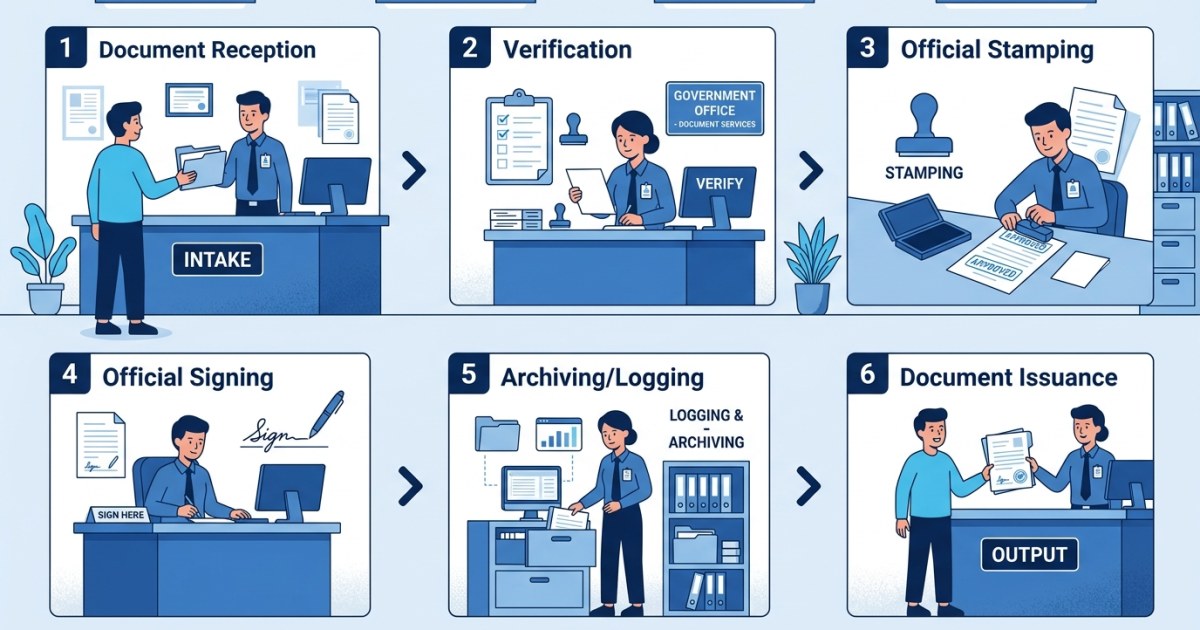
Once your accredited vet has completed and signed the health certificate, you cannot use it yet. It must be submitted to your regional USDA APHIS Veterinary Services office for endorsement. This is the step where the USDA verifies the vet's accreditation, checks the document for completeness and accuracy, and then stamps and signs it to make it officially recognised by foreign governments.
Finding your USDA APHIS office: APHIS has a network of Veterinary Services offices across the country, each serving specific states. You must submit to the correct regional office — submitting to the wrong one will cause delays. The USDA APHIS website has a state-by-state directory of endorsement offices with contact information and submission instructions.
USDA APHIS Endorsement — Key Facts
| Who endorses | USDA APHIS Veterinary Services regional office |
| Typical processing time | 1–3 business days (in-person or by courier); allow more for postal submissions |
| Cost | Typically $38 USD per certificate (fees may be updated — verify with your office) |
| Submission methods | In person, by post, or via authorised courier service |
| What to submit | Completed vet-signed health certificate, any supporting documents required by destination country, USDA endorsement fee |
| Return of documents | Include a pre-paid return envelope or courier label if submitting by post |
In-person endorsement: If you live near a USDA APHIS office, attending in person is the fastest option and allows you to resolve any issues on the spot. Some offices offer same-day endorsement for in-person submissions, though you should call ahead to confirm availability and whether an appointment is required.
Courier and postal submissions: If you are not near an office, you can send documents by overnight courier. Always use a tracked, insured service and include a pre-paid return label. Factor in at least 2–4 business days for a round-trip courier submission, plus processing time.
Warning
Never send original vaccination records or microchip documentation to the USDA. Only send the documents specifically requested for endorsement. Keep certified copies of everything for your own records and to carry with you when travelling.
TIMING YOUR VET APPOINTMENT AND UNDERSTANDING CERTIFICATE VALIDITY WINDOWS

Timing is arguably the trickiest part of the entire export health certificate process, and it is where the majority of travellers come unstuck. Different destination countries have different validity windows — meaning the certificate must be issued (and sometimes endorsed) within a specific number of days before your cat's arrival. Getting the timing wrong can render a perfectly completed certificate invalid.
Common validity windows by destination type: Many countries, including most EU member states and the UK, require the health certificate to be completed within 10 days of travel. Some countries, such as Japan, have extremely specific and stringent timelines that begin months before travel (related to rabies titre testing waiting periods, not the certificate itself). Others, like Canada, are more flexible. Always check the specific requirements for your destination country directly with the relevant embassy, official government importation authority, or through USDA APHIS country-specific guidance.
Pro Tip
Work backwards from your travel date. If your destination requires the certificate to be issued within 10 days of arrival, and USDA endorsement takes 2–3 business days, your vet appointment needs to happen no earlier than 7 days before travel — and no later than about 5 days before, to leave time for endorsement and return of documents.
Building your timeline: A safe working timeline for most destinations looks something like this — confirm all destination requirements 8–12 weeks before travel, ensure rabies vaccinations and any titre tests are up to date well in advance, book your USDA-accredited vet appointment 7–10 days before departure (destination-dependent), submit documents to USDA APHIS immediately after the vet appointment, and collect or receive endorsed documents at least 2 days before your flight.
📋 Pre-Travel Health Certificate Timeline Checklist
- ☐Research destination country's official import requirements (8–12 weeks before travel)
- ☐Confirm your cat's microchip is ISO 11784/11785 compliant (15-digit)
- ☐Ensure rabies vaccination is current and administered by an accredited vet
- ☐Complete any required rabies titre testing if required by destination (and observe waiting periods)
- ☐Locate and contact a USDA-accredited vet experienced with your destination
- ☐Confirm which health certificate form is required (APHIS 7001 or country-specific form)
- ☐Book vet appointment within the certificate validity window for your destination
- ☐Submit completed certificate to USDA APHIS for endorsement immediately after vet appointment
- ☐Receive endorsed certificate and check all details are correct before travel
- ☐Make multiple certified copies — carry originals and keep digital backups
HOW REQUIREMENTS DIFFER BY DESTINATION COUNTRY
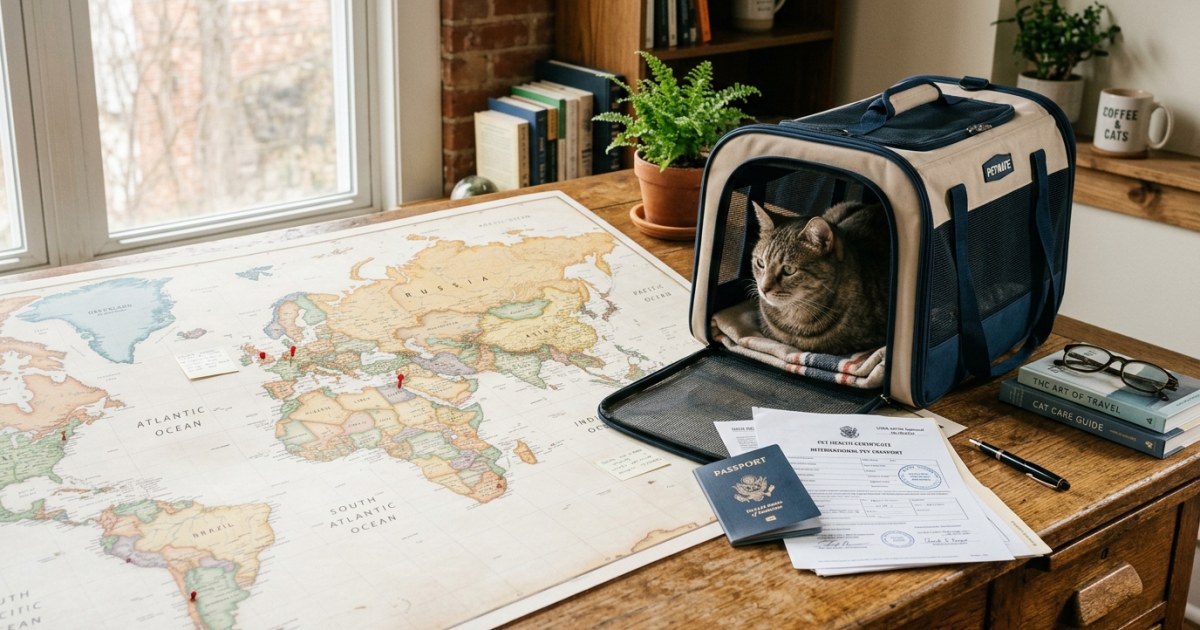
One of the most important things to understand about export health certificates is that they are not a one-size-fits-all document. What satisfies the requirements for entering Canada will look quite different from what is required to enter the United Kingdom, the European Union, Australia, or Japan. The certificate is always the backbone of the process, but the supporting requirements, the specific form used, and the timing windows vary enormously.
Canada: Canada is one of the more straightforward destinations for US cat owners. Cats must have a valid rabies vaccination certificate, and in most cases a simple statement from a licensed vet confirming the cat is healthy is sufficient. The USDA APHIS endorsement requirement is less stringent for Canada than for many other destinations, though it is still advisable. Always verify current requirements with the Canadian Food Inspection Agency (CFIA) before travel.
European Union: EU countries require an official health certificate issued by an official (accredited) veterinarian and endorsed by a government authority — in the US, that is the USDA. The EU has its own required certificate format for animals entering from third countries. Your cat must also be microchipped, have a valid rabies vaccination, and the certificate must be completed within 10 days of travel. Some EU countries may have additional requirements.
United Kingdom: Post-Brexit, the UK has its own import rules separate from the EU. Cats entering the UK from the US must be microchipped, have a valid rabies vaccination, and since the US is not a listed country for the UK's pet travel scheme in the same way that listed countries are, requirements are more involved. You should check the UK Government's official guidance on bringing pets into Great Britain for the most current requirements, as these have evolved since Brexit.
Warning
Australia and New Zealand have some of the strictest biosecurity requirements in the world. Cats entering these countries face mandatory quarantine periods (currently a minimum of 10 days in Australia), extensive pre-travel health protocols, and very specific approved pathway requirements. Begin planning at least 6 months — ideally 12 months — in advance for these destinations.
Japan: Japan is another notoriously rigorous destination. Cats must be microchipped, have two rabies vaccinations at a specific interval, pass a rabies titre test showing adequate antibody levels, wait 180 days after the titre test before entering, and arrive via an approved route. The health certificate is just one part of a multi-step, months-long process. Start planning well over a year in advance if possible.
Good to Know
The USDA APHIS website maintains a country-specific information section for pet travel that is regularly updated. This should always be your first port of call when researching requirements, alongside the official government importation authority of your destination country.
MICROCHIPPING, VACCINATIONS, AND OTHER SUPPORTING DOCUMENTS YOUR CAT NEEDS
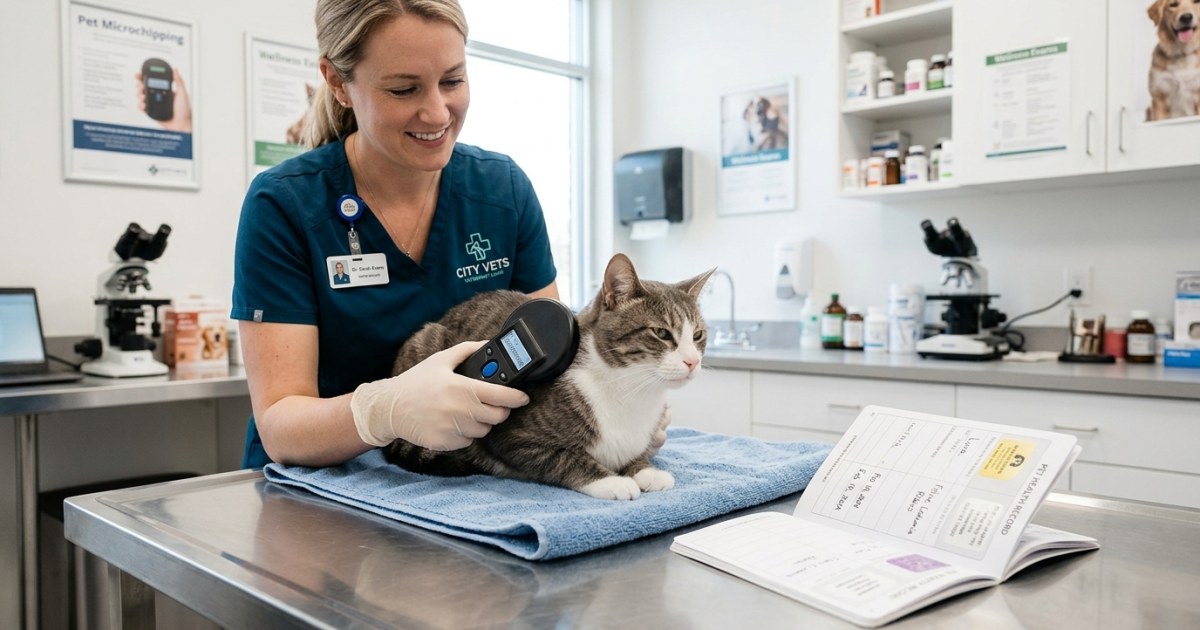
The export health certificate does not stand alone. It sits within a broader set of documentation and preparation that must all be in order before your cat can travel internationally. Think of the EHC as the document that ties everything together — but the underlying requirements (microchip, vaccinations, titre tests) must be in place first.
Microchipping: Virtually every country in the world now requires cats to be microchipped before entry, and the microchip must conform to ISO standard 11784/11785, meaning it is a 15-digit chip. Many older US microchips are 9 or 10-digit chips and may not be readable by international scanners. If your cat has an older chip, speak to your vet about whether a second, ISO-compliant chip is needed. The microchip number must appear on the health certificate, and the chip must be verifiable at the port of entry.
Rabies vaccination: A current rabies vaccination is required for almost every international destination. The vaccination must be administered by a licensed veterinarian (who should also be the accredited vet completing your EHC, or the records must be clearly documented and transferable). Pay attention to whether the destination requires the vaccine to be given after the microchip was implanted — some countries will not accept a rabies vaccination that was administered before the cat was chipped, as there is then no guaranteed link between the vaccination record and the animal.
Common Supporting Documents for International Cat Travel
| Microchip certificate | Confirms ISO-compliant chip number and implantation date |
| Rabies vaccination record | Signed by a licensed vet; must show vaccine brand, batch number, and expiry |
| Rabies titre test result | Required for high-biosecurity countries such as Japan, Australia, and New Zealand |
| Internal parasite treatment | Required by some countries within a specific window before entry |
| Tapeworm treatment | Required for entry into the UK and some other destinations |
| Import permit | Required by some countries — must be obtained in advance from destination government |
| Airline health certificate | Some airlines require their own form in addition to the official EHC |
Rabies titre testing: For countries with the highest biosecurity standards, a rabies titre test (also called an RNATT — Rabies Neutralising Antibody Titre Test) is required. This blood test confirms your cat has a sufficient level of rabies antibodies. The test must be performed by an approved laboratory, and the waiting period after the test is often counted as part of the qualification timeline — not something you can rush. In Australia and Japan, for example, there is a mandatory 180-day wait from an acceptable titre test result before the cat can enter.
Pro Tip
Keep a dedicated travel folder (physical and digital) for your cat with certified copies of every document — microchip certificate, vaccination records, titre test results, import permit, and the endorsed health certificate. Having duplicates saved to cloud storage has saved many travellers when originals are misplaced or questioned at the border.
COMMON MISTAKES US CAT OWNERS MAKE WITH EXPORT HEALTH CERTIFICATES
Even the most well-prepared cat owners can fall foul of the export health certificate process. The paperwork is detailed, the timelines are tight, and the consequences of errors — a rejected certificate, a missed flight, or a cat placed in quarantine — are significant. Understanding the most common pitfalls is the best way to avoid them.
Using the wrong form: This is the single most frequent error. Some owners (and even some vets) use the generic APHIS Form 7001 when the destination country requires its own specific form, or vice versa. Always research the required form for your destination country before your vet appointment — do not leave this to chance or assumption.
Booking the vet appointment too early: If you book your vet appointment too far in advance of travel, the certificate may expire before your cat even boards the plane. A certificate issued 15 days before departure is worthless if your destination requires it to be issued within 10 days of arrival. Know your window and stick to it precisely.
Forgetting to allow time for USDA endorsement: Many travellers book their vet appointment correctly within the validity window, then discover that adding USDA endorsement processing time pushes them out of compliance. Always factor in endorsement time as part of your validity window calculation, not as time after it.
Warning
Any correction, amendment, or white-out on a health certificate — even a minor one — will result in rejection by the USDA and by the destination country's border control. If there is an error on the certificate, your vet must issue a completely new document. There are no shortcuts here.
Relying on out-of-date information: Country import requirements change. A blog post from two years ago, advice from a friend who travelled three years ago, or even information from an airline's website may be out of date. Always verify requirements directly with the USDA APHIS website and the official government animal importation authority of your destination country — and do so close to your travel date, not just during initial planning.
Not confirming airline requirements separately: Your export health certificate satisfies the importing country's government requirements, but your airline may have additional health documentation requirements of their own. These are entirely separate. Always check with your airline's pet travel department directly — and do so early, as policies can vary significantly and some airlines have breed restrictions, carrier size requirements, and temperature embargoes that are completely independent of government import rules.
USDA APHIS RESOURCES AND PROFESSIONAL HELP FOR COMPLEX CASES
Navigating the export health certificate process for the first time can feel overwhelming, but the good news is that there are excellent official resources available — and for complex or high-stakes travel, professional pet relocation services can take the entire process off your hands.
USDA APHIS Pet Travel website: The USDA APHIS Pet Travel section (available at aphis.usda.gov/pet-travel) is the authoritative source for all US export requirements and country-specific guidance. It includes downloadable forms, a directory of accredited veterinarians, a directory of APHIS endorsement offices, and country-specific information sheets. Bookmark this page and check it regularly in the lead-up to travel.
APHIS Veterinary Services helpline: USDA APHIS operates a customer support line staffed by people who can answer specific questions about endorsement requirements, form selection, and processing timelines. If you are unsure about anything, calling them directly is far more reliable than searching online forums.
Good to Know
For moves to countries with complex entry requirements — Japan, Australia, New Zealand, Singapore, and similar destinations — many cat owners use accredited pet relocation companies. These specialists manage the entire documentation process, coordinate with vets and USDA offices, and liaise with the destination country's authorities on your behalf. The cost is often worth it for peace of mind on a high-stakes move.
Professional pet relocation services: Companies accredited by the International Pet and Animal Transportation Association (IPATA) specialise in managing international pet moves. They know destination-specific requirements intimately, maintain relationships with USDA-accredited vets and APHIS offices, and can often navigate issues that would take an individual traveller days to resolve. For permanent relocations or countries with multi-step entry protocols, they are worth serious consideration.
Embassy and consulate resources: For any destination country, the agricultural or consular section of their embassy in Washington DC is an authoritative source of current import requirements. Embassies can confirm exactly which forms are required, whether an import permit needs to be applied for in advance, and any recent changes to their country's animal import rules.
📋 Final Pre-Departure Document Check
- ☐USDA APHIS-endorsed health certificate (original) — check all details are correct
- ☐Certified copies of health certificate (carry at least two additional copies)
- ☐Microchip certificate and documentation
- ☐Original vaccination records (including rabies certificate with batch number)
- ☐Rabies titre test results (if required by destination)
- ☐Import permit from destination country (if applicable)
- ☐Airline's own pet documentation (separate from government EHC)
- ☐Digital backups of all documents saved to cloud storage
- ☐Emergency contact details for destination country's border animal control authority
Frequently Asked Questions
How long does it take to get a cat export health certificate in the US?
The vet appointment itself typically takes 30–60 minutes, but the full process — including USDA APHIS endorsement — usually takes 4–7 business days from vet visit to receiving endorsed documents. If you are using postal submission to the USDA, allow up to 10 business days to be safe. Always work backwards from your travel date to calculate when to book your vet appointment.
How much does a USDA-endorsed cat health certificate cost?
You will pay both a vet fee and a USDA endorsement fee. Vet fees vary but typically range from $75–$200 USD for the examination and certificate completion. The USDA APHIS endorsement fee is currently around $38 USD per certificate, though this is subject to change — always verify the current fee with your regional USDA APHIS office before submitting.
Can any vet write a cat export health certificate in the US?
No — only a USDA-accredited veterinarian can issue an export health certificate that is eligible for USDA APHIS endorsement. A certificate signed by a non-accredited vet will not be endorsed by the USDA and will not be accepted by your destination country. Use the USDA APHIS website's veterinarian search tool to find an accredited vet in your area.
What is the difference between a health certificate and a pet passport for cats?
A pet passport is a standardised document used within the EU and UK that records a pet's microchip, vaccination, and health history and allows ongoing travel between participating countries. An export health certificate is a one-time document issued for a specific journey, completed by an accredited vet and endorsed by the USDA, confirming the animal is healthy and meets the destination country's entry requirements. The US does not issue EU-style pet passports.
How long is a USDA-endorsed cat health certificate valid?
Validity depends on the destination country's requirements, not a universal rule. Many countries require the certificate to be completed within 10 days of arrival (meaning the vet examination date falls within 10 days of the cat entering the country). Some countries have different windows. Always check the specific validity requirements for your destination and plan your vet appointment accordingly.
Does my cat need a health certificate to travel to Canada from the US?
Canada requires cats to have a valid rabies vaccination certificate, and a vet-signed health certificate is strongly recommended. Requirements are generally less complex than for many other international destinations, but they are not non-existent. You should verify current requirements with the Canadian Food Inspection Agency (CFIA) before travel, as requirements can change.
What happens if my cat's health certificate has an error on it?
Any error, amendment, correction fluid, or unauthorised alteration on a health certificate will cause it to be rejected by the USDA APHIS and by border control at your destination. If there is an error — no matter how minor — your vet must issue a completely new certificate. There is no facility to correct or amend the original, so it is worth carefully reviewing the completed document with your vet before leaving the clinic.
Do I need an import permit as well as a health certificate for my cat?
It depends on the destination country. Some countries require an import permit that must be applied for and approved in advance before your cat can enter — this is separate from and in addition to the export health certificate. Australia, New Zealand, and Japan, among others, have pre-approval import processes. Research your specific destination early, as obtaining an import permit can take weeks or months.