
Only 40% of pet cats visit a veterinarian each year — compared to 82% of dogs — despite cats being equally or more susceptible to chronic, painful, and progressive diseases. That gap, highlighted in Hill's Pet Nutrition's landmark 2025 World of the Cat Report, is one of the most consequential statistics in feline health: millions of cats living with undiagnosed dental disease, kidney failure, obesity, and pain, largely because their owners don't realise anything is wrong.
Cats evolved to hide illness. What looks like aloofness or independence is often stoicism in the face of significant physical suffering. The data bears this out: by age three, the majority of cats already have measurable dental disease. By age ten, one in three will have chronic kidney disease. And yet vet visit rates are declining, not rising — falling 3.1% in 2025 alone as veterinary costs continued to outpace general inflation.
This article aggregates the most current available data on cat health from peer-reviewed research, veterinary association surveys, insurance claim databases, and industry reports.
Data compiled from 14+ primary sources including AVMA, Hill's Pet Nutrition, RVC VetCompass, Morris Animal Foundation, Vetsource, and peer-reviewed journals.- Only 40% of cats visit a vet annually, versus 82% of dogs — despite comparable disease burden (Hill's World of the Cat Report, 2025)
- 28% of US cat owners spent nothing on veterinary care in the past year (AVMA, 2025)
- Top diagnosed conditions: dental disease (21%), obesity (11.6%), skin disorders (9.6%), bowel problems (8.5%) (RVC VetCompass, 2023)
- 41% of cats are overweight or obese — the single most prevalent preventable health issue in pet cats (UC Davis, 2021)
- 1 in 3 cats over age 10 will develop chronic kidney disease
- Vet service inflation ran at 8% in 2024 — 1.6× the national inflation rate
- Lifetime healthcare cost over 15 years now reaches up to $50,000 (Synchrony Financial, 2025)
- Cat vet visits fell 3.1% in 2025, continuing a four-year declining trend
- 80% of cats have periodontal disease by age three, yet dental care remains the most commonly deferred treatment
- Obese cats aged 8–12 face a 2.8× higher mortality risk than lean cats of the same age
The gap between cat and dog vet visit rates is one of the most persistent disparities in companion animal health. It reflects a complex mix of cat behaviour, owner perception, and the practical difficulty of getting cats to the vet — but the result is that millions of cats go years without professional health assessments.
| Statistic | Figure | Source | Year |
|---|---|---|---|
| Cat owners who visited a vet in the past year | 40% (Hill's) / 69.4% (AVMA) | Hill's / AVMA | 2025 |
| Dog owners who visited a vet in the past year | 82% | Hill's World of the Cat Report | 2025 |
| Cat owners with a regular vet but didn't visit | ~10% gap | AVMA | 2025 |
| Primary reason cats visited vet: routine checkup | 76.4% | AVMA | 2025 |
| Cat owners who spent $0 on vet care in past year | 28% | AVMA | 2025 |
| Top reason for skipping vet: "pet didn't get sick" | 35.1% | AVMA | 2025 |
| Top reason for skipping vet: cost | 16.4% | AVMA | 2025 |
| Time between vet visits vs 3 years prior | +48% (85.8 days avg) | Vetsource | 2025 |
| Wellness visit decline (2025) | −3.8% | Vetsource | 2026 |
| Owners who skipped needed vet care due to cost | >50% | AVMA | 2025 |
| Owners delaying or foregoing procedures | 46% | Encore Vet / AVMA | 2025 |
The two figures for annual vet visit rates (40% from Hill's, 69.4% from AVMA) reflect different methodologies: Hill's used a global survey approach while AVMA surveyed US pet owners directly. Both confirm the same directional story — cats receive significantly less professional healthcare than dogs, and the trend is worsening as costs rise.
Two major studies provide the most comprehensive picture of what cats are actually being diagnosed with: the RVC VetCompass study of over 1.25 million UK cats, and Hill's 2025 World of the Cat Report drawing on global data.
| Condition | Prevalence | Source | Notes |
|---|---|---|---|
| Dental/gum disease (all types) | 21.21% | RVC VetCompass | Most common condition group |
| Gum disease specifically | 15.23% | RVC VetCompass | Most common single diagnosis |
| Obesity | 11.58% | RVC VetCompass | Second most common single diagnosis |
| Skin disorders | 9.63% | RVC VetCompass | Third most common group |
| Bowel problems | 8.50% | RVC VetCompass | — |
| Parasite infestation | 6.30% | RVC VetCompass | — |
| Heart disease | 5.99% | RVC VetCompass | — |
| Flea infestation | 5.07% | RVC VetCompass | — |
| Heart murmur | 4.44% | RVC VetCompass | — |
| Average conditions per cat per year | 1 | RVC VetCompass | Higher in males and older cats |
Male cats had higher risk for periodontal disease, heart murmur, and obesity. Female cats had higher risk for hyperthyroidism and over-grooming. Age was a differentiating factor for 90% of the 30 most common conditions studied.
Obesity is the single most prevalent preventable health condition in domestic cats — a gateway to diabetes, kidney disease, joint problems, and significantly shortened lifespan.
2.8× higher mortality risk
| Statistic | Figure | Source | Year |
|---|---|---|---|
| Prevalence of overweight + obese cats (UC Davis) | 41.0% | UC Davis / PubMed | 2021 |
| Overweight cats specifically | 17.2% | UC Davis | 2021 |
| Obese cats specifically | 23.8% | UC Davis | 2021 |
| Reported prevalence range across populations | 11.5%–63.0% | ScienceDirect review | 2021 |
| Obesity prevalence in North America broadly | 30–35% | Multiple | 2024 |
| Cats aged 5–11 above ideal weight | ~50% | Multiple | 2024 |
| Increased mortality risk: obese cats aged 8–12 | 2.8× vs lean | Multiple studies | Various |
| Key risk factors | Neutering, male sex, indoor lifestyle, age 3–14, ad libitum feeding | Multiple | Various |
| Conditions associated with obesity | Diabetes, dental, orthopaedic, urinary, hepatic lipidosis | UC Davis | 2021 |
Owners who associate a rounded body shape with cuteness are more likely to have an overweight or obese cat. Beyond the well-documented links to diabetes and hepatic lipidosis, obese cats show reduced gut microbiome diversity, impaired immune function, and accelerated kidney disease progression — factors that collectively explain the 2.8× elevated mortality risk in middle-aged obese cats.
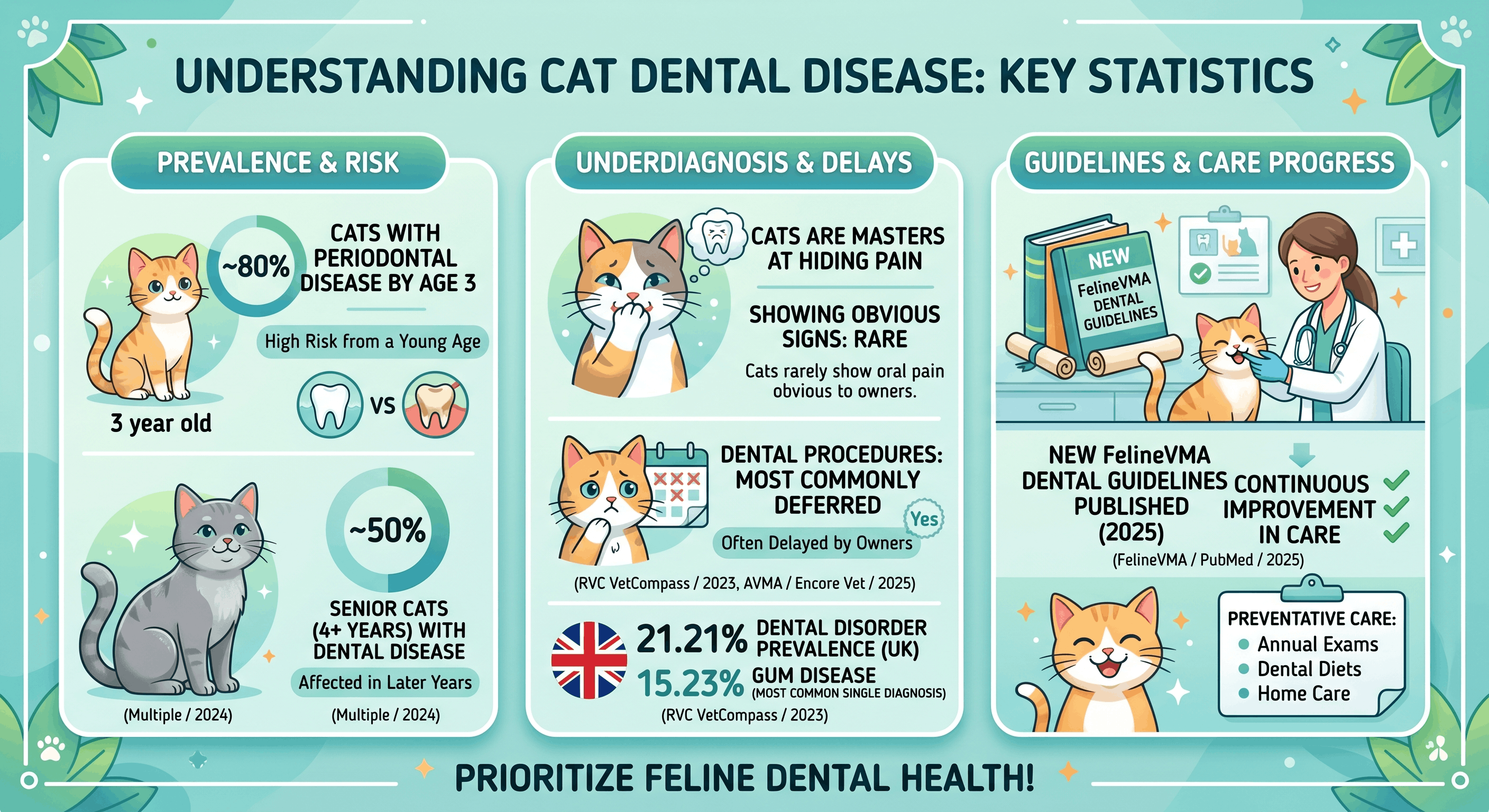
Dental disease is the most commonly diagnosed condition group in cats globally, yet it remains dramatically underdiagnosed because cats rarely show obvious signs of oral pain.
| Statistic | Figure | Source | Year |
|---|---|---|---|
| Cats with periodontal disease by age 3 | ~80% | Multiple | 2024 |
| Senior cats (4+ years) with dental disease | ~50% | Multiple | 2024 |
| Dental disorder group prevalence (UK cats) | 21.21% | RVC VetCompass | 2023 |
| Gum disease — most common single diagnosis | 15.23% | RVC VetCompass | 2023 |
| Dental procedures: most commonly deferred | Yes | AVMA / Encore Vet | 2025 |
| New FelineVMA dental guidelines published | 2025 | FelineVMA / PubMed | 2025 |
| Cats showing obvious signs of dental pain | Rare — cats hide pain | RVC / Multiple | 2023 |
Evolution has taught cats to hide signs of pain — making dental disease typically progress unchecked until severe. The 2025 FelineVMA oral health guidelines — the first comprehensive feline-specific dental guidelines — cover periodontal disease, early-onset gingivitis, tooth resorption, endodontic disease, feline chronic gingivostomatitis, and oral masses.
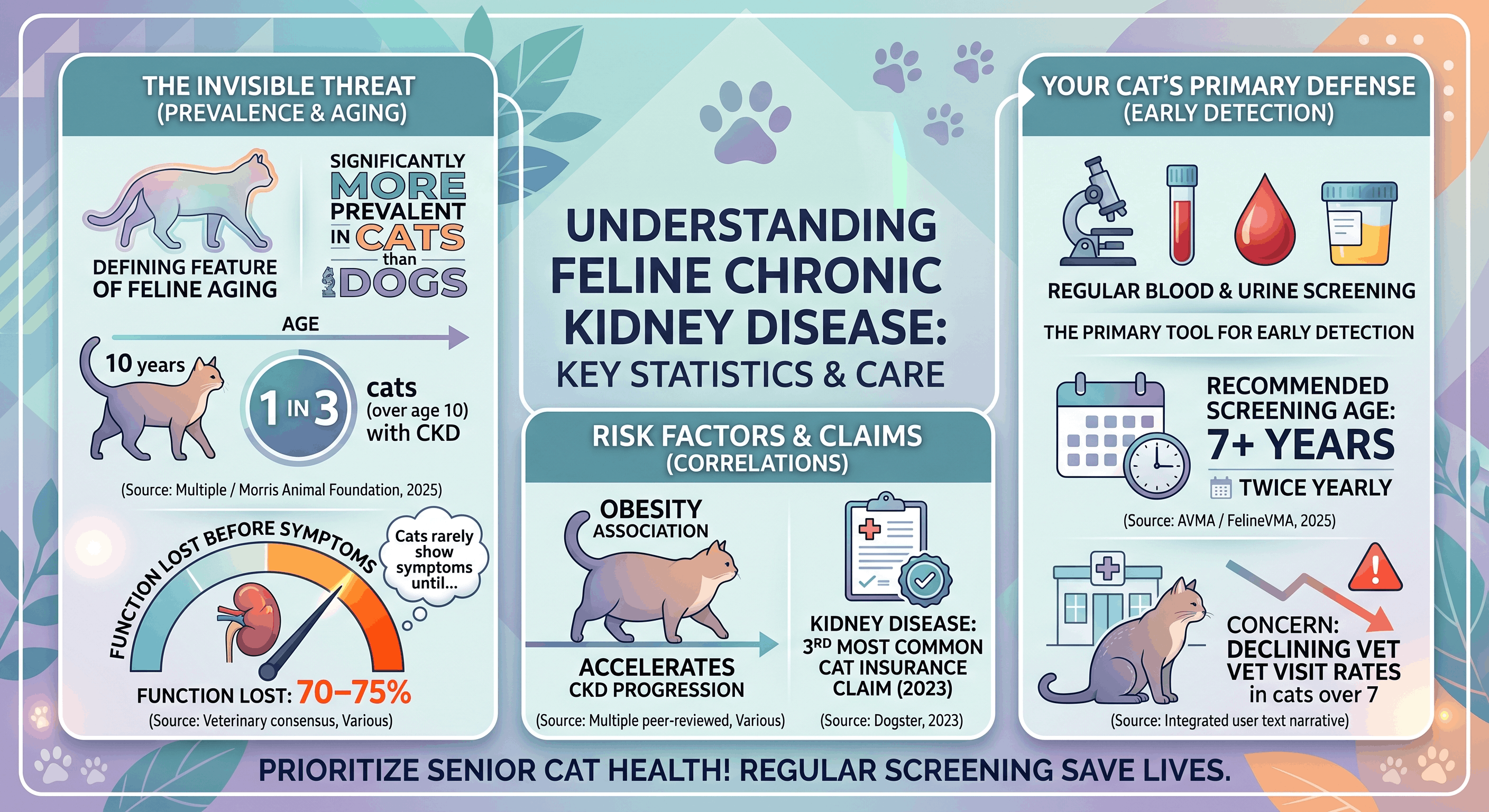
Chronic kidney disease (CKD) is one of the leading causes of death in older cats and is dramatically more prevalent in cats than in dogs — making it a defining feature of feline ageing.
| Statistic | Figure | Source | Year |
|---|---|---|---|
| Cats over age 10 with chronic kidney disease | 1 in 3 | Multiple / Morris Animal Foundation | 2025 |
| Kidney disease as top cat insurance claim (2023) | 3rd most common | Dogster | 2023 |
| Association with obesity | Yes — accelerates CKD progression | Multiple peer-reviewed | Various |
| Kidney function lost before symptoms appear | 70–75% | Veterinary consensus | Various |
| Recommended screening age | 7+ years, twice yearly | AVMA / FelineVMA | 2025 |
Cats rarely show symptoms until 70–75% of kidney function is already lost. Regular blood and urine screening in cats over 7 is the primary tool for early detection, yet vet visit rates in this age group are declining alongside overall trends.
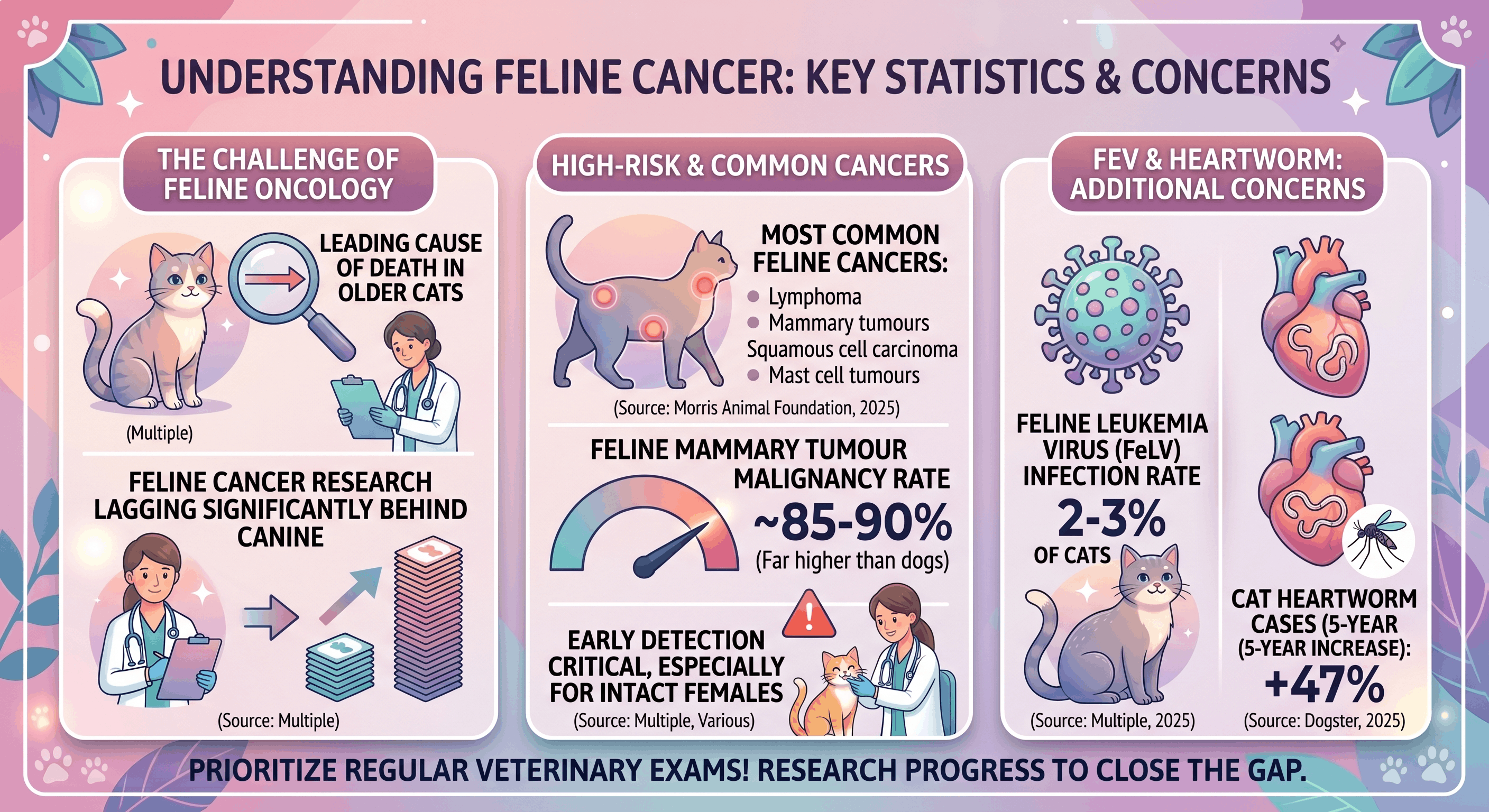
Cancer is a leading cause of death in older cats, with feline cancer research lagging significantly behind canine oncology — a gap researchers are actively working to close.
| Statistic | Figure | Source | Year |
|---|---|---|---|
| Most common feline cancers | Lymphoma, mammary tumours, squamous cell carcinoma, mast cell tumours | Morris Animal Foundation | 2025 |
| Feline mammary tumour malignancy rate | ~85–90% | Multiple | Various |
| Feline leukemia virus (FeLV) infection rate (US) | 2–3% of cats | Multiple | 2025 |
| Cat heartworm cases (5-year increase) | +47% | Dogster | 2025 |
Feline mammary tumours are malignant in approximately 85–90% of cases — far higher than the equivalent figure in dogs — making early detection through regular veterinary examination especially critical for intact females.
Rising veterinary costs are the primary driver of declining vet visit rates — and the gap between what cat healthcare actually costs and what owners expect to pay is widening every year.
| Statistic | Figure | Source | Year |
|---|---|---|---|
| Average annual vet spending (cat owners, US) | $529 | AVMA | 2025 |
| Average cost of last vet visit (2025) | $202 | AVMA | 2025 |
| Average cost of last vet visit (2024) | $147 | AVMA | 2024 |
| Routine vet visit cost (cats, avg) | $198 | APPA | 2025 |
| Surgical vet visit cost (cats, avg) | $232 | World Animal Foundation | 2025 |
| Vet service inflation rate (12 months to mid-2024) | 8% | Vetsource | 2024 |
| Vet inflation vs national inflation rate | 1.6× higher | Vetsource | 2024 |
| Lifetime cat healthcare cost (15 years) | Up to $50,000 | Synchrony Financial | 2025 |
| Pet owners who underestimate lifetime cost | ~80% | Synchrony Financial | 2025 |
| Owners facing anxiety over unexpected $250 expense | 25% | Dogster | 2025 |
The average cost of a single vet visit jumped from $147 in 2024 to $202 in 2025 — a 37% increase in a single year. Veterinary prices have been rising faster than general inflation consistently since the latter half of 2022.
The structural dynamics of the veterinary industry are changing rapidly, with direct implications for how and whether cats receive care.
| Trend | Stat / Detail | Source | Year |
|---|---|---|---|
| Annual vet visit decline (2025) | −3.1% | Vetsource | 2026 |
| Annual vet visit decline (2024) | −2.6% | Vetsource | 2025 |
| Annual vet visit decline (2023) | −1.4% | Vetsource | 2024 |
| Annual vet visit decline (2022) | −3.5% | Vetsource | 2023 |
| Practices reporting revenue increases despite declines | ~66% | Brakke Consulting | 2025 |
| Vet telehealth market size (2024) | $4.48 billion | Dogster | 2024 |
| Projected telehealth market | $8.99 billion (CAGR 19%) | Dogster | 2025 |
| Cat insurance growth (2019–2023) | +190% | NAPHIA / Dogster | 2024 |
| Cat owners using calming products | 53% | APPA | 2024 |
| Cat owners now training their cats | 48% (+41% since 2018) | APPA | 2024 |
Pet owners are deferring the optional, not abandoning the essential. Wellness and preventive visits are bearing the brunt of the pullback, while emergency and critical care are holding up better.
Feline cognitive dysfunction syndrome (FCDS) — the cat equivalent of dementia — is increasingly recognised as a significant welfare issue in ageing cats, and one of the most under-researched areas of feline medicine.
| Statistic | Figure | Source | Year |
|---|---|---|---|
| Osteoarthritis prevalence in senior cats | 90% | Multiple | 2025 |
| Kidney disease in cats over 10 | 1 in 3 | Multiple | Various |
| Hyperthyroidism risk in older cats | High — top age-related condition | RVC VetCompass | 2023 |
| FCDS research focus (2025) | Behaviour, blood biomarkers, brain tissue analysis | Morris Animal Foundation | 2025 |
| Pet ownership and human cognitive decline | Slower decline in exec function & episodic memory (18-year study) | Scientific Reports | 2025 |
New work at the University of Wisconsin-Madison is developing blood biomarker tests and brain imaging approaches for earlier FCDS diagnosis. The irony is notable: while cat ownership is associated with slower cognitive decline in human owners, cats themselves are increasingly affected by their own form of cognitive deterioration.
Dr. Susan Little, DVM, DABVP (Feline Practice) — "Cats are not small dogs. They have unique physiological and behavioural characteristics that affect how disease presents, how they respond to stress, and what kind of care they need. The single biggest thing we can do for cat health is get them seen more regularly — before problems become crises." (International Society of Feline Medicine, 2024)
Prof. Dan O'Neill, Royal Veterinary College VetCompass Programme — "Dental disease is the elephant in the room for cat health. It's the most common condition we see, it causes real suffering, and the majority of owners have no idea their cat is in pain — because cats simply don't show it the way dogs or humans do." (RVC VetCompass, 2023)
American Pet Products Association (APPA), 2025 National Pet Owners Survey — "The cat care category is undergoing a fundamental shift. Owners are investing in enrichment, training, and preventive health in ways we haven't seen before. The humanisation of cats is no longer a trend — it's the new baseline." (APPA, 2025)
Statistics were gathered from veterinary association surveys, peer-reviewed academic research, insurance industry data, and industry reports published primarily between 2023 and 2026. Where multiple sources give different figures, ranges or both figures are presented with attribution.
Data limitationsDisease prevalence figures vary between studies due to differing populations, methodologies, and geographic regions. Cat vet visit statistics from Hill's (40%) and AVMA (69.4%) use different sampling approaches and should be read as complementary rather than contradictory.
Primary sources- Hill's Pet Nutrition — 2025 World of the Cat Report — hillspet.com
- AVMA — 2025 Pet Ownership and Demographics Sourcebook — avma.org
- RVC VetCompass — The most common disorders in UK cats — rvc.ac.uk
- UC Davis School of Veterinary Medicine — Overweight and obesity in cats — PubMed PMID 34936906
- Vetsource — Behavior Shift: Implications of pet owner trends in 2025 — vetsource.com
- Brakke Consulting / AVMA — 2025 Veterinary Business and Economic Forum
- Morris Animal Foundation — Cat health research 2025 — morrisanimalfoundation.org
- Dogster — Pet Healthcare Statistics — dogster.com
- Synchrony Financial — Lifetime of Care Study 2025
- PMC / PubMed — Overweight and obesity in domestic cats — pmc.ncbi.nlm.nih.gov
- FelineVMA — 2025 Feline Oral Health and Dental Care Guidelines — PubMed PMID 41319038
- myvetcandy.com — Vet Visits Keep Falling — myvetcandy.com
- Encore Vet Group — 2025 In Review — encorevet.com
CatAbroad.com. (2026). Cat Health Statistics 2026: 65+ Data Points on Common Diseases, Vet Costs & Feline Wellbeing. CatAbroad.com. Retrieved [date], from [https://catabroad.com/blog/discover-cat-facts-from-these-recent-statistics/]