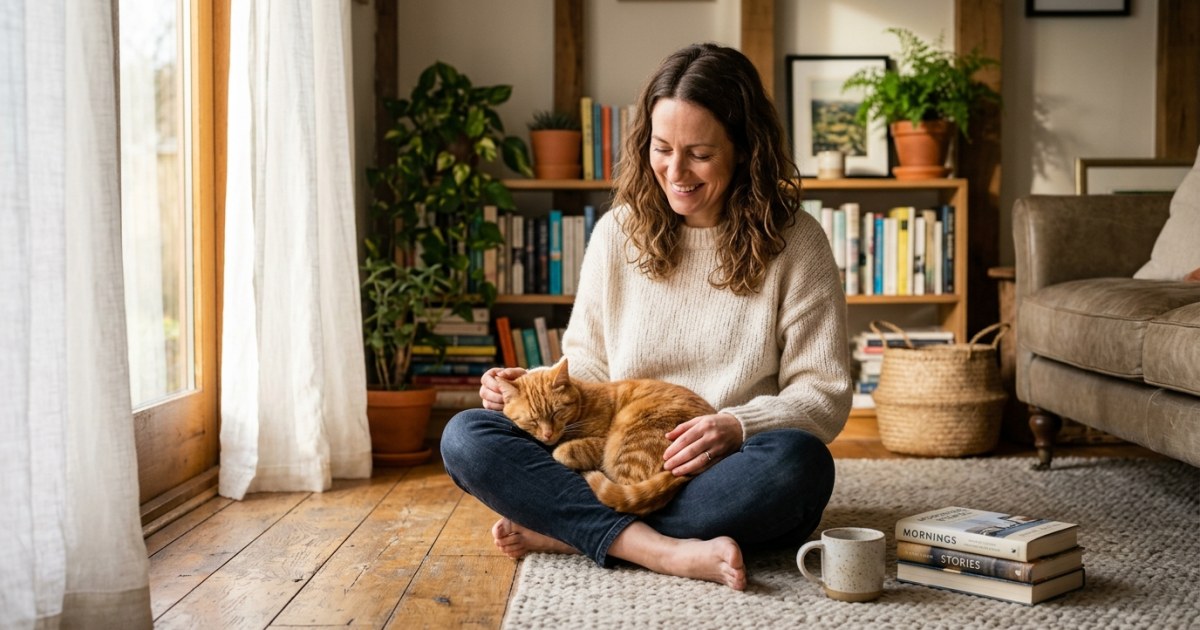
Most cat owners have long suspected what science is now beginning to confirm: sharing your life with a cat genuinely makes you happier. A new study from Metropolitan State University of Denver has added rigorous academic weight to what millions of pet lovers already feel in their bones — that the bond between humans and their animals is a meaningful contributor to everyday wellbeing. For cat owners in particular, the findings carry some fascinating implications for how we understand our cats, care for them, and even travel with them.
WHAT THE MSU DENVER STUDY ACTUALLY FOUND
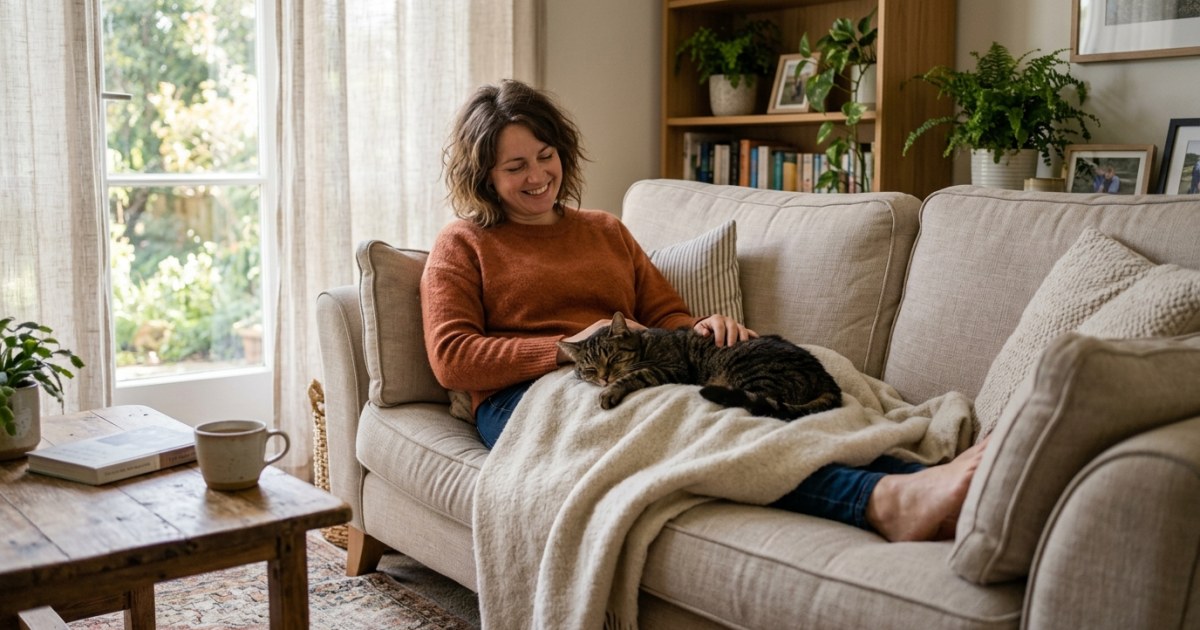
The research, published through Metropolitan State University of Denver's RED (Research, Engagement and Discovery) platform, set out to examine the relationship between pet ownership and self-reported levels of happiness in adults. The study surveyed a broad cross-section of pet owners and non-owners, asking participants to rate their subjective wellbeing, sense of purpose, and emotional satisfaction across a range of life domains.
The headline finding is striking but not entirely surprising: pet owners consistently reported higher levels of happiness and life satisfaction than their non-pet-owning counterparts. Crucially, the study didn't just measure a vague sense of contentment — it explored why pets appear to drive these improvements, pointing to factors including companionship, routine, physical touch, and a sense of being needed.
Good to Know
The MSU Denver study used self-reported wellbeing metrics, which is the gold standard in happiness research. Subjective wellbeing — how a person feels about their own life — is considered by psychologists to be one of the most reliable indicators of genuine quality of life.
The researchers also identified that the positive effect wasn't uniform across all pet types, though companion animals broadly — cats and dogs included — showed the strongest associations with elevated mood and reduced feelings of loneliness. The bond appears to be bidirectional: owners who felt their pet was attuned to them reported even greater wellbeing boosts, which is a finding that will resonate with anyone whose cat has ever appeared at precisely the right moment during a difficult day.
Study at a Glance
| Source Institution | Metropolitan State University of Denver (MSU Denver) |
| Published Via | MSU Denver RED (Research, Engagement and Discovery) |
| Key Finding | Pet owners report significantly higher happiness and life satisfaction |
| Core Mechanisms | Companionship, routine, physical touch, sense of purpose |
| Relevance to Cats | Companion animals including cats showed strong wellbeing associations |
WHY CATS IN PARTICULAR DESERVE A CLOSER LOOK
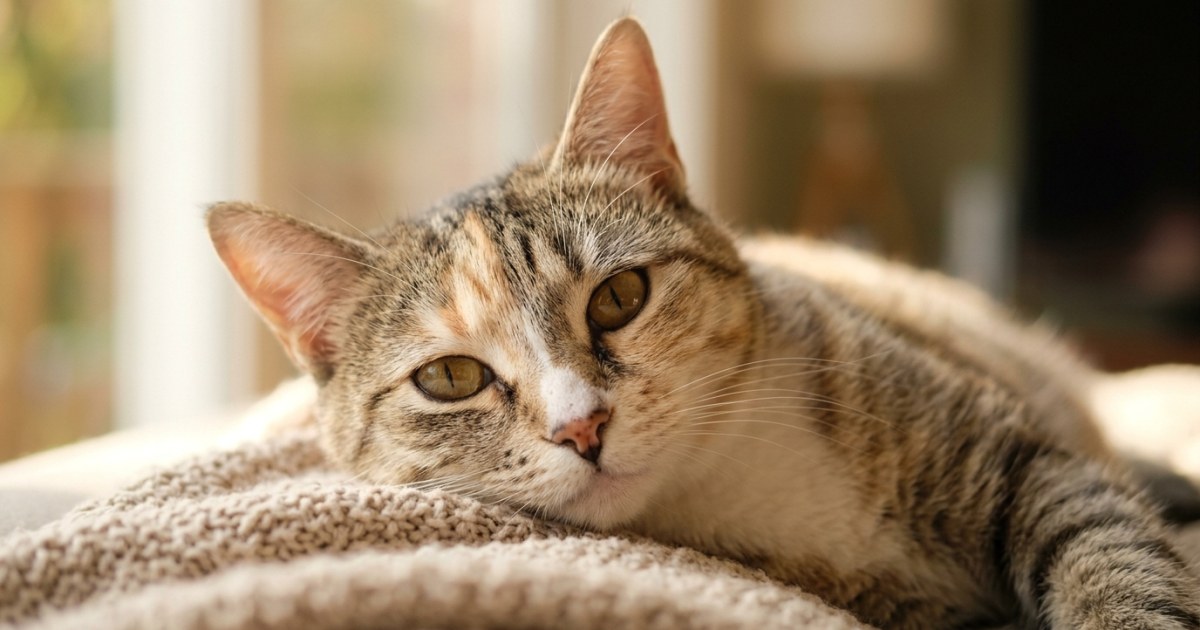
It would be easy to read this study and assume dogs are doing the heavy lifting — after all, they're walked, trained, and tend to demand visible affection in ways that feel more obviously mood-lifting. But the science around cats and human happiness is more nuanced, and arguably more interesting.
The purr is genuinely therapeutic. Cats purr at a frequency of between 25 and 150 Hz — a range that has been associated in multiple studies with reduced stress hormones, lower blood pressure, and even accelerated bone healing. When your cat curls up on your lap and vibrates contentedly, your nervous system is receiving a measurable physiological benefit. This isn't folk wisdom; it's biomechanics.
Cats reduce loneliness without demanding constant interaction. Unlike dogs, cats are largely independent — they don't require walks, they don't panic when left alone for a workday, and they don't need to be the centre of your social life. But they are present. That ambient companionship — knowing there's a living creature in the flat who occasionally chooses to sit near you — is, according to loneliness researchers, one of the most potent forms of social buffering available to people who live alone.
Pro Tip
If you live alone and travel frequently for work, research consistently suggests that simply having a cat at home — even when cared for by a sitter — can reduce baseline anxiety levels. The anticipation of returning home to a pet is itself a measurable mood booster.
The bond is earned, which makes it matter more. Cats are famously selective. They don't default to affection the way many dogs do — they grant it. Behaviourists increasingly argue that this means when a cat chooses to sit with you, groom you, or slow-blink in your direction, the human brain interprets it as genuine validation. The happiness hit from a cat's voluntary affection may actually be neurologically stronger than the equivalent from an animal that's always enthusiastic.
UNDERSTANDING YOUR CAT'S BEHAVIOUR THROUGH THE LENS OF MUTUAL WELLBEING

The MSU Denver findings aren't just useful for understanding ourselves — they offer a new lens through which to read our cats' behaviour. If the human-pet bond is genuinely bidirectional (and the study suggests it is), then your cat isn't simply a passive recipient of your care. They are an active participant in a mutual wellbeing relationship.
Slow blinking isn't just cute — it's communication. The slow blink that cats direct at trusted humans is now well-documented as a signal of relaxed contentment and social trust. A 2020 study published in Scientific Reports confirmed that humans who slow-blink back at cats are more likely to receive the gesture in return, and that cats approached unfamiliar humans more readily when those humans had slow-blinked at them. This is reciprocal emotional communication — exactly the kind of bidirectional bond the MSU Denver research highlights.
Kneading and proximity-seeking are signs of secure attachment. When your cat kneads your lap or consistently chooses to sleep near you, they are exhibiting behaviours associated with secure attachment — the same psychological framework used to describe healthy human relationships. Cats that display secure attachment are generally calmer, more adaptable, and less prone to stress-related illness. A happy cat, it turns out, is one that has a happy owner.
📋 Signs Your Cat Is Thriving in Your Bond
- ☐Slow-blinking at you from across the room
- ☐Greeting you at the door when you return home
- ☐Choosing to sleep in the same room (or on you)
- ☐Showing their belly (a significant trust signal in cats)
- ☐Head-butting or rubbing their scent on you
- ☐Chirping or trilling when they see you (distinct from demanding meows)
- ☐Eating and grooming normally — stress disrupts both
Stress in cats often mirrors stress in owners. This is one of the more remarkable findings in recent feline behaviour research: cats living with anxious or depressed owners show elevated cortisol levels and are more prone to stress-related health issues like overgrooming, feline idiopathic cystitis, and appetite changes. The happiness relationship truly does run both ways. Taking care of your own wellbeing is, in a very literal sense, an act of cat care.
WHAT THIS MEANS IF YOU TRAVEL WITH — OR AWAY FROM — YOUR CAT
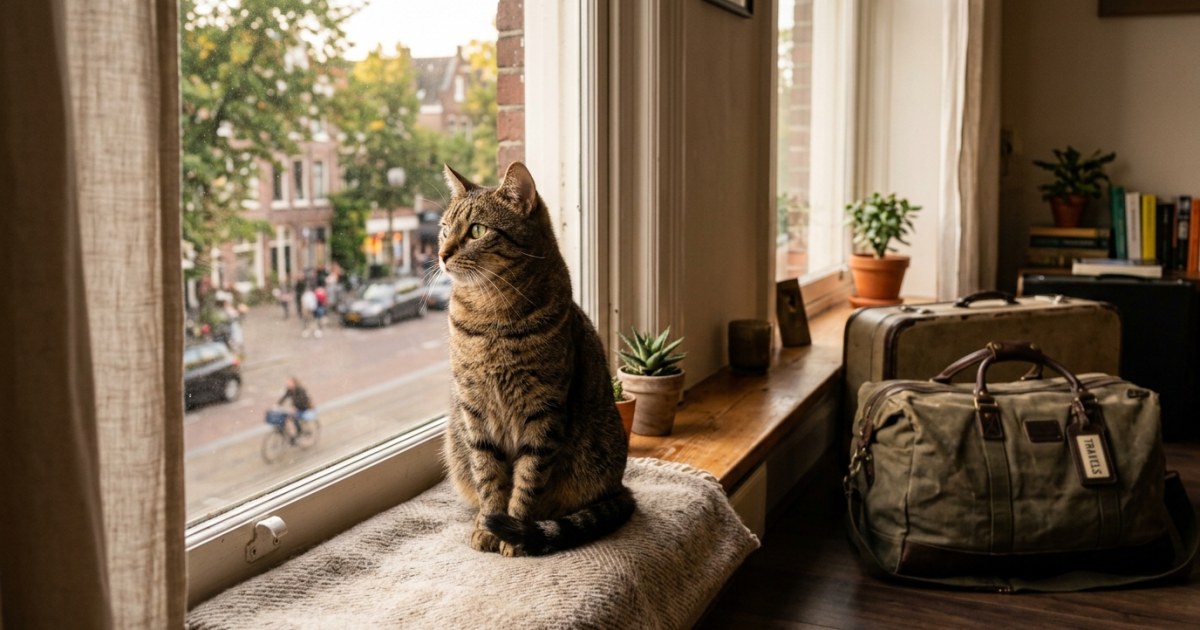
For the CatAbroad community, the MSU Denver research has particular relevance. Whether you're planning to relocate abroad with your cat, travel long-haul with them in cabin, or simply leave them in the care of a trusted sitter while you travel for work, understanding the depth of the human-cat bond changes how you should approach every aspect of those decisions.
Separation affects both of you. The study's finding that the bond is bidirectional should make every cat owner think carefully about the quality of care their cat receives during absences. A cat that is simply fed and watered but not engaged, spoken to, or given affection is likely to experience measurable stress — and that stress can manifest as health problems that are expensive to treat and distressing to witness on your return.
Warning
Never assume a cat will simply 'cope' with a fortnight in a basic cattery. For cats that are strongly bonded to their owners, institutional boarding without enrichment or regular human interaction can cause significant psychological stress. Always visit any cattery before booking, and ask specifically about individual playtime and handling.
Travelling with your cat isn't just logistically complex — it's emotionally significant. Many cat owners feel genuine guilt about international relocation because they worry the upheaval will damage their cat's quality of life. The MSU Denver research offers a reassuring counter-perspective: the bond between you and your cat is itself a source of resilience. Cats that are securely attached to their owners adapt to new environments more readily when those owners are present and calm. Your presence is, quite literally, their anchor.
Pro Tip
When settling into a new home abroad with your cat, prioritise re-establishing familiar routines as quickly as possible — feeding times, play sessions, sleep locations. Routine is the fastest route to a cat feeling safe in a new environment, and a settled cat will help regulate your own stress levels during the adjustment period.
The happiness dividend of travelling with your cat is real. For expats and long-term travellers who bring their cats with them rather than rehoming them, the emotional benefit extends far beyond sentimentality. Having your cat with you in a foreign country — especially if you're navigating culture shock, language barriers, or professional pressure — provides exactly the kind of ambient companionship and routine that the MSU Denver study identifies as central to pet-related happiness. Your cat isn't just baggage. They're infrastructure for your wellbeing.
📋 Pre-Travel Wellbeing Checklist for You and Your Cat
- ☐Book a vet check-up at least 10 weeks before travel to allow time for any required treatments or documentation
- ☐Begin carrier training early — a cat that is comfortable in their carrier is a less stressed traveller
- ☐Use Feliway or similar feline pheromone products in the carrier and new home to ease the transition
- ☐Pack familiar items — a favourite blanket, a well-used toy — that carry your scent and theirs
- ☐Research a local vet in your destination before you arrive, not after a problem develops
- ☐Give yourself and your cat a dedicated 'settling in' period without heavy social commitments or further disruption
THE BIGGER PICTURE: LOOKING AFTER YOURSELF IS LOOKING AFTER YOUR CAT
Perhaps the most quietly radical implication of the MSU Denver study is what it suggests about the responsibilities of pet ownership. We tend to think of care as flowing in one direction — from human to animal. But if the bond is genuinely bidirectional, and if your emotional state demonstrably affects your cat's wellbeing, then self-care stops being a luxury and starts being a duty of ownership.
This reframing matters for cat owners who travel, relocate, or juggle high-pressure lives. The guilt many cat owners feel about absences, changes of environment, or lifestyle disruptions is often counterproductive — it generates exactly the kind of low-level chronic stress that transmits to cats. Understanding that your own happiness is part of the equation allows you to approach these challenges more constructively.
Good to Know
Research from the University of Lincoln has shown that cats form genuine attachment bonds with their owners — not just with the location or food source. This means that a cat relocated abroad with a calm, settled owner is likely to adapt better than a cat remaining in a familiar home with an anxious carer.
The MSU Denver study is, at its heart, a reminder that the relationship between humans and companion animals is one of the more profound and underappreciated features of modern life. For cat owners — particularly those navigating the logistics of international travel or expatriate relocation — it offers both validation and practical guidance. Your cat makes you happier. You make your cat happier. The work of keeping that bond strong, across borders, time zones, and bureaucratic hurdles, is work that pays dividends for both of you.
At CatAbroad, that's precisely the philosophy we're built on. The science is simply catching up.
Frequently Asked Questions
Do cats actually make you happier according to science?
Yes — multiple studies, including the new MSU Denver research, confirm that cat owners report significantly higher levels of happiness and life satisfaction than non-owners. The mechanisms include companionship, routine, physical touch, and the sense of purpose that comes from caring for another living creature.
Is the bond between cats and owners bidirectional?
Research increasingly suggests yes. Cats living with stressed or unhappy owners show elevated cortisol levels and are more prone to stress-related health conditions. Conversely, owners who feel their cat is attuned to them report greater wellbeing benefits from the relationship.
Can cats sense when their owner is sad or anxious?
Yes — cats are sensitive to changes in their owner's body language, scent, vocal tone, and routine. Studies show cats alter their own behaviour in response to owner emotional states, and some research suggests they actively seek proximity to owners who are distressed, which many owners interpret as comfort-seeking or offering.
Does travelling with a cat damage the human-cat bond?
Not if managed well. Cats that are securely bonded to their owners tend to adapt to new environments more readily when those owners are present and emotionally calm. The bond itself is a source of resilience for the cat during disruption, making owner presence one of the most important factors in a successful relocation.
How can I tell if my cat is happy and thriving?
Key indicators include voluntary proximity-seeking, slow-blinking at you, normal eating and grooming, vocalising in soft chirps or trills (rather than demanding yowls), and showing relaxed body language such as an upright tail with a curved tip or an exposed belly. Any significant change in behaviour or routine warrants a vet check.
Does leaving a cat behind when travelling cause them distress?
It depends on the cat and the quality of care provided. Strongly bonded cats may show signs of stress during owner absences, including reduced appetite, overgrooming, or hiding. High-quality in-home cat sitting — with human interaction and play, not just feeding — is generally preferable to boarding for cats with secure owner attachments.
Why do cats purr and is it actually good for human health?
Cats purr primarily as a self-soothing mechanism and as a communication signal to trusted individuals. The frequency range (25–150 Hz) has been associated in research with reduced human stress hormone levels, lower blood pressure, and even potential bone-healing properties, making it one of the more remarkable incidental health benefits of cat ownership.
Do expats who bring their cats abroad adjust better than those who don't?
While large-scale studies on this specific question are limited, the broader research on pet ownership and psychological resilience strongly suggests that the companionship, routine, and emotional grounding provided by a cat can be a significant buffer against the culture shock, loneliness, and anxiety that many expats experience in the early months abroad.
Originally reported by MSU Denver RED.