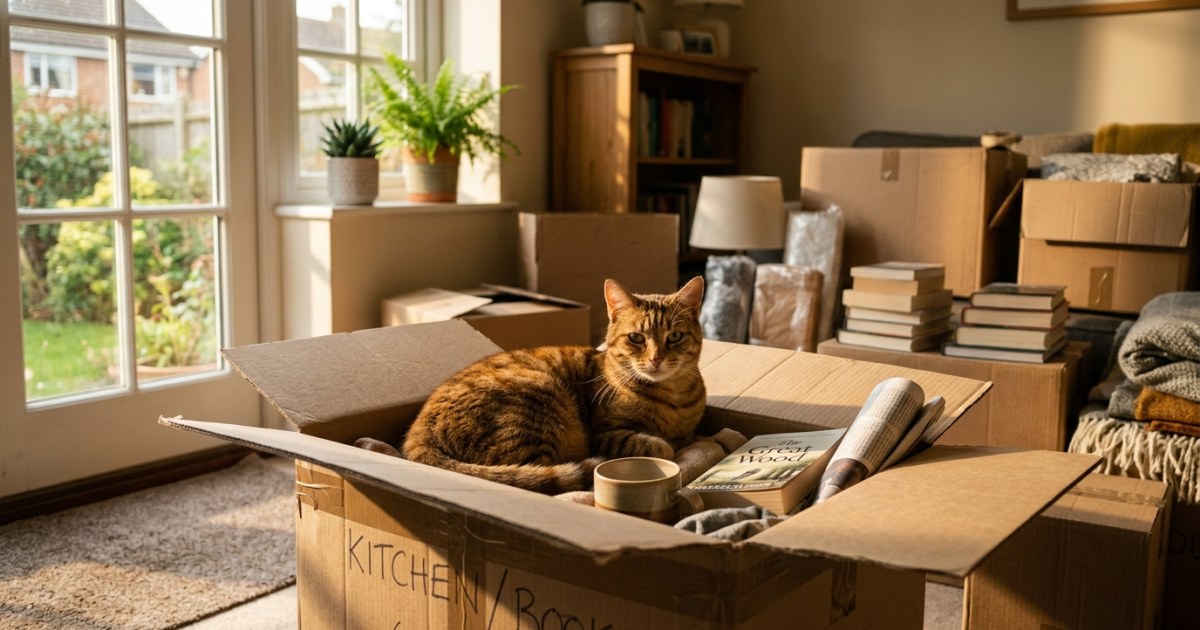
Moving house is one of the most stressful life events for humans — but for cats, who are deeply territorial creatures governed by scent and routine, it can be genuinely overwhelming. The good news is that with the right preparation, a thoughtful moving-day strategy, and a patient settling-in period, the vast majority of cats adapt beautifully to a new home. This guide walks you through every stage of the process, from the weeks before the move to the months after, so both you and your cat can arrive feeling as calm as possible.
WHY MOVING IS SO STRESSFUL FOR CATS (AND WHAT YOU CAN DO ABOUT IT)
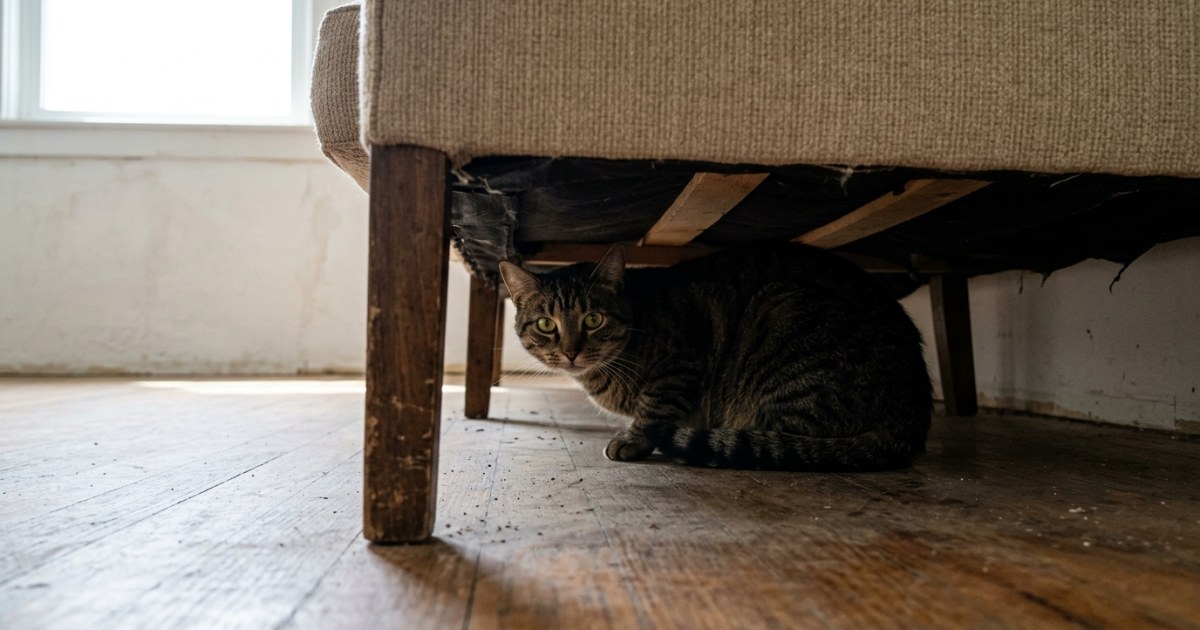
Unlike dogs, who tend to bond most strongly with their people, cats form an equally powerful bond with their territory. Their home range is rich with their own scent markings — on furniture, doorframes, carpets, and walls — and those chemical signals are what make a cat feel safe. When you uproot all of that and transport them somewhere completely unfamiliar, it's the feline equivalent of waking up in a stranger's house with no phone and no map.
The stress response in cats can manifest in many ways: hiding for days, refusing to eat, over-grooming, inappropriate toileting, or becoming uncharacteristically vocal or aggressive. Understanding that these behaviours are a normal fear response — rather than bad behaviour — helps you respond with patience rather than frustration. The goal of everything in this guide is to minimise the number of unknowns your cat has to process at once, and to rebuild their sense of security as quickly as possible.
Good to Know
Cats use scent glands on their cheeks, chin, paws, and flanks to mark their territory. When they rub against your legs or furniture, they're saying "this is mine and it's safe." Bringing familiar-smelling items into the new home gives them a head start on feeling secure.
Preparation is everything: The single biggest factor that determines how smoothly a cat adjusts is how well their owner has prepared. Cats who are moved with minimal preparation in chaotic, noisy conditions take significantly longer to settle than those whose owners have spent even a week thinking ahead. Every section of this guide builds on that foundation.
WHAT TO DO IN THE WEEKS BEFORE YOUR MOVE
The preparation phase begins at least two to four weeks before moving day — ideally longer if you have an anxious cat or if this is a long-distance relocation. This window gives you time to acclimatise your cat to their carrier, start using calming products, and make small changes to their routine without everything happening at once.
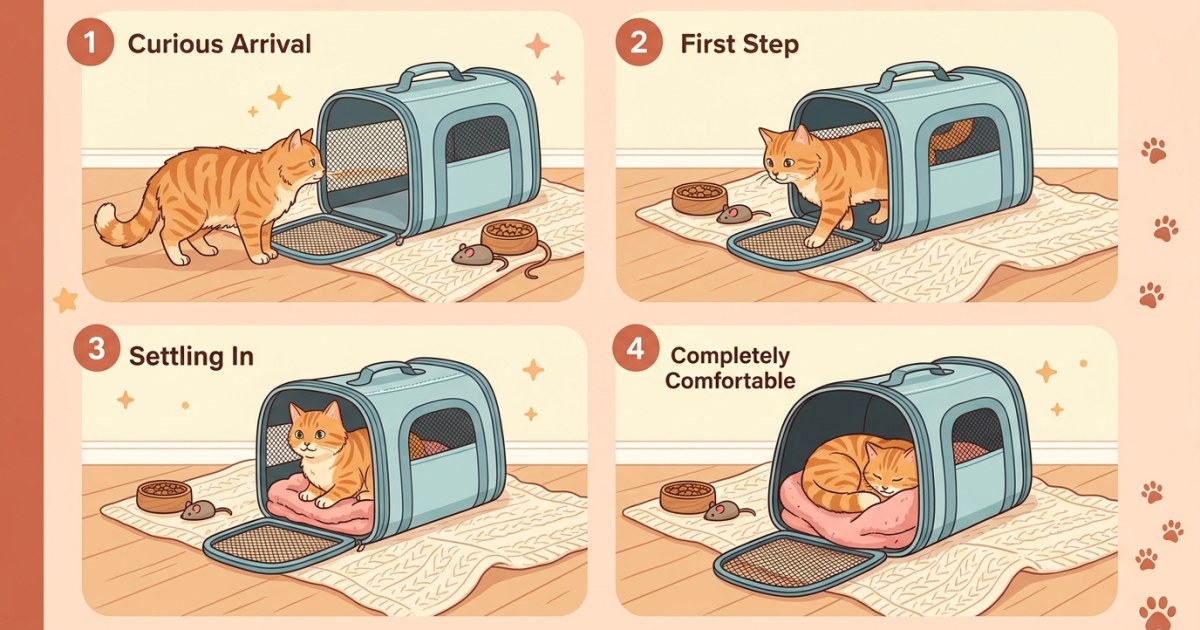
Carrier training: If your cat only ever sees their carrier when a vet visit is looming, they've already learned to associate it with something unpleasant. Start leaving the carrier open on the floor with a soft blanket inside — ideally one that smells of you — and let your cat investigate at their own pace. Feed treats near it, then inside it, over several days. By moving day, the goal is for the carrier to feel like a familiar, safe den rather than a trap.
Pro Tip
Spray a synthetic feline facial pheromone product (such as Feliway Classic) inside the carrier 15–30 minutes before you put your cat in it. This mimics the "happy marking" pheromone cats deposit when they rub their face on things they like, and can significantly reduce travel anxiety.
Feliway and calming products: Pheromone diffusers such as Feliway Classic plug directly into a wall socket and release a synthetic version of the cat's own facial pheromone continuously. Plug one in at your new home a day or two before your cat arrives if possible, or as soon as you move in. Some owners also use calming supplements — such as those containing L-theanine or alpha-casozepine — in the weeks leading up to the move. These are available from vets and pet shops and are generally very safe, but it's worth mentioning them to your vet if your cat is on any other medication.
Vet check and microchip update: Before you move, book a quick health check if your cat is due one. More importantly, make sure their microchip details are up to date — including your new address and phone number. If your cat slips out during the chaos of moving day (it happens more often than you'd think), a current microchip registration is their best chance of being reunited with you quickly.
📋 Pre-Move Checklist (2–4 Weeks Before)
- ☐Begin carrier training — leave it open with familiar bedding inside
- ☐Purchase Feliway Classic diffuser and/or spray
- ☐Update microchip registration with new address and mobile number
- ☐Book a vet check if overdue — mention the move and ask about calming supplements
- ☐Ensure your cat's ID tag has your mobile number (not just the old home phone)
- ☐Stock up on your cat's usual food — this is not the time to introduce a new diet
- ☐Gather familiar items: their blanket, toys, and scratch post to bring to the new home
Keep routines as normal as possible: Cats are acutely sensitive to disruption. As boxes begin to pile up, feeding and play times should stay consistent. Even small reassurances — like maintaining your cat's usual morning routine — reduce their background stress level considerably in the weeks before the big day.
HOW TO MANAGE MOVING DAY SAFELY AND CALMLY
Moving day is, unavoidably, the single most chaotic moment of the whole process. Doors are open, strangers are coming in and out, furniture is being moved, voices are raised, and the entire home your cat knows is being dismantled around them. A thoughtful moving-day strategy can make the difference between a cat who copes and one who bolts.
Confine your cat to one room early: Before the removal team arrives or any significant packing begins, put your cat in a single, quiet room — ideally one that won't be emptied until last, such as a bedroom. Put a sign on the door so nobody accidentally opens it. Include their litter tray, water, a small amount of food, their carrier (open), their bed, and a familiar toy. Keep the room as undisturbed as possible throughout the day.
Warning
Never leave your cat unconfined in the house on moving day with external doors open. Cats in a heightened state of anxiety can bolt through an open door and become lost in an unfamiliar area with no idea how to find their way home. This is one of the most common ways cats go missing during a move.
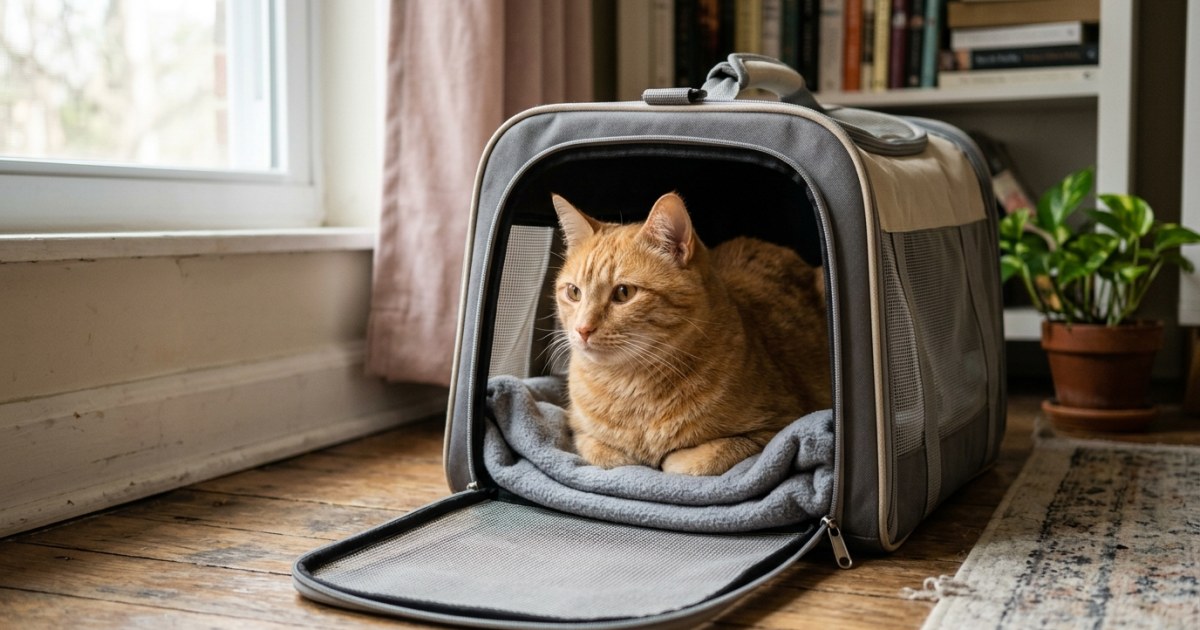
Transport in a secure, familiar carrier: When it's time to travel, carry your cat in their carrier — ideally covered with a light cloth or towel to reduce visual stimulation. Keep them in the car with you rather than in a removal van. Speak to them calmly and check on them at stops. Don't be alarmed by vocalisation; most cats protest during travel but calm down once stationary.
If the journey is long: For moves of more than a couple of hours, offer water at each stop (a small flat dish offered through the carrier door is usually sufficient). Do not feed a large meal immediately before travel as this can cause nausea. A light meal two to three hours before departure is usually fine. If your cat has a history of severe travel anxiety, speak to your vet in advance — they may prescribe a short-term anxiolytic such as gabapentin, which is commonly used for this purpose.
Pro Tip
Place an unwashed item of your clothing — a worn T-shirt works well — in the carrier with your cat during transport. Your scent is genuinely reassuring to a bonded cat and can help keep them calmer during a stressful journey.
Arrival at the new home: When you arrive, don't open the carrier immediately in the hallway with doors ajar. Instead, carry your cat directly to the room you've designated as their base room (more on this below), close the door, then open the carrier and let them emerge in their own time. Resist the urge to force them out or hover over them — give them space to investigate at their own pace.
SETTING UP A BASE ROOM: THE KEY TO A SUCCESSFUL SETTLE-IN
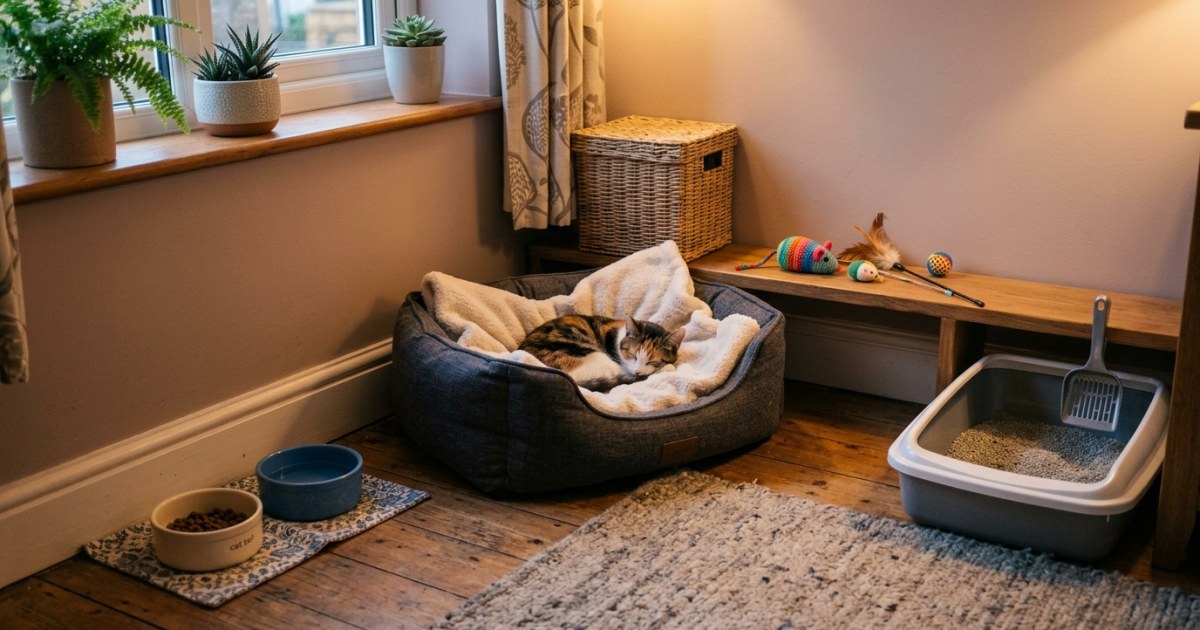
The concept of a base room is one of the most effective tools in your cat-moving toolkit, and yet it's one many owners skip because it feels counterintuitive. Rather than giving your cat the run of the entire new house immediately, you confine them to a single room for the first few days to a week. This allows them to thoroughly map and scent-mark a small, manageable space before gradually being introduced to the rest of the home.
Think of it this way: if you arrived in a new country and were immediately responsible for navigating an entire unfamiliar city, you'd feel overwhelmed. But if you were given one familiar hotel room to settle into first, you'd feel far more confident exploring from that secure base. The base room works on exactly this principle.
Ideal Base Room Setup
| Location | A quiet room away from the front door and main foot traffic — a spare bedroom is ideal |
| Litter tray | Their familiar tray with their usual litter — placed away from food and water |
| Food and water | Their usual bowls in a quiet corner, away from the litter tray |
| Hiding spots | Their carrier left open, a cardboard box on its side, or their usual bed under a surface |
| Familiar scent | Unwashed bedding, toys, and scratch post from the old home |
| Pheromones | Feliway Classic diffuser plugged in and running |
| Duration | Minimum 2–3 days for confident cats; up to 1–2 weeks for anxious or timid cats |
When to expand their territory: Watch your cat's body language rather than the calendar. Signs they're ready to explore further include: eating and drinking normally, using the litter tray, approaching you voluntarily, playing, grooming, and generally appearing relaxed with a straight or gently curved tail. When you see these signs consistently, open the door a crack and let them choose when to venture out. Don't carry them from room to room — let the exploration be entirely on their terms.
Good to Know
It's completely normal for a cat to spend their first day or two entirely hidden — under the bed, behind the sofa, or inside the carrier. Don't drag them out or try to force interaction. Provide food and water within easy reach of their hiding spot, speak softly when you're in the room, and let them come to you. Most cats begin to emerge naturally within 24–48 hours.
HELPING YOUR CAT SETTLE INTO THEIR NEW HOME LONG-TERM
Once your cat is out of the base room and exploring the wider house, the real settling-in process begins. This phase can take anywhere from a few days for a bold, confident cat to several months for a more timid or sensitive individual — and both ends of that spectrum are entirely normal. Your job during this period is to be a reliable, calm presence while the new environment gradually becomes familiar.
Maintain consistent routines: Cats thrive on predictability. Feed at the same times each day, maintain your usual play schedule, and keep major household disruptions (loud parties, builders, overnight guests) to a minimum in the first few weeks if you can. The faster your cat re-establishes their daily rhythm, the faster the new home begins to feel like their own.
Encourage scent-marking: You can actively help your cat scent-mark the new home by gently rubbing a soft cloth along their cheeks and chin, then wiping it at cat-nose height on doorframes, corners of furniture, and walls around the house. This technique — sometimes called "scent soaking" — deposits your cat's own facial pheromone around the home and accelerates the process of it feeling like their territory.
Pro Tip
Position scratch posts near doorways and in prominent spots around the new home. Scratching is a major scent-marking behaviour — cats have scent glands in their paws — so providing appropriate outlets helps them establish their territory quickly without resorting to your sofa.
Watch for stress-related health issues: Stress can trigger a number of health problems in cats, the most common of which is feline idiopathic cystitis (FIC) — painful inflammation of the bladder with no bacterial cause, brought on entirely by psychological stress. Signs include straining in the litter tray, frequent trips with little urine produced, blood in the urine, or urinating outside the tray. This is particularly common in male cats. If you notice any of these symptoms in the weeks after moving, contact your vet promptly as this can become a medical emergency if the bladder becomes blocked.
Multi-cat households: If you have more than one cat, moving is often an opportunity for tension between them to resurface — especially if they were only loosely tolerant of each other before. The new home has no established hierarchy, and cats may need to re-negotiate their social dynamics from scratch. Give each cat their own base room initially if possible, and reintroduce them gradually once both are individually settled. Ensure there are sufficient resources throughout the new home: the general rule is one litter tray per cat plus one extra, and multiple feeding stations so no one feels they have to compete.
OUTDOOR CATS: WHEN AND HOW TO INTRODUCE THEM TO A NEW GARDEN

If your cat was allowed outdoors at your previous home, one of the most common questions is how soon they can go outside again. The short answer is: not until they are thoroughly settled inside the new home and have had ample time to establish it as their base. For most cats, this means a minimum of three to four weeks of indoor-only time before any outdoor access is permitted — and many experts recommend waiting a full month.
The reason for this is straightforward: a cat who hasn't yet bonded with the new home has no reason to return to it if they become frightened outside, get into a fight with a neighbouring cat, or simply get disoriented. A cat who has established the new house as their territory, however, will instinctively navigate back to it because it smells like theirs.
📋 Checklist: Is Your Cat Ready to Go Outside?
- ☐Has been in the new home for at least 3–4 weeks
- ☐Is eating, drinking, and using the litter tray normally
- ☐Has explored the entire interior of the new home confidently
- ☐Returns to you voluntarily for food and affection
- ☐Appears relaxed and confident in body language
- ☐Microchip details are updated with new address
- ☐ID collar tag has current mobile number
The first outdoor session: Choose a dry, calm day — not during a thunderstorm or a windy evening when the environment will feel unpredictable. Go outside with your cat rather than simply opening the door and leaving them to it. Let them sniff around just outside the back door initially, and call them in after five to ten minutes. Build the duration gradually over the following days and weeks. Feeding your cat before letting them out reduces the chance of them roaming far in search of food.
If your cat has been microchipped but not yet registered to the new address: Don't let them outside until you've sorted this. In the UK, all cats over 20 weeks must be microchipped from June 2024, and keeping the registration current is both a legal obligation and your best safety net if they stray.
Good to Know
Some cats will try to return to their old home, especially if the move was within a relatively short distance (under five miles or so). If your previous home is nearby, alert the new occupants so they can turn the cat away gently rather than feeding them. Most cats stop attempting the return journey once they are fully settled in the new home — usually within a few weeks.
WHAT TO DO IF YOUR CAT IS REALLY STRUGGLING TO SETTLE
Most cats will show some signs of stress after a move, and most will work through it within a few weeks given time, patience, and the right environment. However, a small number of cats — particularly those who are naturally anxious, have had difficult early life experiences, or have been through multiple moves — may continue to struggle beyond what would be considered a normal adjustment period.
Signs that suggest your cat needs extra support include: refusing to eat for more than 24–48 hours, complete refusal to leave hiding spots after more than a week, consistent inappropriate toileting (outside the litter tray) without any physical explanation, persistent aggression, or signs of self-directed stress such as over-grooming leading to hair loss or skin sores.
If you're seeing any of these signs beyond the first two weeks, the first step is a visit to your vet. Some of these symptoms can have a physical cause (a urinary infection, for example, can look like stress-related toileting issues), and a health check rules that out. Your vet can also discuss whether a prescription anxiolytic — such as a short course of medication — might be appropriate for particularly severe cases, or can refer you to a veterinary behaviourist.
Pro Tip
Zylkene (bovine-derived alpha-casozepine) and Anxitane (L-theanine) are non-prescription calming supplements that many vets recommend for cats going through stressful transitions. Neither sedates the cat; they simply take the edge off anxiety and can be very effective for moderate stress. Both are widely available from vet practices and online pet pharmacies.
Interactive play as therapy: Play is one of the most powerful stress-relief tools available for cats, and it's completely free. Daily interactive play sessions — using a wand toy, feather on a string, or laser pointer — not only reduce cortisol levels but also help your cat build positive associations with the new home. Aim for two sessions of ten to fifteen minutes each day. A cat who has had a satisfying "hunt" is a calmer, more confident cat.
Don't punish stress-related behaviours: Shouting at a cat for urinating in the wrong place or hissing at you will only add to their anxiety and set the settling-in process back. These behaviours are a communication, not a choice — your cat is telling you they're struggling. Respond by quietly cleaning up (using an enzymatic cleaner to fully remove the scent), reassessing their environment, and giving them more time and patience.
Settling Timeline: What to Expect
| Days 1–3 | Hiding, reduced appetite, and vocalisation are all normal. Keep them in the base room with everything they need. |
| Days 4–7 | Most cats begin eating normally and emerge more frequently. Begin supervised exploration of adjacent areas. |
| Week 2 | Gradual exploration of the wider home. Litter tray and food use should be fully normal. Play sessions resuming. |
| Weeks 3–4 | Most cats appear settled and comfortable. Outdoor access can begin to be considered for previously outdoor cats. |
| Month 2–3 | Full territorial confidence in most cats. If significant stress behaviours persist, seek veterinary advice. |
SPECIAL CASES: KITTENS, SENIOR CATS, AND CATS WITH HEALTH CONDITIONS
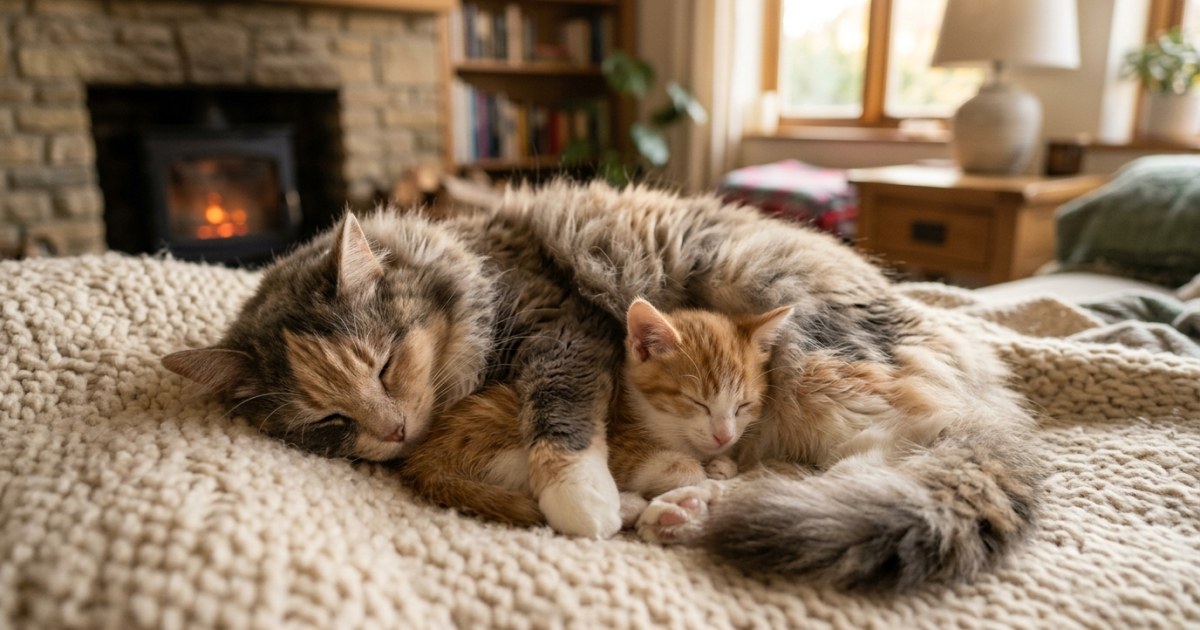
While the general principles of cat relocation apply across the board, there are some groups of cats who deserve particular consideration when moving home. Understanding their specific needs ensures you tailor your approach appropriately rather than applying a one-size-fits-all strategy.
Kittens (under one year): The good news is that kittens are generally far more adaptable than adult cats. Their socialisation windows mean they're wired to explore and adapt to new environments, and they typically settle in new homes quickly — often within a few days. The main considerations for kittens are safety (new homes often have more hazards to explore) and ensuring they don't get outside before they're microchipped and up to date with their vaccinations. If your kitten hasn't been neutered yet, moving is a particularly bad time for them to have outdoor access, as they may wander further than expected.
Senior cats (aged 10 and over): Older cats can find change more difficult than their younger counterparts, both psychologically and physically. Cognitive changes associated with feline ageing (similar to dementia in humans, sometimes called feline cognitive dysfunction) can make familiar surroundings feel more important than ever, and disruption can cause or worsen confusion and disorientation. Allow senior cats a longer base room period, keep everything as familiar as possible, and be patient with a longer settling timeline. It's also worth a pre-move vet check to make sure there are no underlying health issues that could be exacerbated by the stress of moving.
Good to Know
If you have a senior cat with feline cognitive dysfunction (FCD), try to arrange furniture and resources in a similar layout to the previous home where possible. Familiar spatial arrangements reduce confusion and help them navigate the new space with more confidence.
Cats with chronic health conditions: Cats managing ongoing conditions — diabetes, hyperthyroidism, chronic kidney disease, or inflammatory bowel disease — are more vulnerable to stress-related flare-ups. Talk to your vet before the move about whether any temporary adjustments to their management plan are advisable, and monitor them closely in the first two weeks for any changes in their symptoms or behaviour. Keep their medication routine absolutely consistent throughout the move — this is not the time to experiment with dosing times or new formulations.
Rescue cats with unknown histories: Rescue cats who have already experienced multiple home changes may show more extreme initial stress responses — or, conversely, may be remarkably stoic having been through it before. The key with rescue cats is to move slowly, keep everything low-pressure, and accept that trust may need to be rebuilt from scratch in the new environment. The base room approach is particularly important for this group, and it's worth checking in with your rescue organisation if you have concerns — most provide post-adoption support.
📋 Moving Day Final Safety Checklist
- ☐Cat is confined to a clearly signed room before removal team arrives
- ☐Carrier has been sprayed with Feliway and contains familiar bedding
- ☐New home base room is set up before cat arrives
- ☐Feliway diffuser is plugged in at the new home
- ☐Microchip details have been updated to new address
- ☐New vet has been registered with (if relocating to a new area)
- ☐Cat is transported in the passenger compartment, not the removal van
- ☐All windows and external doors in the new home are checked and secured before carrier is opened
Frequently Asked Questions
How long does it take for a cat to settle into a new home?
Most cats begin to feel comfortable in a new home within two to four weeks, though fully confident territorial behaviour may take two to three months. Timid or anxious cats can take longer — some up to six months — which is entirely normal. Consistent routines, a familiar base room, and pheromone support all help speed up the process.
Should I keep my cat in one room when I move house?
Yes — confining your cat to a single, quiet base room for the first few days to a week is one of the most effective ways to help them settle. It gives them a manageable, safe territory to scent-mark before being introduced to the rest of the home gradually. Make sure the room has their litter tray, food, water, familiar bedding, and a hiding spot.
How do I stop my cat from trying to return to my old house?
Keep your cat indoors for at least three to four weeks after moving — this is the single most important step. During this time, help them bond with the new home using familiar-scented items, pheromone diffusers, and consistent routines. If the old home is nearby, alert the new occupants to turn the cat away rather than feeding them, as this discourages the behaviour.
My cat won't eat after moving house — should I be worried?
It's common for cats to have a reduced appetite for the first 24–48 hours after a move due to stress. Offer their usual food in small amounts and ensure they have easy access to fresh water. If a cat hasn't eaten at all for more than 48 hours, or is also showing other signs of significant distress, contact your vet as prolonged anorexia in cats can lead to hepatic lipidosis (fatty liver disease).
When can my cat go outside after moving to a new house?
Most experts recommend keeping your cat indoors for a minimum of three to four weeks after moving before allowing outdoor access — some recommend a full month. Before venturing outside, your cat should be eating normally, exploring the home confidently, and returning to you voluntarily. Make sure their microchip is updated to the new address before their first outdoor session.
Do pheromone diffusers like Feliway actually work for moving house?
Yes — synthetic feline facial pheromone products such as Feliway Classic are well-supported by research and widely recommended by vets for stress-related situations including moving house. They work by mimicking the calming pheromone cats deposit when rubbing their face on familiar objects. They're not sedatives and won't change your cat's personality, but they can meaningfully reduce the physiological stress response in many cats.
How do I help two cats settle into a new home together?
If you have multiple cats, give each one their own separate base room initially — especially if they're only loosely tolerant of each other. The new home has no established hierarchy, so re-introducing them gradually once both are individually settled helps avoid conflict. Ensure there are enough resources throughout the home: one litter tray per cat plus one extra, and separate feeding stations so there's no competition.
Is it normal for a cat to hide for days after moving house?
Completely normal, yes. Hiding is a natural coping mechanism for cats under stress — it's how they protect themselves while they assess a new environment. Provide comfortable, accessible hiding spots, place food and water near them rather than across the room, and speak softly when you're nearby without forcing interaction. Most cats begin to emerge voluntarily within 24–72 hours once they realise the new space is safe.