Moving to India with a cat is entirely achievable, but it demands careful planning — India's animal import rules are administered by the Department of Animal Husbandry & Dairying (DAHD) and require a government-endorsed health certificate, a current rabies vaccination given at least 30 days before travel, and an ISO-compliant microchip, with the entire process best started 7–8 months before your departure date. What makes India particularly distinctive is that only a handful of designated ports of entry accept live animals, meaning even your choice of airport can determine whether your cat clears customs smoothly or faces an unexpected hold. This guide walks you through every requirement, form, cost and potential pitfall so you can bring your cat to India with complete confidence.
India — At a Glance
India — At a Glance
| Difficulty | Moderate — paperwork-heavy but no mandatory quarantine if all conditions are met |
| Quarantine | Conditional — up to 30 days if documents are incomplete or incorrect at port of entry |
| Microchip | ISO 11784/11785 compliant, 15-digit number required |
| Rabies Vaccine | Required — administered at least 30 days before travel, must be current |
| Import Permit | No dedicated import permit — but government-endorsed health certificate is mandatory |
| Typical Total Cost | £800–£2,500 / $1,000–$3,200 depending on origin country and whether a pet relocation agent is used |
| Processing Time | Start 7–8 months before travel date |
| Governing Body | Department of Animal Husbandry & Dairying (DAHD), Ministry of Fisheries, Animal Husbandry & Dairying |
| Official Website | dahd.nic.in |
India does not operate a straightforward points-based or category-based risk system like the UK or Australia. Instead, all cats entering the country are assessed at the port of entry by an Animal Quarantine and Certification Service (AQCS) officer, who reviews your documentation in real time. A clean, complete document set almost always results in same-day clearance. Any gap — a missing government endorsement stamp, a rabies vaccine administered fewer than 30 days before travel, or a microchip that was implanted after vaccination — will trigger a detention order. See our India cat import overview for the most current official links and any regulatory updates issued after this article's publication.
Good to Know
India's AQCS operates six quarantine stations: Delhi (IGI Airport), Mumbai (CSIA), Chennai, Kolkata, Hyderabad and Bengaluru. Only these six cities — via their international airports — are officially designated to accept live animal imports. If your itinerary routes through any other Indian airport, your cat will be refused entry.
Step-by-Step: Moving to India with a Cat — The Complete Import Process
India cat import requirements follow a strict sequential logic: each step must be completed in order because later documents reference earlier ones. Skipping ahead — for instance, getting your health certificate before the rabies vaccine is 30 days old — will invalidate the certificate entirely. Follow this sequence precisely and you will arrive at the AQCS inspection desk with everything an officer needs to clear your cat on the spot.
Step 1: Implant an ISO-Compliant Microchip
Your cat must be implanted with an ISO 11784/11785-compliant microchip carrying a unique 15-digit identification number before any other step begins. This is non-negotiable: India will not accept 9- or 10-digit chips, or chips that do not conform to ISO standards. The microchip must be implanted before the rabies vaccination is administered — if your cat is vaccinated first and chipped second, the vaccination record is considered invalid because there was no permanent ID to attach it to. Book this with your vet as early as possible, ideally 8 months before your planned travel date. Microchipping typically costs between £20–£50 / $25–$65 in the UK or US.
Step 2: Administer a Current Rabies Vaccination
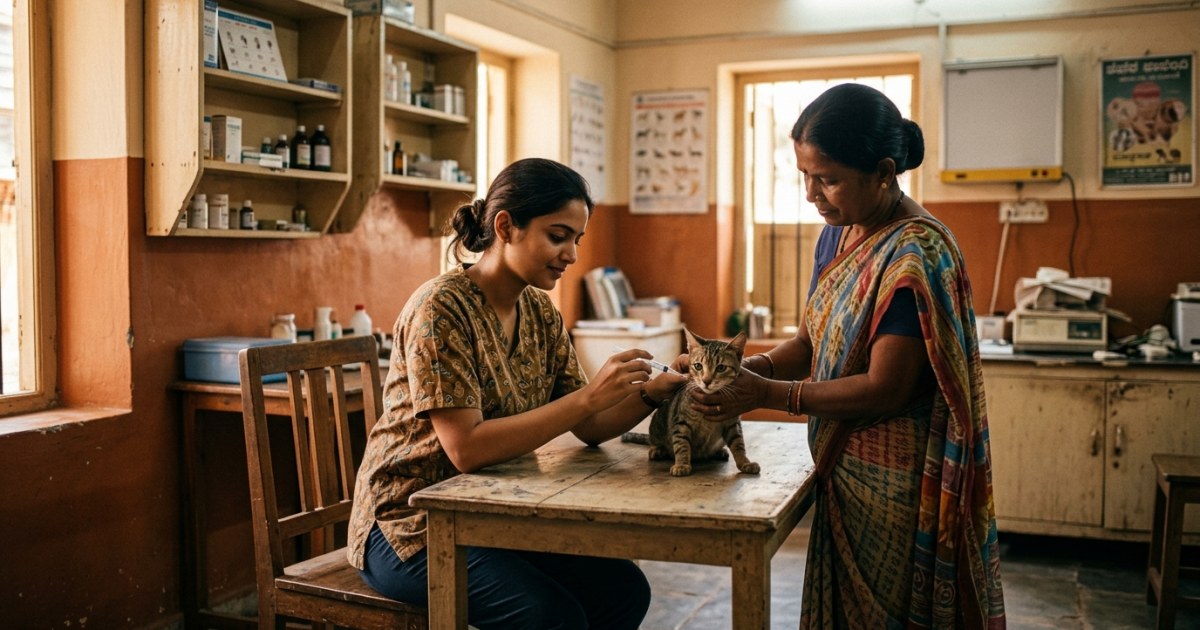
Once the microchip is confirmed and scanning correctly, your accredited vet must administer a current rabies vaccine. India requires the vaccination to have been given at least 30 days before the date of arrival in India — not 30 days before travel documentation is issued, but 30 days before your cat physically lands. The vaccine must also be within its valid period (i.e., not expired) on the day of arrival. Most inactivated rabies vaccines — such as Rabisin, Nobivac Rabies, or Defensor 3 — are valid for either 1 or 3 years; your vet must record the expiry date explicitly on all certificates. Budget 4–6 weeks minimum between vaccination and travel to satisfy the 30-day rule and allow time for paperwork.
Pro Tip
If your cat's rabies booster is due during the preparation window, get it administered at least 32–35 days before travel — giving yourself a 2–5 day buffer in case of flight delays or date changes. An AQCS officer counts calendar days; a 29-day-old vaccine will fail inspection even if it was valid the day you left home.
Step 3: Obtain a Health Certificate from an Accredited Vet
No earlier than 10 days before departure, your accredited (USDA-accredited, APHA-approved, or equivalent in your country) veterinarian must issue an official health certificate. This certificate must confirm: the cat's microchip number, the rabies vaccination details (vaccine brand, batch number, date administered, expiry date), that the cat is free from clinical signs of infectious disease, and that it is fit to travel. In the UK, the relevant form is an EHC (Export Health Certificate); in the US, the USDA's APHIS Form 7001 is used as the basis. The certificate must be on official headed paper, signed, dated and stamped. Cost: £60–£150 / $75–$190 depending on your vet practice.
Step 4: Obtain Government Endorsement of the Health Certificate
This is the step that catches the most travellers off guard. After your accredited vet signs the health certificate, it must be endorsed — officially countersigned and stamped — by the relevant government authority in your exporting country. In the UK, this is the Animal and Plant Health Agency (APHA); in the USA, it is the USDA APHIS (Animal and Plant Health Inspection Service), specifically through the APHIS Veterinary Export office; in Australia, it is the Department of Agriculture, Fisheries and Forestry (DAFF). Processing times vary: APHA in the UK typically takes 3–5 working days; USDA APHIS can take 3–10 working days depending on your state. Factor this into your timeline and never book flights before this endorsement is confirmed. Fee: £45–£70 / $38–$85 depending on the issuing authority.
Step 5: Book Your Flight and Prepare the Travel Crate
Confirm your flight only to one of India's six approved entry airports (Delhi, Mumbai, Chennai, Kolkata, Hyderabad, or Bengaluru). Contact the airline's cargo or live animal department — not general reservations — to arrange your cat's transport. Most airlines permit cats either in-cabin (if under 8 kg including carrier) or as checked excess baggage or manifest cargo; rules differ significantly by carrier. Air India, IndiGo (international codeshare routes only), British Airways, Emirates and Lufthansa all accept cats on select India-bound routes, but capacity is limited, so book at least 8 weeks in advance. The travel crate must meet IATA Live Animal Regulations (LAR) container requirements — specifically Container Requirement 82 for cats — meaning solid floor, ventilation on three sides, a secure latch, and sufficient room for the cat to stand, turn and lie down. Crate costs: £40–£120 / $50–$155.
Good News

India does not require a titre test (rabies antibody blood test) for cats arriving from any country, unlike some nations that require proof of immune response. A valid vaccination record with the correct timing is sufficient, which significantly reduces both cost and preparation time compared to destinations like Australia, New Zealand or Japan.
Step 6: Arrive at an Approved Port and Clear AQCS Inspection
On arrival in India, proceed directly to the Animal Quarantine and Certification Service (AQCS) desk before collecting your baggage from the main carousel. Present your complete document set to the AQCS officer, who will scan the microchip, cross-reference it against your health certificate, check the rabies vaccination dates, and verify the government endorsement stamp. If everything is in order, clearance is typically granted within 1–3 hours. You will be issued a No Objection Certificate (NOC) or an import clearance letter, which you then present to Customs before leaving the terminal. Do not proceed to the Customs hall without this AQCS clearance — attempting to do so is a serious offence under the Prevention of Cruelty to Animals Act 1960 and the Foreign Trade (Development and Regulation) Act 1992.
Microchip & Vaccination Requirements for Moving to India with a Cat
India's microchip and vaccination requirements are the twin pillars of any successful India cat import. Both must be documented precisely and in the right order. Here is everything you need to know.
Microchip Standard
India mandates an ISO 11784/11785-compliant transponder with a 15-digit numeric code. The chip must be implanted in the standard location — the left side of the neck, between the shoulder blades — and must be readable by a standard ISO-compatible scanner. If your cat was previously microchipped with a 9-digit chip (common in older US registrations) or a 10-digit chip, you have two options: implant a second ISO-compliant chip (which is safe and legal) or contact the AQCS in advance with documentation; however, the second-chip route is far simpler. Keep your own ISO-compatible chip reader if travelling from a country that uses non-ISO chips — AQCS scanners may not pick up older formats, and being unable to scan the chip at the inspection desk is grounds for detention.
Rabies Vaccination Rules
The rabies vaccine must meet all of the following criteria simultaneously:
- Administered after the microchip was implanted and confirmed functional
- Given at least 30 days before the date of arrival in India
- Still within its valid period (not expired) on the day of arrival
- Recorded with vaccine brand name, batch/lot number, date of administration, and expiry date
Acceptable vaccine products include Nobivac Rabies (MSD), Rabisin (Boehringer Ingelheim), Rabvac 3 (Elanco), Defensor 3 (Zoetis), and Purevax Recombinant Rabies (Boehringer Ingelheim). India does not publish a specific list of approved vaccine brands, but inactivated or recombinant rabies vaccines licensed in your country of origin are universally accepted.
Pro Tip
If your cat has never been vaccinated against rabies before (a "primary" vaccination rather than a booster), some AQCS officers may request additional reassurance of immune response even though India has no official titre test requirement. To avoid any ambiguity, ask your vet to note in the health certificate that this is a primary vaccination and the animal is otherwise healthy. Cats with a documented booster history face zero additional scrutiny.
Other Vaccinations
India does not officially mandate any vaccination beyond rabies for cats. However, your health certificate issuing vet — and the AQCS officer — will expect to see a complete, up-to-date vaccination history as evidence that the cat is in good health. Ensure your cat's core vaccines — feline herpesvirus (FHV-1), feline calicivirus (FCV), and feline panleukopenia (FPV), typically given as a combined F3 or FVRCP vaccine — are current. This is good veterinary practice regardless of import rules and signals to an AQCS officer that the animal has been properly cared for.
Good to Know
India has been classified as "rabies-present" by the World Organisation for Animal Health (WOAH/OIE), meaning incoming animals from all countries — including those classified as rabies-free — are subject to the same vaccination requirement. There is no fast-track or simplified pathway for cats arriving from low-risk nations such as the UK, Australia or Japan.
Import Permit & Health Certificate for India Cat Import
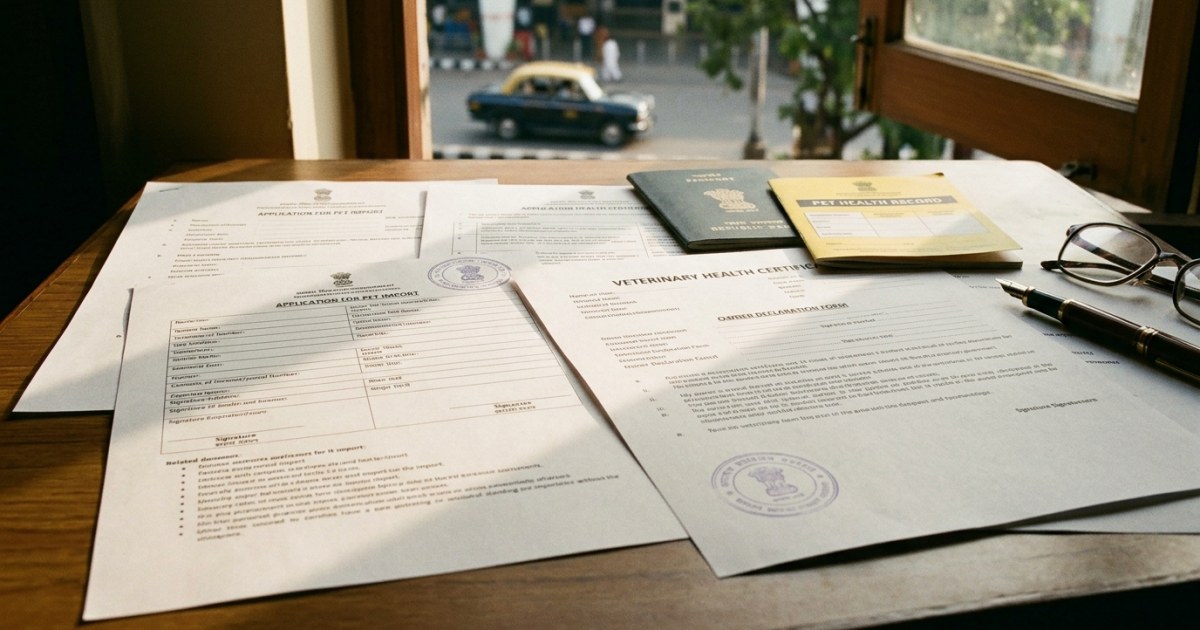
Understanding the difference between an import permit and a health certificate is essential for bring cat to India paperwork. India does not issue a dedicated import permit for pet cats (unlike commercial livestock imports), but the government-endorsed health certificate serves a functionally equivalent gatekeeping role.
Health Certificate Requirements
The health certificate is the single most important document in your India cat import package. It must:
- Be issued by an officially accredited veterinarian (APHA-approved in UK; USDA-accredited in USA; AQIS-registered in Australia)
- Be dated no more than 10 days before the date of departure
- Include the cat's full description: species, breed, colour, sex, age, and microchip number
- Confirm the cat is free from clinical signs of contagious disease, including rabies, feline panleukopenia, feline leukaemia, feline infectious peritonitis, and external parasites
- State the complete rabies vaccination history with batch numbers and expiry dates
- Be signed, stamped and dated by the issuing vet
- Be endorsed (countersigned and officially stamped) by the relevant government authority in the exporting country
The health certificate must be presented in English or accompanied by a certified English translation. India's AQCS officers work in English; documents in other languages without translation will be treated as incomplete.
Government Endorsement — By Country
The endorsement step is country-specific:
- UK: Animal and Plant Health Agency (APHA) — submit via the APHA online export portal at gov.uk/export-health-certificates. Fee: £47–£69 per certificate. Turnaround: 3–5 working days.
- USA: USDA APHIS Veterinary Services — submit via the VS VEHCS (Veterinary Export Health Certification System) portal at vehcs.aphis.usda.gov. Fee: $38 per endorsement. Turnaround: 3–10 working days.
- Australia: Department of Agriculture, Fisheries and Forestry (DAFF) — submit via the NEXDOC system. Fee: AUD $110–$180. Turnaround: 5–10 working days.
- EU countries: The competent authority in your member state (e.g., DREAL in France, LAVES in Germany). Fee: €30–€80.
Warning
A health certificate signed only by your vet — without the government endorsement stamp — is not valid for India entry. AQCS officers will immediately flag it as incomplete. The government endorsement must appear as a physical stamp or seal directly on the original certificate, not on a separate covering letter. Do not travel without this.
Pet Passport Validity
India does not recognise the EU Pet Passport or the UK Pet Health Certificate as a standalone import document. These documents can supplement your health certificate by providing a clear vaccination history, but they cannot replace the AQCS-required accredited health certificate with government endorsement. Bring your pet passport in addition to — not instead of — the full documentation set.
Cat Quarantine India: What to Expect on Arrival
India pet import requirements 2026 do not mandate automatic quarantine for cats arriving with a complete and compliant document set. However, the AQCS has full authority to detain any animal where documentation is incomplete, inconsistent or where the animal appears unwell at the time of inspection.
When is Quarantine Triggered?
Quarantine — held at the AQCS facility at the port of entry — is triggered in the following situations:
- Missing or invalid government endorsement on the health certificate
- Rabies vaccine administered fewer than 30 days before arrival
- Microchip that cannot be scanned or does not match the certificate
- Health certificate issued more than 10 days before departure
- Evidence of external parasites (fleas, ticks, mites) on inspection
- Clinical signs of illness observed by the AQCS veterinary officer
- Inconsistencies between the cat's physical description and the certificate
Duration and Conditions of Quarantine
If quarantine is ordered, the standard detention period is up to 30 days, although in practice most cases are resolved within 7–14 days once the specific documentation issue is identified and rectified. During quarantine, your cat is housed at the AQCS station, which provides basic veterinary supervision, feeding and water. You are generally not permitted to visit during the quarantine period, though AQCS staff will provide progress updates on request. Quarantine fees are charged on a per-day basis: expect to pay ₹500–₹1,500 per day (approximately $6–$18/day), plus any additional veterinary examination fees of ₹1,000–₹3,000 ($12–$36). A 14-day quarantine could therefore cost ₹8,000–₹24,000 ($96–$288) in government fees alone, on top of the distress caused to your cat.
Good News
The vast majority of cat owners who arrive with a correctly prepared, government-endorsed health certificate and a properly timed rabies vaccination clear AQCS inspection in under 3 hours with no quarantine whatsoever. Cat quarantine India is an avoidable outcome, not an automatic one — meticulous preparation is all it takes.
Pro Tip
Bring two complete sets of all documents — originals and certified photocopies — to the AQCS desk. If an officer needs to retain the originals for their records, you keep a copy. Also carry the AQCS contact number for your entry airport in case of any processing delays: AQCS Delhi can be reached at +91-11-2565-2440; AQCS Mumbai at +91-22-2682-9199.
Approved Entry Points for Moving to India with a Cat
This is one of the most critical — and most overlooked — aspects of bring cat to India logistics. India restricts live animal imports to six designated AQCS-staffed airports. Arriving at any other international gateway, even one that handles international passenger flights, will result in your cat being refused entry and potentially returned to the origin country at your expense.
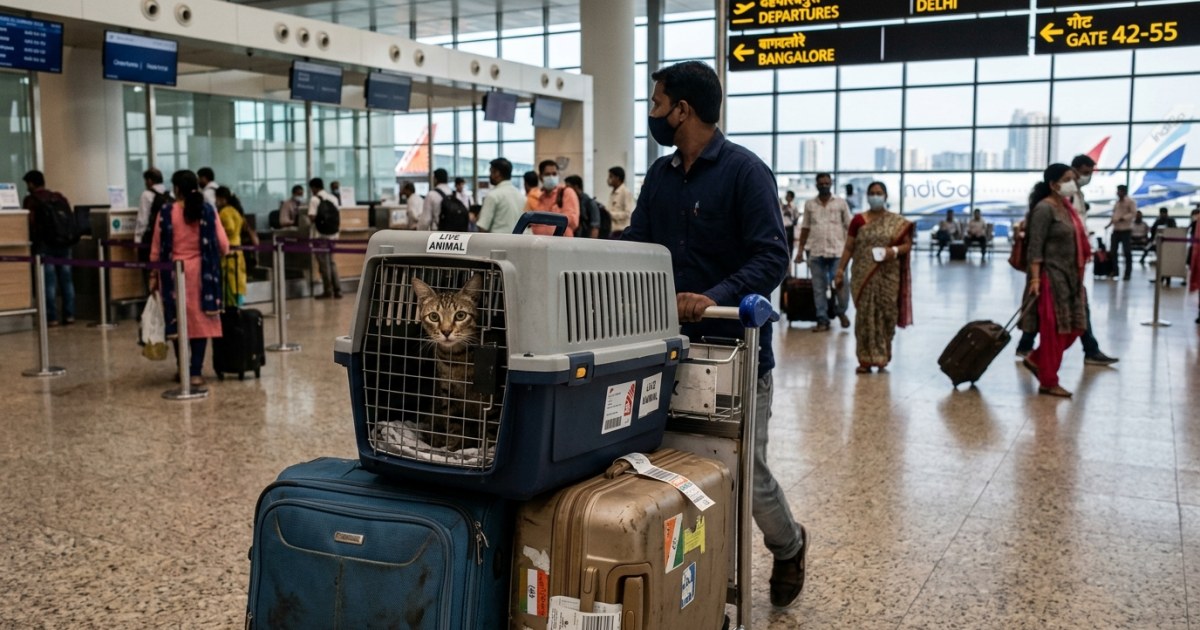
AQCS-Approved Entry Points for Live Animal Import
| City | Airport | IATA Code | AQCS Contact |
|---|---|---|---|
| New Delhi | Indira Gandhi International Airport | DEL | +91-11-2565-2440 |
| Mumbai | Chhatrapati Shivaji Maharaj Intl Airport | BOM | +91-22-2682-9199 |
| Chennai | Chennai International Airport | MAA | +91-44-2256-0551 |
| Kolkata | Netaji Subhas Chandra Bose Intl Airport | CCU | +91-33-2511-9271 |
| Hyderabad | Rajiv Gandhi International Airport | HYD | +91-40-6654-5167 |
| Bengaluru | Kempegowda International Airport | BLR | +91-80-6678-5080 |
Warning
Kochi (COK), Pune (PNQ), Ahmedabad (AMD), Goa (GOI) and all other Indian international airports are NOT approved for live animal imports as of 2026. Even if your final destination is one of these cities, your cat must enter through one of the six approved airports. Plan a domestic connecting flight or surface transport from the approved entry point to your final destination. Never route your cat's travel through an unapproved gateway.
If you are relocating to a city not served by one of the six approved airports — for instance, to Goa or Pune — the most common approach is to fly into Mumbai (BOM), clear AQCS there, and then arrange ground transportation or a domestic flight to your final destination. Your cat will be cleared as a domestic animal once the AQCS NOC has been issued and requires no further customs inspection for the domestic leg of the journey. For more detailed routing advice, visit our full India guide.
India Cat Import Cost Breakdown: What to Budget for Moving to India with a Cat
The total cost of moving to India with a cat varies depending on your country of origin, whether you use a pet relocation agent, and your chosen airline and routing. The figures below represent realistic costs for a single cat travelling from the UK or USA as of 2026. All INR amounts are approximate at an exchange rate of ₹105/£1 and ₹83/USD$1.
India Cat Import — Cost Breakdown (Single Cat, UK/USA Origin)
| Item | Cost (local currency) | Cost (USD est.) |
|---|---|---|
| ISO microchip implant | £20–£50 / ₹1,750–₹4,400 | $25–$65 |
| Rabies vaccination | £25–£60 / ₹2,100–₹5,200 | $30–$75 |
| Vet health certificate (accredited vet) | £60–£150 / ₹5,250–₹13,100 | $75–$190 |
| Government endorsement (APHA / USDA) | £47–£69 / $38 (USDA) | $38–$90 |
| IATA-approved travel crate | £40–£120 / ₹3,500–₹10,500 | $50–$155 |
| Airline pet fee (in-cabin, checked or cargo) | £100–£400 / ₹8,750–₹35,000 | $125–$500 |
| AQCS inspection fee (on arrival in India) | ₹500–₹1,500 | $6–$18 |
| Pet relocation agent (optional but recommended) | £500–£1,500 / ₹43,750–₹131,250 | $600–$1,900 |
| Contingency / quarantine (if triggered) | ₹500–₹1,500/day for up to 30 days | $6–$18/day |
| TOTAL (without agent) | £292–£849 / ₹25,500–₹74,200 | $349–$1,093 |
| TOTAL (with relocation agent) | £800–£2,400 / ₹70,000–₹210,000 | $1,000–$3,100 |
Good to Know
India does not charge import duty or customs tax on a single pet cat travelling with its owner as a personal effect, provided you declare the animal correctly and hold all required AQCS documentation. Commercial imports of multiple animals are subject to different regulations and fees under the Foreign Trade Policy. For most expats and returning Indian nationals, the cost above represents the full financial picture.
Document Checklist for India Cat Import
Print this checklist and physically tick each item before you leave for the airport. Present documents in this order at the AQCS desk — it mirrors the sequence the officer will follow.
📋 Document Checklist — Bring Cat to India
- ☐Microchip certificate / registration document — showing the 15-digit ISO chip number, the cat's name, and the implanting vet's details
- ☐Rabies vaccination record — showing vaccine brand, batch/lot number, date administered (30+ days before arrival), expiry date, and administering vet's signature
- ☐Full vaccination history — FHV-1, FCV, FPV (F3/FVRCP) with dates — not mandatory but strongly recommended for a smooth inspection
- ☐Accredited vet health certificate — issued no more than 10 days before departure, signed and stamped, listing microchip number, vaccination details, and declaration of clinical health
- ☐Government-endorsed health certificate — APHA stamp (UK), USDA APHIS endorsement (USA), DAFF endorsement (Australia), or equivalent — original with official seal
- ☐Certified copy of all above documents — in case originals are retained by AQCS
- ☐Airline pet booking confirmation — confirming the cat's travel on the same flight as the owner, with the pet's crate dimensions and weight
- ☐IATA-compliant travel crate — label attached with owner's name, destination address in India, and "LIVE ANIMAL" markings on all four sides
- ☐Owner's passport — with valid India visa or OCI/PIO card as applicable
- ☐Pet passport or equivalent travel document (EU/UK) — as supplementary vaccination record
- ☐Contact details for your destination vet in India — reassures AQCS that the animal has ongoing veterinary supervision post-entry
Pro Tip
Organise all documents in a clear plastic folder in the order listed above. Write your cat's microchip number on the outside of the folder in permanent marker. This simple step signals to the AQCS officer that you are prepared and reduces the time they need to spend cross-referencing, which in turn speeds up clearance.
Choosing a Pet Relocation Company for Moving to India with a Cat
For many people moving to India with a cat, engaging a specialist pet relocation company is money extremely well spent. India's paperwork requirements — particularly the government endorsement step and the need to coordinate timing precisely — are areas where professionals genuinely add value. A mistake made by a relocation agent is their problem to fix; a mistake you make yourself can mean 30 days of quarantine for your cat.
What a Good Pet Relocation Agent Does
- Prepares and reviews your complete document set against India's current AQCS requirements
- Coordinates with your vet and the government endorsement body on your behalf
- Books the correct airline and pet-approved routing via an approved entry airport
- Provides IATA-compliant crate advice and labelling
- Meets your cat at the destination airport and shepherds it through AQCS inspection (on request)
- Handles any unexpected complications at the inspection desk
The IPATA (International Pet and Animal Transportation Association) accreditation mark is the most reliable indicator of a reputable agent — all IPATA members are bound by a code of conduct and carry professional liability insurance. You can verify membership at ipata.org.
DIY vs. Agent: Making the Decision
If you are methodical, have plenty of lead time (7–8 months), have experience dealing with government agencies and are comfortable calling AQCS offices directly, the DIY route is entirely feasible. The total cost without an agent is £292–£849 / $349–$1,093. If you are relocating in under 4 months, have a complex routing, or are managing a multi-cat household, an agent's fee of £500–£1,500 / $600–$1,900 is a sound investment. For the latest cost estimates and routing options specific to your origin country, our India cat import overview has up-to-date agent recommendations and reader reviews.
Common Mistakes to Avoid When Moving to India with a Cat
These are the errors that most frequently cause cats to be detained at the AQCS desk or result in owners having to cancel and rebook travel at significant expense. Every single one of these mistakes is preventable with adequate preparation.
Warning
Vaccinating before microchipping. This is the single most common — and most devastating — error. If your vet administers the rabies vaccine before implanting the microchip, there is no permanent ID to attach the vaccination record to, and the entire vaccination is rendered invalid for import purposes. India's AQCS will reject it. Your cat will then need to be re-vaccinated and you must wait another 30+ days before travelling. You cannot simply add the chip number to the existing certificate retroactively. Always microchip first, confirm the chip scans correctly, then vaccinate.
Warning
Flying into an unapproved airport. Booking flights into Goa (GOI), Kochi (COK), Pune (PNQ), Jaipur (JAI), Ahmedabad (AMD) or any other Indian international airport that is not one of the six AQCS-designated gateways will result in your cat being denied entry. There is no on-the-spot exception process. The airline may refuse boarding at origin if they are aware of the routing issue; if they are not, Indian Customs will detain the animal on arrival. Always confirm your entry airport against the AQCS-approved list before booking any tickets.
Warning
Leaving government endorsement until the last moment. Many owners correctly complete the vet health certificate but wait until 3–4 days before travel to submit it to APHA or USDA APHIS for endorsement. Government processing times are not guaranteed — APHA regularly quotes 5 working days and USDA can take up to 10 — and any backlog or administrative issue means you miss your flight. Submit for government endorsement the moment the vet signs the certificate, accounting for the 10-day validity window. If the endorsement takes longer than expected, contact APHA/USDA directly and ask for expedited processing, which is available for an additional fee of £30–£50 / $50–$75.
Warning
Relying on a pet passport as a substitute for the health certificate. EU Pet Passports and UK Pet Health Certificates are not accepted by India's AQCS as standalone import documentation. They can accompany a full health certificate as supplementary evidence of vaccination history, but they cannot replace it. An owner who presents only a pet passport at the AQCS desk will be turned away regardless of how complete the passport's records are.
Warning
Using a non-accredited vet for the health certificate. The health certificate must be issued by an officially government-accredited veterinarian in your country of origin — in the UK this means an APHA-listed official vet (OV), in the USA a USDA-accredited veterinarian. A certificate from a general practice vet who does not hold official accreditation cannot be endorsed by APHA or USDA APHIS and will be rejected by AQCS. Before booking your vet appointment, confirm their accreditation status by searching the APHA Official Vet register at gov.uk/guidance/official-veterinarians-ovs (UK) or the USDA APHIS vet search at aphis.usda.gov/pet-travel/find-accredited-vet (USA).
Good to Know
India's AQCS regulations are updated periodically by the Department of Animal Husbandry & Dairying. Requirements that were correct 2–3 years ago may have changed — always verify against the official DAHD website at dahd.nic.in or our full India guide, which is reviewed quarterly for regulatory changes.
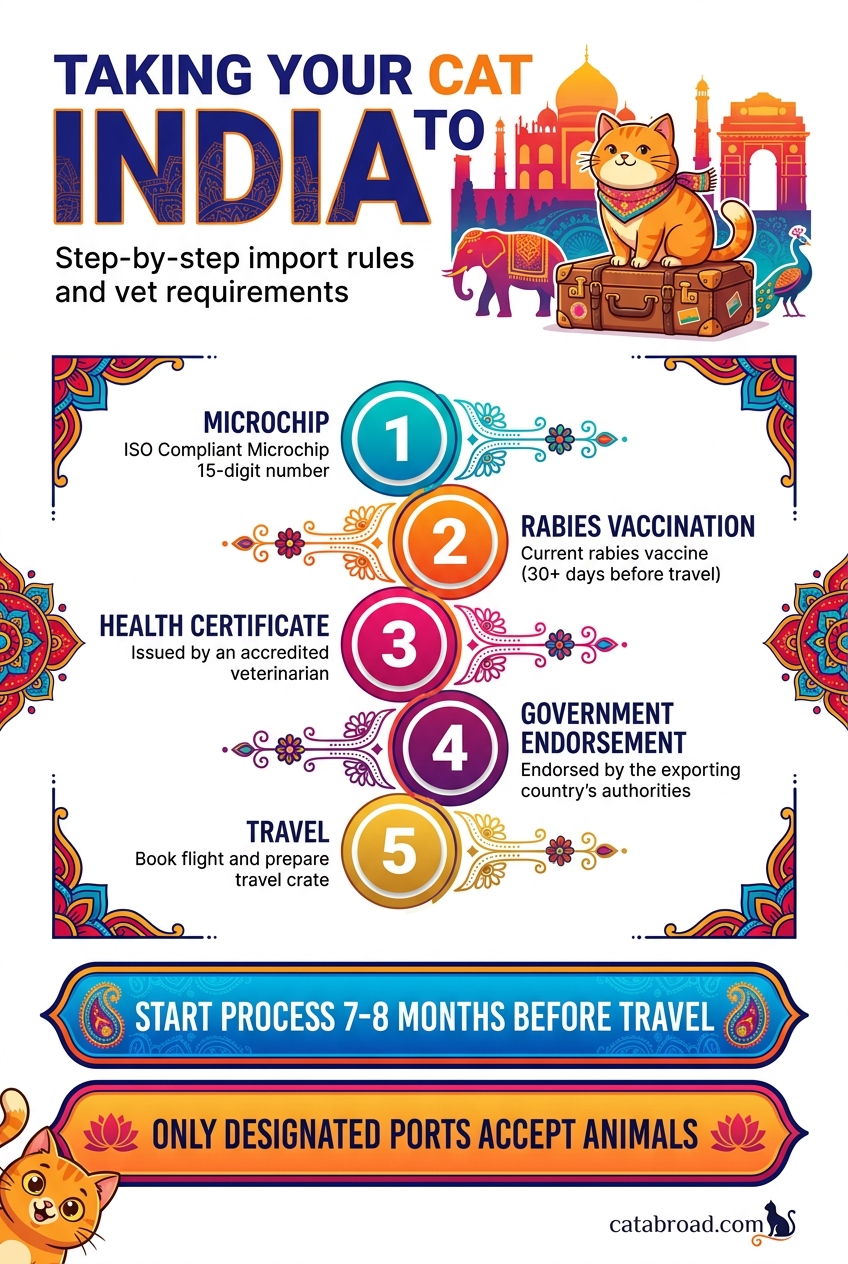
At a Glance: India Cat Import Requirements
Frequently Asked Questions
Is there a quarantine for cats entering India?
India does not impose mandatory quarantine on pet cats if the owner arrives with a correctly prepared, government-endorsed health certificate and a current rabies vaccination administered at least 30 days before arrival. However, the Animal Quarantine and Certification Service (AQCS) can order a detention of up to 30 days if documents are incomplete, the microchip cannot be scanned, or the animal shows signs of illness at inspection. Quarantine is avoidable with proper preparation — the majority of cats with compliant paperwork clear AQCS in under 3 hours.
Does my cat need a rabies titre test to enter India?
No — India does not require a rabies antibody titre test (blood test) for cats arriving from any country, including those classified as rabies-free. A valid rabies vaccination administered after microchipping and at least 30 days before arrival is sufficient. This makes India's import process significantly less time-consuming and expensive than destinations like Australia, New Zealand or Japan, which mandate titre testing with a 180-day wait period.
Which airports in India accept pet cats?
As of 2026, only six Indian airports are designated by the Animal Quarantine and Certification Service (AQCS) to accept live animal imports: Delhi Indira Gandhi International (DEL), Mumbai Chhatrapati Shivaji Maharaj International (BOM), Chennai International (MAA), Kolkata Netaji Subhas Chandra Bose International (CCU), Hyderabad Rajiv Gandhi International (HYD), and Bengaluru Kempegowda International (BLR). Arriving with a pet cat at any other Indian international airport — including Goa, Kochi, Pune or Jaipur — will result in the animal being refused entry.
How long does it take to prepare to move to India with a cat?
The official AQCS recommendation is to start the process 7–8 months before your planned travel date. The critical timing constraint is the 30-day gap required between the rabies vaccination and arrival in India, plus the 10-day validity window for the health certificate, which cannot be issued until the vaccination is already 30 days old. Add in government endorsement processing time (3–10 working days depending on country), airline booking lead times, and administrative buffer, and 7–8 months is a realistic minimum. Attempting the process in under 6 weeks risks missing the vaccination window and being unable to travel on your planned date.
Can I take a cat to India on a flight as hand luggage?
Some airlines permit cats to travel in-cabin (as hand luggage under the seat in front) on India-bound international routes, provided the cat and carrier combined weigh under the airline's in-cabin pet weight limit — typically 7–8 kg. Airlines known to offer in-cabin pet options on select India routes include Lufthansa and Swiss. However, many major carriers operating India routes — including British Airways — only accept cats as checked excess baggage or as manifest cargo. Always contact the airline's live animal reservations desk directly, as policies change and capacity is limited.
Do I need an import permit to bring a cat to India?
India does not issue a dedicated import permit for pet cats travelling as personal effects with their owner. However, the government-endorsed health certificate issued by the exporting country's authorities functions as the key gatekeeping document and is effectively mandatory — no endorsed health certificate means no entry. Commercial imports of multiple animals (more than two pets per person) are subject to additional regulatory requirements under the Foreign Trade Policy and may require DAHD approval in advance.
What happens if my cat is stopped at Indian customs?
If your cat's documents are found to be incomplete or non-compliant, the AQCS officer will issue a detention order and the animal will be held at the AQCS quarantine station at the port of entry — not a private facility. You will be advised of the specific documentation issue and given the opportunity to remedy it; for example, if a government endorsement is missing, you may be able to arrange emergency re-endorsement from your origin country while your cat is held. Detention fees are ₹500–₹1,500 per day ($6–$18/day). You must not attempt to remove the cat from the AQCS facility without a clearance NOC, as this constitutes an offence under the Prevention of Cruelty to Animals Act 1960.
 Singapore
 UAE
UAE Thailand
 Sri Lanka
📋 Official Requirements: View the full import rules and vet requirements for taking your cat to India on CatAbroad.com.