Flying a Persian,
British Shorthair
or Exotic out
of the UK
A special cat. A carefully chosen route.
A new chapter — together.
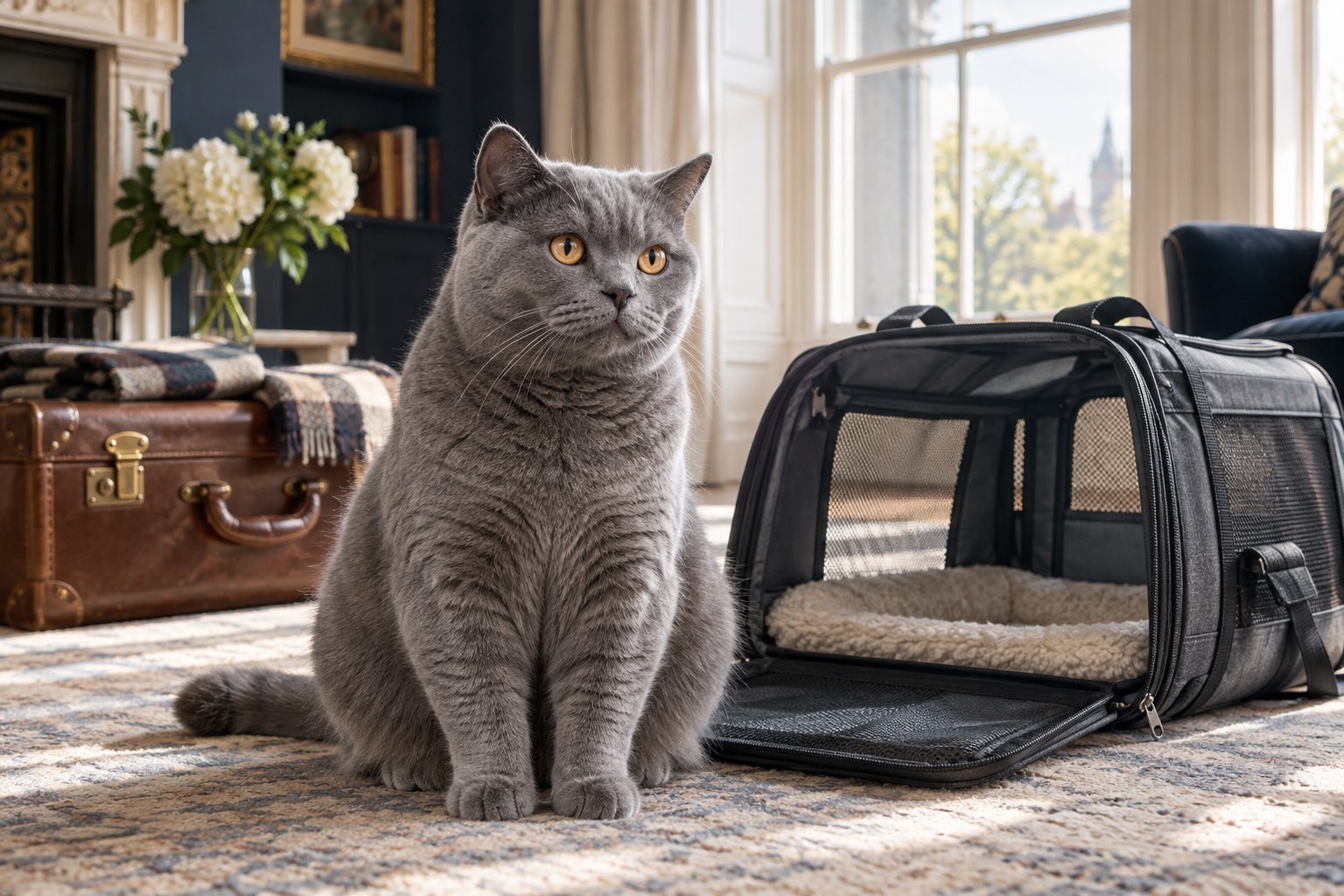
You can pack up a house in Britain, arrange a job overseas and still find the hardest part of the move is getting one round-faced cat on a plane. A Persian owner may expect that conversation. A British Shorthair owner can be completely blindsided by it.
The problem is that “we carry cats” is only the first answer. You need the next one: will the operating carrier accept this breed, in this travel mode, on this route, in this month? Then you need to know whether your own cat is fit for that journey.
For a complicated move, the answer is often an agent who knows which carrier and which month. And if you want your cat beside you, PetAir offers a specific alternative: its Superior private-jet package, delivered through K9 Jets, which welcomes snub-nosed breeds subject to destination rules and individual suitability. For an Exotic or Persian whose cargo options have narrowed, that can change the whole conversation.

 CAT ABROAD PARTNER
Your cat.
Your side.
Your next chapter.
Fly together on a shared private jet with PetAir’s Superior package — an option for Persians, British Shorthairs and Exotics, including snub-nosed breeds.
- Your cat stays with you in a suitable carrier
- Travel coordination and veterinary-document support
- Selected UK departures to the USA, Canada and Dubai
Ask PetAir for dates, suitability and a full quote. Premium shared-charter service; destination entry rules apply.
Miami · Los Angeles · New Jersey · Toronto · Vancouver · Dubai
Published network · Confirm current departures with PetAirPartner disclosure: Cat Abroad partners with PetAir. The featured links below are partner links. Airline acceptance and veterinary suitability still need individual confirmation. Policy sources checked 10 September 2026.
Cats remain in a suitable carrier throughout the flight. PetAir’s cat-specific FAQ makes this clear: “beside you” does not mean roaming loose around the jet. Ask the team to approve a carrier that fits your cat, and familiarise your cat with it before travel.
Outside that network, ask about other arrangements. A private-jet landing in a nearby country is not automatically a solution to your destination’s import rules. An agent should explain the entire onward journey before you agree to it.
Leaving the UK is a different problem from coming back
Our companion guide explains why flying a flat-faced cat into the UK can be harder than leaving. Do not assume that the restrictions on arriving in Great Britain describe every outbound flight.
There is no blanket ban on pets departing Britain in the cabin: Finnair explicitly describes cabin carriage from the UK to Finland for eligible pets. Its general pet policy includes cats. But a permitted departure is not a workable booking for every flat-faced cat, body size or destination. That is where a specialist alternative can matter.
This guide focuses on departures from England, Scotland and Wales. Northern Ireland has a different pet-travel framework; check DAERA’s export guidance if that is your starting point. For a return move, check the return journey separately before buying both tickets.
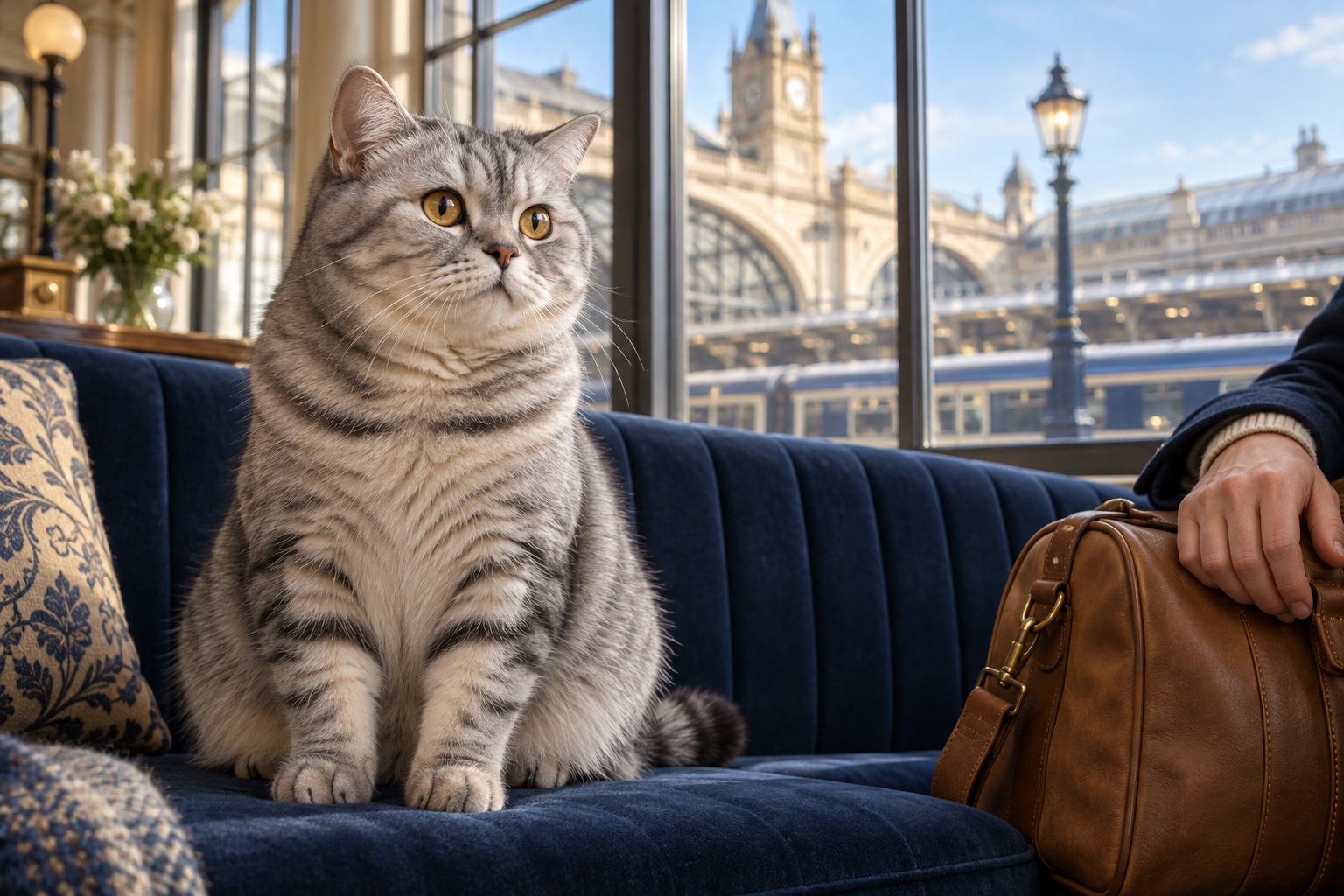
The British Shorthair surprise: a familiar British cat on a restricted-breed list
A British Shorthair does not have to look like an extreme-faced Persian for an airline’s breed policy to affect it. Owners naturally see their own cat: broad cheeks, a sturdy body, a familiar face. The airline may see a named breed on its restriction list.
British Shorthairs also raise a second, separate question: can the cat comfortably fit inside the permitted cabin carrier? Breed acceptance is little help if the carrier is too low for a stocky adult to stand or too small to turn around in. A lightweight bag cannot solve a body-size problem.
One cat. Eighteen very different answers.
A familiar airline name does not settle the breed question. This comparison shows restrictions outside the passenger cabin for the three cats in this guide. Each row names the service being assessed; cabin alternatives are explained below.
| Carrier / service | Persian | British Shorthair | Exotic Shorthair |
|---|---|---|---|
| British Airways / IAG CargoManifest cargo | Ask | Ask | Ask |
| THAIChecked baggage (AVIH) | Ask | Ask | Ask |
| Qatar AirwaysChecked baggage (AVIH) | No | Ask | No |
| Emirates SkyCargoManifest cargo | Seasonal | Seasonal | Seasonal |
| Singapore AirlinesChecked baggage + cargo¹ | No | No | No |
| AEGEAN / OlympicChecked baggage + cargo | No | No | No |
| KLMHold as passenger baggage | No | Ask | No |
| Brussels AirlinesHold as passenger baggage | No | No | No |
| SWISSHold as passenger baggage | No | No | No |
| Austrian AirlinesHold as passenger baggage | No | No | No |
| TAP Air PortugalHold as passenger baggage | Review | Ask | Review |
| Turkish AirlinesHold as passenger baggage | Ask | Ask | Ask |
| Etihad CargoManifest cargo | Seasonal | Seasonal | Seasonal |
| Cathay CargoHeathrow → Hong Kong | Paused | Paused | Paused |
| Qantas FreightFreight · specialist booking | Review | Ask | Review |
| Air CanadaHold as passenger baggage | Ask | Ask | Ask |
| LufthansaHold as passenger baggage | No | No | No |
| Air FranceHold as passenger baggage | Ask | Ask | Ask |
“Ask” is not a green light. It means the cited source does not establish acceptance for this breed and journey. “No” applies to the service shown, not automatically to every cabin or cargo product. ¹Singapore’s linked checklist explicitly covers both services.
Emirates SkyCargo’s published window
Listed snub-nosed cats may be considered under specific conditions in November–April. May–October falls outside that exception.
The exact lists, exceptions and sources
Open a carrier for its named cat breeds and the detail behind the chart.
British Airways / IAG CargoPolicy detail + source
BA directs UK departures to PetAir UK. IAG Cargo says some snub-nosed cats may not be accepted and asks customers to enquire; its FAQ does not provide a definitive cat-breed list. Request assessment of your cat and route. This is separate from PetAir’s private-jet cabin offer.
THAIPolicy detail + source
The published AVIH embargo names dog breeds, not cat breeds. That does not confirm acceptance of these cats: ask THAI to approve the exact breed and itinerary. For London, animal plus crate above 32 kg must use cargo, which requires a separate enquiry.
Qatar AirwaysPolicy detail + source
The AVIH list names Burmese, Exotic, Persian and Shirazi. British Shorthair is not named; broader snub-nosed wording means it still needs explicit confirmation. Qatar notes that the list can change and the restriction applies mainly to pure breeds. Do not assume a cross is exempt or that separate cargo will accept it.
Emirates SkyCargoPolicy detail + source
The Emirates Pets leaflet lists British Longhair, British Shorthair, Burmese, Exotic Shorthair, Exotic Fold (Foldex), Himalayan, Persian, Scottish Fold and Selkirk Rex, including crosses. These are restricted, with exceptions under specific conditions during November–April. A winter date is an enquiry window, not approval.
Singapore AirlinesPolicy detail + source
Named cats: British Shorthair, Burmese, Exotic Shorthair, Himalayan, Persian and Scottish Fold. The linked checklist extends its breed prohibition to cargo and checked baggage, including crosses; the main page also excludes other brachycephalic cats from checked baggage. Airport rules differ: checked pets cannot depart Gatwick or Manchester under the published destination list.
AEGEAN / OlympicPolicy detail + source
Named cats: Burmese, Exotic, Himalayan, Persian, British Shorthair, British Longhair, Scottish Fold, Scottish Straight, American Longhair and American Shorthair. Cabin eligibility is separate. UK departures permit cabin or hold except Gatwick, where AEGEAN specifies cargo only; the breed embargo therefore rules out these listed cats under its published Gatwick policy.
KLMPolicy detail + source
Named cats: Burmese, Exotic Shorthair, Himalayan and Persian. British Shorthair is not on this list: confirm rather than assume. KLM permits snub-nosed cats in the cabin subject to its conditions, including an 8 kg combined limit, and explicitly permits pet departures from the UK. Cargo is a separate enquiry.
Brussels AirlinesPolicy detail + source
Named cats: British Shorthair, Exotic Shorthair, Himalayan, Persian and Scottish Fold. The snub-nosed policy allows cabin carriage with a declaration, subject to normal requirements. This page alone does not confirm a UK departure route or a separate cargo option.
SWISSPolicy detail + source
The hold exclusion names British Shorthair, Exotic Shorthair, Himalayan, Persian and Scottish Fold, including crosses. Cabin travel is a separate assessment, subject to the route, carrier and weight requirements. This does not establish acceptance by a separate cargo service.
Austrian AirlinesPolicy detail + source
Named cats: British Shorthair, Exotic Shorthair, Himalayan, Persian and Scottish Fold, including crosses. These snub-nosed breeds cannot travel in the passenger-baggage hold. Check cabin eligibility and any separate cargo service independently.
TAP Air PortugalPolicy detail + source
TAP names Burmese, Exotic, Himalayan, Persian and Scottish Fold in its hold restriction. It publishes a veterinary-certificate exception for specified circumstances, including an animal that lacks the relevant breed characteristics. Existing corrective surgery is also mentioned in its criteria; this is not a recommendation to arrange surgery for travel. Obtain TAP’s written decision. British Shorthair is not named. Gatwick does not permit TAP’s cabin or checked-pet service.
Turkish AirlinesPolicy detail + source
Turkish identifies Birman, Persian, Himalayan, Burmese, Scottish Fold, British Shorthair and Exotic Cat Breeds among cats with respiratory concerns. Its terms say certain respiratory-risk breeds are restricted in the hold and describe cabin carriage within its limits. Ask for the exact hold decision; the chart does not convert that wording into a definitive breed-by-breed ban. Turkish Cargo requires a separate enquiry.
Etihad CargoPolicy detail + source
Etihad Cargo announced conditional acceptance of snub-nosed cats and dogs from 1 November to 1 March, with additional checks, documents and specialist approval. That is not permission throughout March. The announcement does not give a named cat-breed list: confirm how your cat is classified and whether the current route and seasonal window apply.
Cathay CargoPolicy detail + source
Cathay’s published brachycephalic service says Heathrow-to-Hong Kong carriage is temporarily unavailable until further notice. Its seasonal provision on certain flights departing Hong Kong does not establish an outbound-UK option. Confirm breed classification and any reopening with the appointed agent; this is a route suspension, not a worldwide permanent ban.
Qantas FreightPolicy detail + source
Qantas’s brachycephalic policy names purebred Exotic Shorthair, Persian and Himalayan cats. It requires an approved pet-travel specialist and additional conditions, documents and checks. British Shorthair is not named in this policy. A listing here does not confirm a direct UK flight or an accepted connection; have the specialist assess the complete journey.
Air CanadaPolicy detail + source
The passenger policy’s short-nosed breed exclusion is presented as a dog list. Do not apply those dog names to cats or interpret the absence of a named cat as approval. Confirm the cat’s breed, UK departure airport, temperature limits and itinerary directly. Air Canada Cargo is a separate service and enquiry.
LufthansaPolicy detail + source
Lufthansa’s snub-nosed list names British Shorthair, Exotic Shorthair, Himalayan, Persian and Scottish Fold, including crosses. Its passenger-hold restriction is separate from cabin eligibility. The page also points to Lufthansa Cargo for freight enquiries; that referral is not acceptance of a particular cat or UK route.
Air FrancePolicy detail + source
Air France’s linked hold waiver requires owners to confirm that their cat is not brachycephalic and describes a hold prohibition for unsuitable snub-nosed cats. The accessible waiver does not reproduce the named breed list. Ask Air France to apply its current list to your cat; “Ask” here is not an exception to that restriction. Cabin and freight arrangements need separate confirmation.
Read breed names literally. “Exotic” and “Exotic Shorthair” are the source terms. Ask about other varieties and crosses. This is a selected comparison, not a worldwide list or a promise of availability.
More than the three headline breeds.
The named cats in the published lists below, with the airline’s own terminology preserved. “Exotic” is grouped with “Exotic Shorthair” for browsing; Birman and Shirazi are explained below. These selected policies are not a universal ban list, and some airlines use broader wording rather than a complete breed list.
Red links identify named hold or cargo restrictions; amber links identify conditional policies. Open the airline notes for the service, exceptions and source. Neither colour settles cabin eligibility.
AI-generated editorial illustrations: coat colours and individual features vary. Use your cat’s recorded breed and the airline’s assessment, not these pictures, to establish eligibility.
Compare all 18 carriers ↑American Longhair
American Shorthair
British Longhair
Exotic / Exotic Shorthair
AEGEAN and Qatar write “Exotic”; the other linked lists write “Exotic Shorthair”. Confirm other varieties explicitly.
Exotic Fold (Foldex)
Scottish Straight
Selkirk Rex
Also named: Birman
Turkish Airlines names Birman in its respiratory-concern policy alongside the other cats listed in its notes. That source wording is not a diagnosis of every Birman, or a ban across all airlines. Obtain an individual decision for the intended service.
Etihad, Cathay and Air France use broader brachycephalic wording in the sources cited here. Their restrictions are explained in the chart. Request an individual assessment for your cat.
Also named: “Shirazi”
Qatar’s AVIH list separately uses this name alongside Persian, Exotic and Burmese. If your cat’s documents use “Shirazi”, quote that wording when enquiring; do not assume a different label avoids the restriction.
Crosses and cats without a listed breed
Emirates SkyCargo includes crosses of its listed breeds. Singapore’s checklist includes crosses, and its passenger page also covers other brachycephalic cats. Other wording varies: an unlisted breed or cross is not automatically approved. The cat section—not a neighbouring dog list—is what matters.
Why no BA or THAI badges? The IAG Cargo FAQ and THAI AVIH page checked do not supply a named cat-breed ban list. Both remain an individual enquiry in our chart. British Airways uses IAG Cargo for cargo transport; PetAir is the specialist arranging the journey.
Found your cat? Ask PetAir about an in-cabin private-jet journey ↗. Breed acceptance, route and travel dates still need confirmation.
Give the agent the accurate veterinary record and, if requested, clear front and side photographs. Describe a rescue cat honestly; ask the vet to resolve uncertain identification rather than guessing a pedigree. Relabelling a known breed to get around a restriction can leave you with a refused animal at check-in.
Which option should you investigate first?
Fits comfortably under a seat? Check a permitted commercial cabin departure, every connection and destination entry rules.
Too large for cabin, or hold-restricted? Ask an agent for a specific cargo acceptance assessment; a bigger crate does not remove a ban.
Want to stay together on a supported route? Ask PetAir about its Superior private-jet package. If none fits, compare an overland route or change the timing.
Manifest cargo: check acceptance before you commit
Cargo is a separate booking and handling process, usually involving an air waybill and an approved travel crate. Do not confuse it with paying an excess-baggage fee at the passenger desk. A passenger airline’s pet page may also describe different rules from its cargo division.
IAG Cargo’s current FAQ says some snub-nosed breeds may not be accepted. That wording is a reason to make a specific enquiry, not a green light for every Persian or Exotic departing Heathrow.
Ask the agent to obtain the applicable breed decision, crate specification and routing conditions. A larger crate can be a requirement where a booking is accepted; it does not overturn a breed ban. Your vet’s assessment matters alongside the carrier’s decision: operational acceptance is not a medical assessment of your cat.
Commercial cabin: a limited alternative to check individually
Where a UK departure and destination permit it, a small cat may qualify for commercial cabin travel. You still need breed acceptance, comfortable under-seat carrier fit and a confirmed pet space on every leg. A stocky British Shorthair can fail the fit requirement even where the breed is permitted. Never squeeze a cat into a smaller bag to meet a published limit.
Get written confirmation from the operating airline before relying on this option. A general pet policy or an available passenger seat does not confirm acceptance of your cat.
Overland to Europe: sometimes the better first leg
If you are moving to continental Europe, a pet-permitted vehicle crossing and onward drive may remove the need to fly. If you are moving farther afield, a European departure airport may offer an alternative flight, but it adds a border crossing, surface transport and potentially an overnight stay.
Compare the whole journey from your current home to the new one. A flight with a better pet policy can still produce a poor itinerary if reaching it adds a long, stressful detour. Check crossing operator rules, EU entry documents and onward import requirements before treating this as a fallback. Our UK–Europe ferry guide is a starting point.

“Which month?” is a real booking question
September in Manchester tells you little about the temperature during a connection in the Gulf. January in Britain does not mean winter at a Southern Hemisphere destination. Review departure, transit and arrival conditions, plus the times your cat will be handled on the ground.
There is no universal “safe season” for these three breeds. Airlines can apply fixed seasonal embargoes, temperature thresholds, aircraft restrictions or day-of-travel decisions. Cold weather can restrict carriage too. Air Canada’s published baggage-compartment rules illustrate both summer and winter restrictions; they are not a timetable for another airline’s cargo service.
| Constraint | Question for the agent |
|---|---|
| Fixed moving date | Which permitted routes and travel modes work around that date, and what is the fallback? |
| Flexible departure | Would moving a few weeks change acceptance, handling conditions or the need to connect? |
| Hot transit airport | Can we avoid this connection, and what temperature rule applies if we cannot? |
| Winter destination | Are there cold-weather or aircraft restrictions on any leg? |
| Shared charter | Is the departure confirmed, and what happens if the date changes or it does not operate? |
The useful answer is not “October is good for Persians”. It is an explanation of why a particular itinerary is acceptable, what could change that answer and who will rearrange the booking if it does.
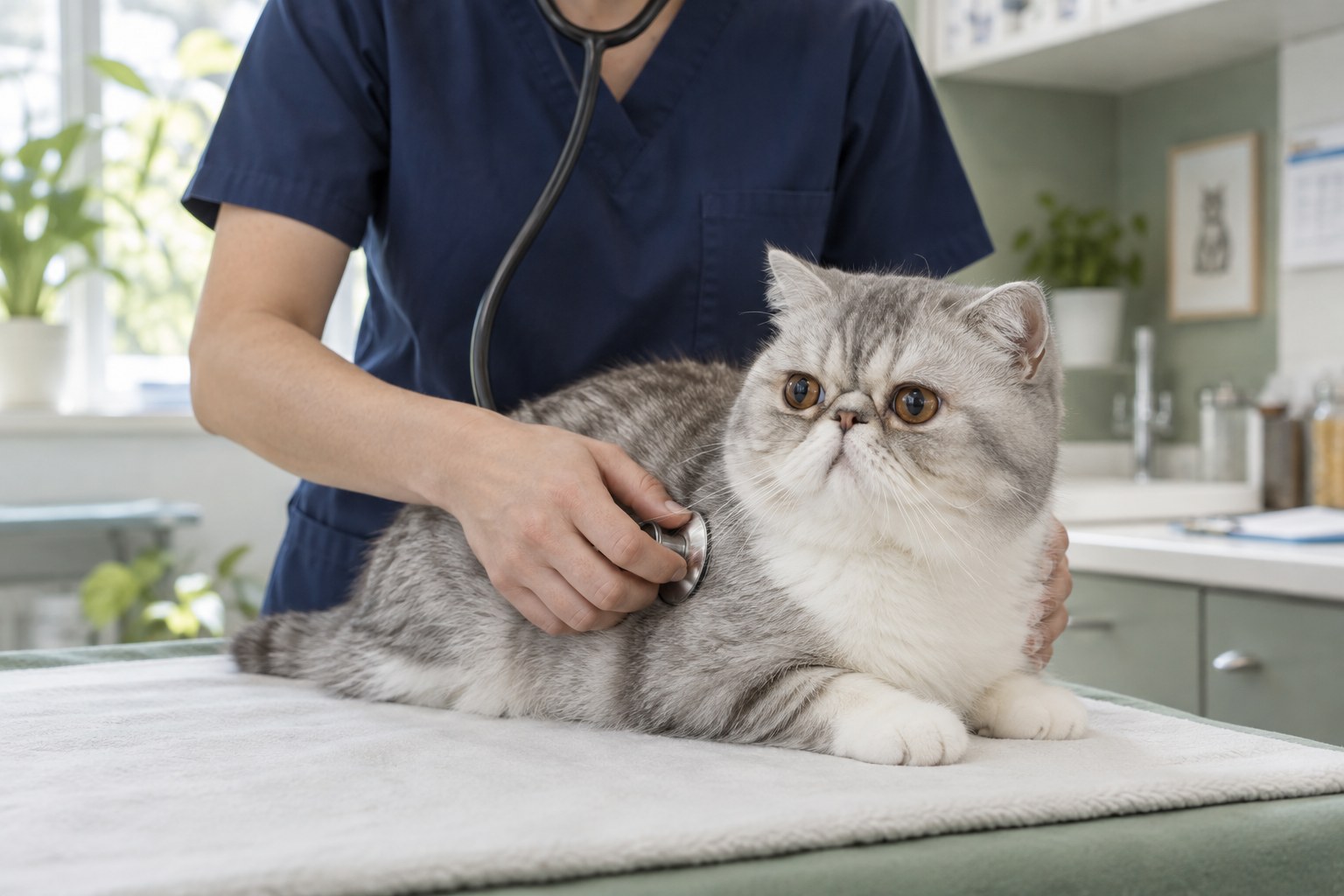
The vet, the paperwork and the crate need their own plan
Start the veterinary discussion early, particularly if your cat has breathing difficulties, previous travel problems or another health condition. Explain the proposed journey and likely handling time. A general check-up is more useful when the vet knows what you are considering.
IATA’s pet-travel guidance discourages sedation and gives container guidance, including additional space for snub-nosed animals. Discuss any medication with your vet and disclose it to the carrier; do not improvise a sedative to make a restrictive itinerary possible.
For entry documents, start with GOV.UK’s current outbound pet-travel guidance and the destination authority. An EU move and a move to Australia are not the same paperwork exercise. Check identification, vaccination sequence, certificates, tests, permits and any quarantine arrangements required for your destination. Transit can introduce further conditions.
Work backwards from the intended arrival date with the official vet and agent. Some preparations need substantial lead time; some final documents have short validity windows. Do not book a last-minute certificate appointment and assume it can repair a missing earlier step.
Send this brief before asking for a quote
A useful first enquiry gives the agent enough information to rule routes in or out. Copy this and fill in the gaps:
We are moving from [UK town / preferred airport] to [destination city and country].
Our cat is a [Persian / British Shorthair / Exotic / accurately described cross], aged [age], weighing [weight]. The cat’s measurements are [length and standing height]. Relevant health conditions or previous travel problems: [details].
Our preferred departure is [date or month], with flexibility of [range]. [Number] adults and [number] cats will travel. Our budget is [range], and we [want to compare cabin and cargo / require an option where we travel together].
Please confirm the operating carrier and every leg, breed acceptance, carrier or crate requirements, seasonal restrictions, documentation responsibilities and what happens if carriage is refused or the departure changes. Please price the full journey and list exclusions.
Send medical documents privately to the appointed team when requested. Include return plans if the move is temporary. That return journey may need a different route even when the outbound trip is straightforward.
Compare complete quotes, not headline fares
A commercial cabin pet fee, a cargo quote and a shared-charter seat are different purchases. Compare the total for the people and cats travelling, including veterinary work, permits, crate or carrier, airport handling, clearance, ground transfers and any accommodation. Ask who pays if a delay makes a certificate expire.
A cheaper quote can be perfectly suitable. It can also leave you arranging collection from a cargo terminal in a country you have never visited. The distinction should be visible in the written inclusions, not discovered after arrival.
Before you commit
- Breed: the accurate breed has been declared and the applicable restrictions checked.
- Fit and fitness: the cat fits the approved carrier or crate, and the vet has assessed the proposed journey.
- Route and month: every operating carrier and connection is covered, with seasonal conditions understood.
- Documents: you know who arranges each requirement and when.
- Fallback: you understand rebooking, cancellation and extra-cost responsibilities.
Flying a Persian, British Shorthair or Exotic out of Britain starts with the cat, then the route, then the date. Get those aligned before building the rest of the move around a passenger ticket.
Sources are linked beside the relevant claims. Airline policies and PetAir’s published network were checked on 10 September 2026; individual flight availability has not been confirmed. This guide does not provide veterinary clearance for an individual cat.