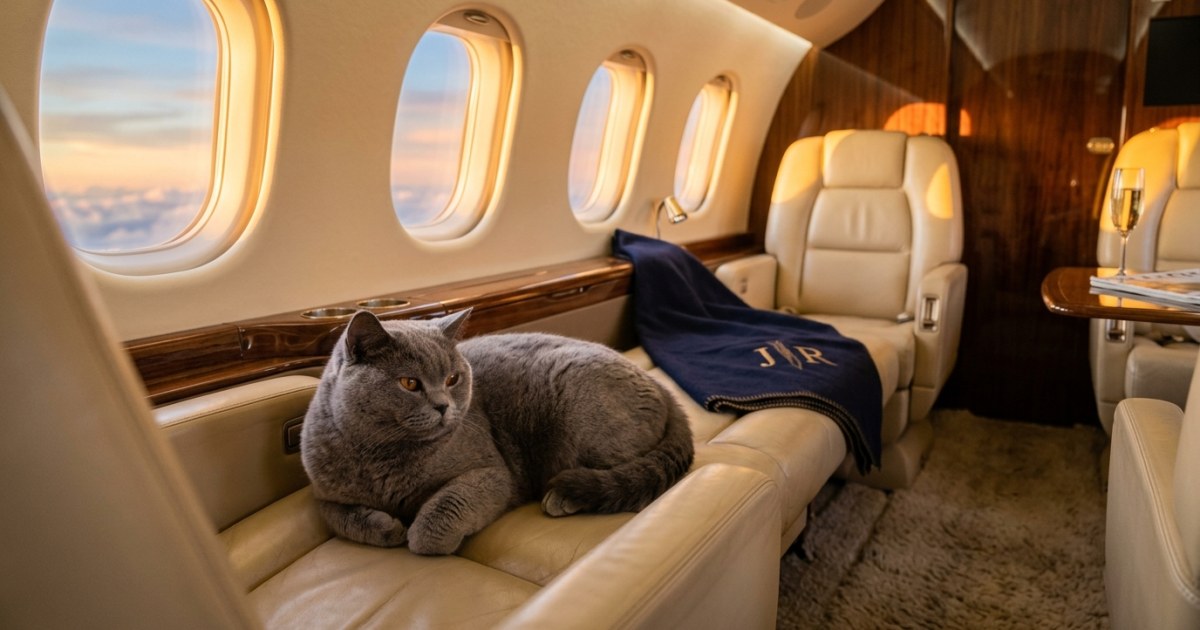
For most cats, air travel means a hard-sided carrier in the cargo hold and a great deal of anxiety — but for a growing number of felines, the experience looks rather different. Private jet travel for cats has moved from celebrity novelty to a legitimate, well-organised sector of the pet relocation industry, with dedicated operators, bespoke in-cabin protocols, and price tags that reflect the extraordinary level of care involved. Whether you're relocating a champion show cat, moving a beloved companion between continents, or simply refusing to compromise on your pet's comfort, this guide covers everything you need to know about how cats travel on private jets — and whether it might be the right choice for yours.
WHY OWNERS CHOOSE PRIVATE JETS FOR THEIR CATS
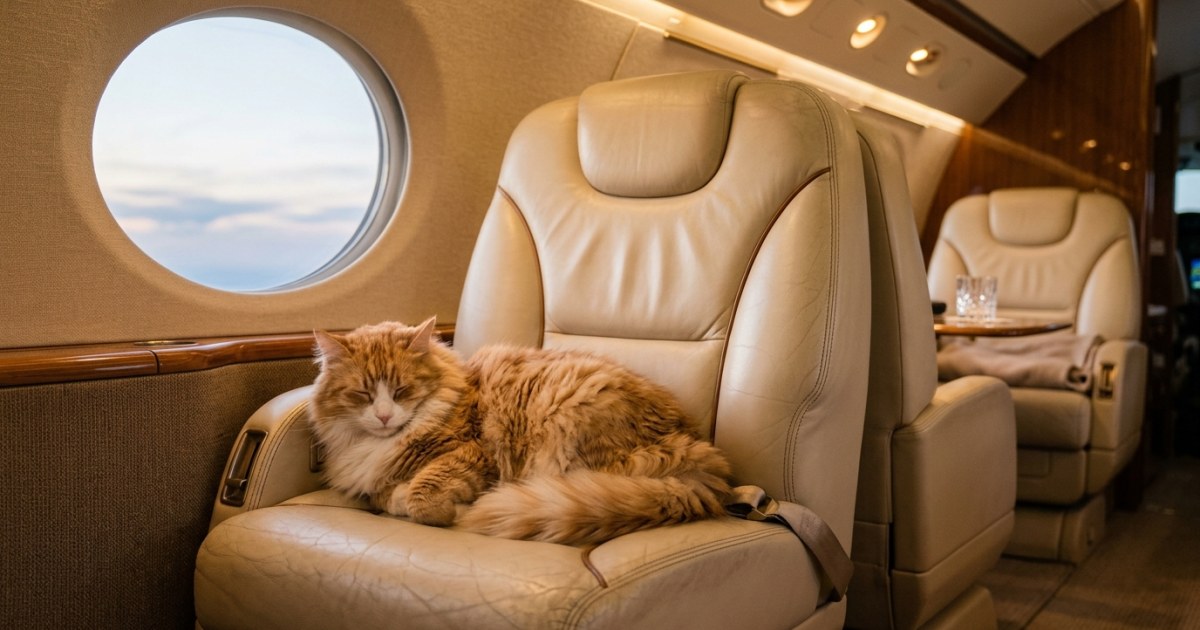
The decision to charter a private jet for a cat is rarely taken lightly — the costs alone ensure that. But for the people who make this choice, the reasoning is almost always the same: commercial aviation, even at its most pet-friendly, asks cats to tolerate conditions that are fundamentally at odds with their nature. Loud, unpredictable environments, unfamiliar smells, long waits in busy terminals, and the particular horror of cargo travel all combine to make commercial flights genuinely stressful for most felines.
Eliminating cargo entirely: The single most compelling reason many owners opt for private aviation is that it removes the possibility of cargo travel altogether. On a private jet, your cat travels in the main cabin with you — on your lap, in a carrier at your feet, or in some cases roaming freely in a secured cabin space. There is no question of being separated, no risk of the animal being loaded into a pressurised hold, and no chance of the carrier being mishandled by baggage staff.
Stress reduction as a medical consideration: Veterinary behaviourists increasingly recognise that extreme travel stress can have genuine health consequences for cats, particularly those with pre-existing cardiac conditions, respiratory issues (such as those common in flat-faced breeds like Persians and Exotic Shorthairs), or a history of anxiety. For these animals, the controlled, quiet, low-traffic environment of a private jet isn't a luxury — it's a clinical recommendation. Several specialist feline vets in the UK now include private aviation in their formal guidance for high-risk patients facing long-distance relocation.
Breed-specific regulations on commercial airlines: Many commercial carriers have outright banned the transport of brachycephalic (flat-faced) breeds due to respiratory risk. British Airways, Virgin Atlantic, and most major European carriers maintain lists of restricted breeds, and the rules change frequently. Private aviation sidesteps these restrictions entirely, making it the only viable in-cabin option for owners of Persians, Scottish Folds, Exotic Shorthairs, and Burmese cats.
Good to Know
Brachycephalic cats — including Persians, Exotic Shorthairs, Scottish Folds, and Burmese — are banned from the cargo holds of most major airlines due to breathing risks. Private jets are often the only legal and safe way to fly these breeds internationally in-cabin.
High-value animals: The world of pedigree cats includes animals worth tens of thousands of pounds. Champion Maine Coons, rare colour-point Ragdolls, and breeding queens from internationally recognised catteries represent significant financial and emotional investments. For these animals, the additional cost of private aviation is proportional — and the peace of mind of having the cat visible and monitored throughout the flight is invaluable.
Complex multi-leg relocations: When a cat is being relocated between countries with complex import requirements — say, from the United Kingdom to Australia, or from the United States to Japan — the journey may involve multiple flights, long layovers, and veterinary inspection points. Private aviation can be routed to minimise stops, avoid transit countries with their own import complications, and reduce total journey time dramatically. What might be a 36-hour ordeal on commercial carriers can sometimes be compressed into a single 14-hour direct flight on a chartered aircraft.
WHAT PRIVATE JET TRAVEL ACTUALLY LOOKS LIKE FOR A CAT
The reality of a private jet journey for a cat is considerably more comfortable than even the most premium commercial cabin — but it's worth understanding what the experience involves in practical terms, rather than imagining something from a film set.
The departure experience: Private terminals — known as FBOs (Fixed Base Operators) in aviation parlance — are a world away from commercial departure halls. There are no queues, no security theatre with hundreds of strangers, and no overwhelming wash of noise and smell. The cat and owner typically drive directly to a small, quiet lounge where the animal can be settled, offered water, and given time to acclimatise before boarding. Some FBOs in London (including those at Farnborough, Luton, and Biggin Hill) have dedicated pet waiting areas with calming music and low lighting.
Boarding and the cabin environment: On most light and midsize jets — the category most commonly chartered for pet travel — the cabin is roughly the size of a comfortable sitting room. Noise levels are significantly lower than on a commercial airliner, particularly on newer aircraft like the Cessna Citation Longitude or the Bombardier Challenger 350. Cabin pressure is also often maintained at a lower simulated altitude on private jets, meaning the air is less dry and more comfortable for both humans and animals.
In-flight behaviour and management: Most cats, once airborne, settle relatively quickly in a private jet environment — particularly if their owner is present and calm. The absence of strangers moving through the aisle, overhead bin banging, and PA announcements makes an enormous difference. Many experienced pet travellers report that their cats spend the majority of a private flight asleep. That said, some cats will vocalise or pace initially, and it's important to have a secure, familiar carrier available rather than allowing free roaming until the cat has clearly settled.
Pro Tip
Bring a worn item of your clothing — a jumper or pillowcase — to place inside the carrier. Your scent is the single most effective calming tool available, and it costs nothing. Many experienced feline travellers rate this above any commercial pheromone spray for genuine anxiety reduction.
Litter provision: For longer flights, litter access is a genuine logistical consideration that commercial travel makes nearly impossible to address. On a private jet, a small covered travel litter tray can be positioned discreetly in the cabin or the aircraft's lavatory area. Many charter operators who regularly carry pets will have protocols for this already — it's worth discussing during the booking process. Litter use during a flight is surprisingly common once a cat has settled and the initial anxiety passes.
Food and water: Most veterinary guidance advises against feeding a cat within four hours of a flight to reduce the risk of nausea, but fresh water should always be available. On a private jet, this is entirely within your control. Some specialist pet travel concierge services will prepare bespoke in-flight packs for cats, including electrolyte water, freeze-dried protein treats, and calming chews — though whether a stressed cat will actually engage with these mid-flight is another matter entirely.
Private Jet vs Commercial Airline: Cat Travel Comparison
| Cargo risk | Private: None — cat is always in-cabin. Commercial: High risk for most routes and breeds. |
| Brachycephalic breeds | Private: No restrictions. Commercial: Banned on most major carriers. |
| Noise environment | Private: Significantly quieter. Commercial: High ambient noise throughout. |
| Litter access | Private: Fully manageable. Commercial: Essentially impossible. |
| Departure experience | Private: Quiet FBO terminal. Commercial: Busy, loud, stressful check-in. |
| Cost (London to NYC) | Private: £30,000–£80,000+. Commercial: £200–£2,000 depending on class. |
| Owner accompaniment | Private: Always. Commercial: Depends entirely on airline policy. |
THE OPERATORS AND SERVICES BEHIND LUXURY CAT AVIATION
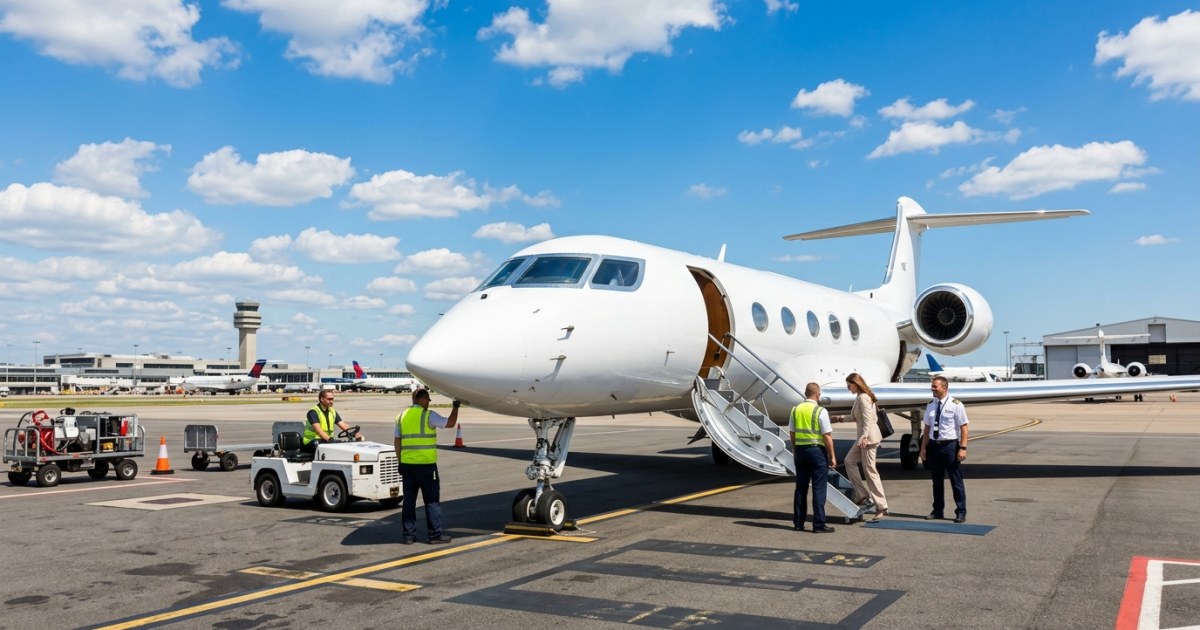
Private jet travel for cats doesn't happen in a vacuum — it involves a small but well-organised network of specialist operators, pet relocation agents, and aviation companies who have developed genuine expertise in managing animals at altitude. Understanding who these players are, and how they work together, is essential if you're seriously considering this route.
Dedicated pet aviation companies: A handful of operators have built their entire model around animal transport. VistaJet, one of the world's largest private aviation companies, has a formal pet programme that allows cats to travel in-cabin on all aircraft and provides pre-flight consultations with their concierge team. Similarly, Air Charter Service — a major UK-based broker — has an established pet charter division that handles everything from the initial booking to coordinating with veterinary authorities at the destination country.
Pet relocation specialists who include aviation: Companies like Global Paws, PetAir UK, and documentation, and travel logistics. For the highest-tier clients, these companies will arrange the charter aircraft as part of a complete relocation package that also handles health certificates, microchip verification, import permits, and destination-country quarantine arrangements (where applicable). This end-to-end service model is often preferable to sourcing the jet independently, because the relocation specialist understands which documentation must be on board the aircraft at departure.
Pro Tip
If you're using a pet relocation company to arrange a private charter, ask specifically whether the agent has experience with your destination country. Import regulations for cats differ enormously — Australia and New Zealand, for instance, require post-arrival quarantine regardless of how the animal travelled.
The role of the handling agent: At most private airports, a ground handling agent (the FBO operator) acts as the liaison between the charter company, the owner, and any regulatory authorities. For pet-carrying flights, the handler may be responsible for ensuring the correct veterinary paperwork is presented at both ends of the journey, that the aircraft has been stocked with appropriate water and bedding, and that any specific requirements from the captain have been communicated. Choosing a departure airport with an FBO experienced in pet transport makes the whole process considerably smoother.
Aircraft type matters: Not all private jets are created equal for cat transport. Very light jets — the Cirrus Vision Jet or Embraer Phenom 100 — have very limited cabin space and may not be comfortable for a long transatlantic journey. Midsize jets like the Hawker 800 or Cessna Citation XLS offer considerably more room and are a reasonable choice for flights up to around six hours. For transatlantic or intercontinental journeys, large cabin jets or ultra-long-range aircraft the Gulfstream G650, Bombardier Global 7500, or Dassault Falcon 8X are the appropriate choice — they have the range to fly non-stop between most major city pairs, and their cabins are spacious enough to feel genuinely settled rather than cramped.
Good to Know
The Gulfstream G650 and Bombardier Global 7500 are among the most popular choices for long-haul cat travel. Both aircraft maintain cabin altitude pressurisation equivalent to approximately 4,000–6,000 feet — significantly lower than the 8,000-foot standard on commercial jets — making the air more comfortable for animals and humans alike.
HOW MUCH DOES IT COST TO FLY A CAT BY PRIVATE JET

The honest answer is: a great deal. Private jet travel is priced by aircraft category, route, and availability — and none of those variables work in the budget-conscious traveller's favour. That said, understanding the cost structure helps you make an informed decision and identify where there might be room to manage expenses.
Empty leg flights: The most accessible entry point into private aviation — for cat owners as much as anyone — is the empty leg market. When a private jet is chartered one-way, the return flight (or the positioning flight to the departure airport) is flown empty. Operators often sell these "empty leg" slots at a significant discount — sometimes 50–75% below the full charter rate. For a cat owner with flexibility on dates and departure airports, this can make private travel genuinely achievable. The main caveat is that empty legs are unpredictable: they appear at short notice and disappear just as quickly.
Typical charter rates for common routes: A light jet from London to Paris or Amsterdam will typically start at around £3,000–£6,000 for the aircraft (not per seat — the whole plane). A midsize jet from London to Ibiza or Nice runs from roughly £8,000–£15,000. Transatlantic routes on a large-cabin jet — London to New York, for instance — start at approximately £60,000–£90,000 for the return charter. These figures do not include landing fees, handling charges, or any specialist pet concierge services, which can add another 10–20% to the total.
Pet surcharges: Most private jet operators who accept pets charge a cleaning surcharge, typically between £150 and £500 depending on aircraft size and journey length. This covers additional cabin cleaning post-flight, particularly if a litter tray is used on board. Some operators also require a damage deposit, though in practice cats travelling in good carriers rarely cause any damage to aircraft interiors.
📋 Budget Checklist: Private Jet Costs to Account For
- ☐Base aircraft charter fee (varies enormously by route and aircraft type)
- ☐Landing and handling fees at departure and destination airports
- ☐Pet cleaning surcharge (typically £150–£500)
- ☐Pet relocation agent fees if using a full-service provider
- ☐Veterinary health certificate (required for all international travel)
- ☐Rabies titre blood test if required by destination country
- ☐Import permit fees where applicable
- ☐Quarantine costs at destination if required (e.g. Australia, New Zealand)
- ☐IATA-compliant carrier or bespoke travel crate
Cost-sharing arrangements: One approach that has become more common among the cat breeding and showing community is cost-sharing on charter flights. If a cattery is sending two or three animals to a show or new home abroad, and the owner or agent is travelling anyway, the cost of a midsize jet charter becomes considerably more reasonable when divided between multiple parties. Online communities for pedigree cat breeders — including those for Maine Coon, Norwegian Forest Cat, and Ragdoll fanciers — sometimes facilitate these arrangements informally.
REGULATIONS AND DOCUMENTATION: WHAT STILL APPLIES ON A PRIVATE JET
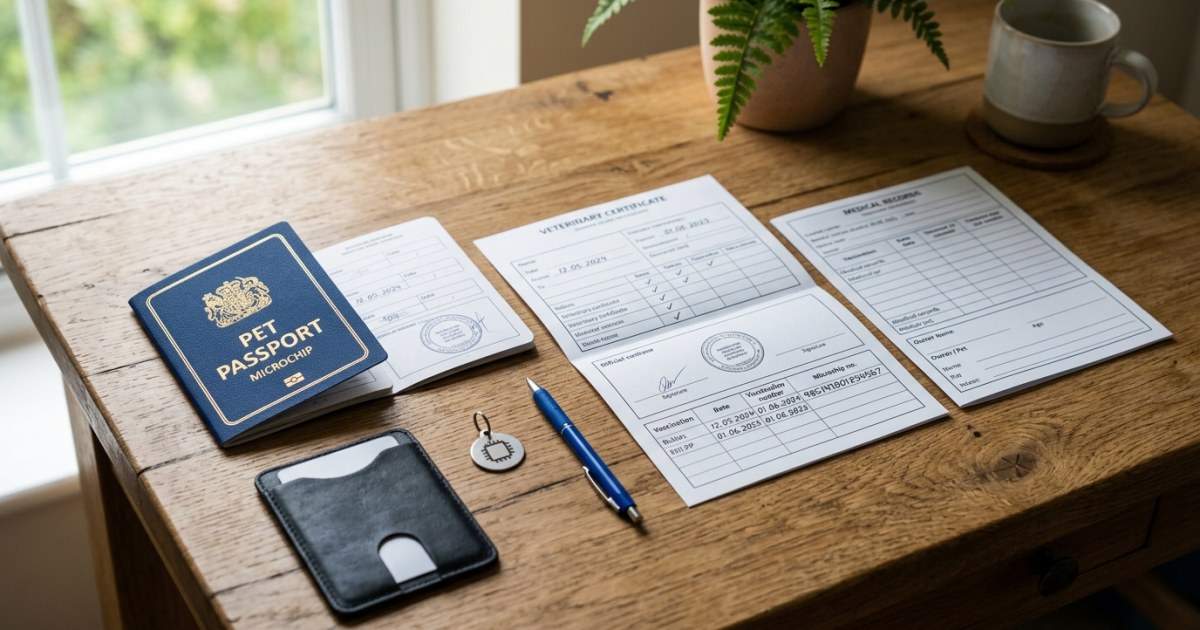
One of the most important misconceptions about private jet travel with cats is that it somehow bypasses the veterinary and customs requirements that apply to commercial travel. It does not. The aircraft may be chartered, the departure lounge may be private, and the service may be extraordinary — but the regulatory framework governing international cat movement is entirely unchanged.
The Animal Travel Certificate (AHC): Since the UK left the EU, British cat owners travelling to Europe with their pets require an Animal Health Certificate rather than an EU Pet Passport (which is no longer valid for travel from Great Britain). The AHC must be issued by an Official Veterinarian (OV) within ten days of travel. This applies whether you are flying commercial or private. Your vet must be APHA-approved and the certificate must list your cat's microchip number, current vaccination status, and tapeworm treatment where applicable.
Warning
An Animal Health Certificate for EU travel from Great Britain must be issued by an Official Veterinarian within 10 days of departure. Private charter does not extend this window. If your flight is delayed by more than a day or two after the AHC is issued, it may expire before you travel — always book the vet appointment as close to departure as possible.
Microchipping: All cats travelling internationally must be microchipped to ISO standard 11784/11785. The microchip must be implanted before or on the same date as the rabies vaccination. This is a firm rule — if the chip was implanted after the vaccination, the vaccination is considered invalid for travel purposes and the entire vaccination course must be repeated.
Rabies vaccination requirements: Virtually every country in the world requires a valid rabies vaccination for an imported cat. The vaccination must be current (boosters must be up to date) and the cat must be at least 12 weeks old at the time of vaccination. Many countries also require a 21-day waiting period post-vaccination before the animal can enter. Japan, Australia, New Zealand, and several other nations additionally require a rabies neutralising antibody titre test to confirm that the vaccination has been effective.
Import permits: Some countries — including Australia, New Zealand, Singapore, and several Gulf states — require import permits to be issued before the animal departs. These are separate from the health certificate and can take weeks or months to process. The fact that you are arriving on a private jet does not give you priority processing at customs, and arriving without the correct permits risks the animal being refused entry or held in quarantine at your expense.
📋 Documentation Checklist for International Cat Travel
- ☐ISO-standard microchip implanted and recorded
- ☐Rabies vaccination current and booster up to date
- ☐Rabies titre test completed (if required by destination country)
- ☐Animal Health Certificate issued by OV within 10 days of travel (EU destinations)
- ☐Import permit obtained from destination country authority (where required)
- ☐Tapeworm treatment administered and recorded (UK to Ireland/Finland/Norway/Malta)
- ☐Vaccination record booklet / pet passport (for non-UK destinations where still accepted)
- ☐Airline / charter operator confirmation of pet acceptance in writing
At the destination: Arriving on a private jet still means your cat will be subject to inspection by customs and veterinary border staff at the destination. In most countries, the pilot or ground handler will notify customs in advance that an animal is on board, and an inspection appointment may need to be pre-arranged — particularly for flights arriving outside normal business hours, which is a common feature of private aviation. Your pet relocation specialist or charter broker should coordinate this as a matter of course.
PREPARING YOUR CAT FOR PRIVATE JET TRAVEL
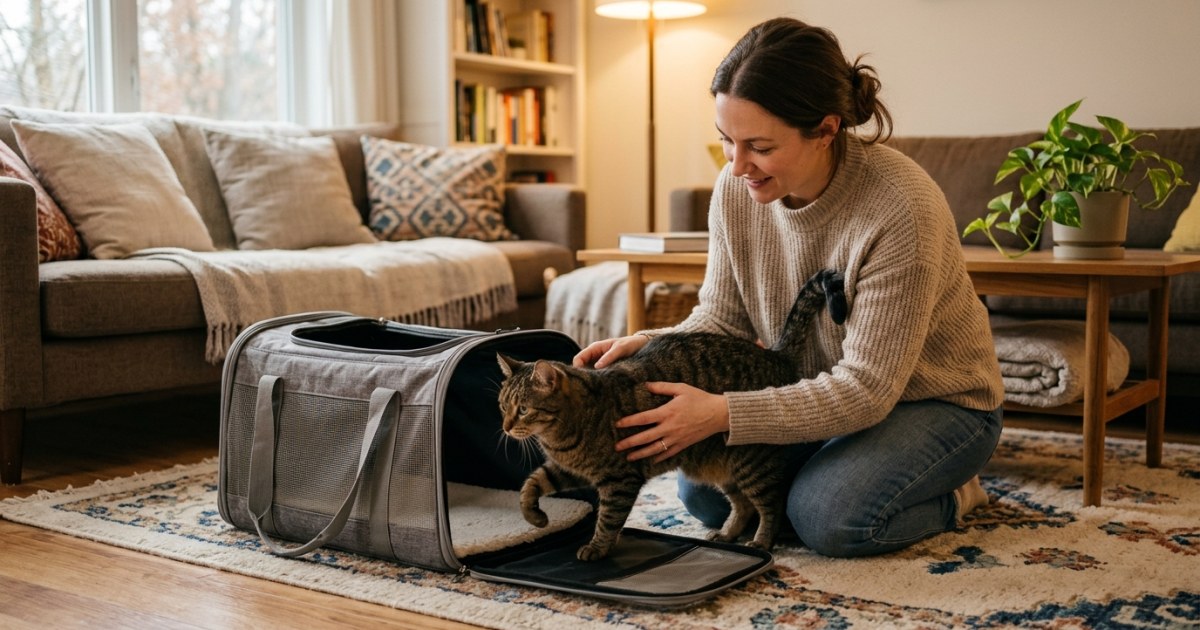
Even the most beautifully appointed private jet cabin cannot fully compensate for a cat that has never been in a carrier before, has never been in a car, or associates every unusual environment with threat. Preparation — which should begin weeks before the flight — is the single most important factor in determining how well a cat copes with any form of travel, private or otherwise.
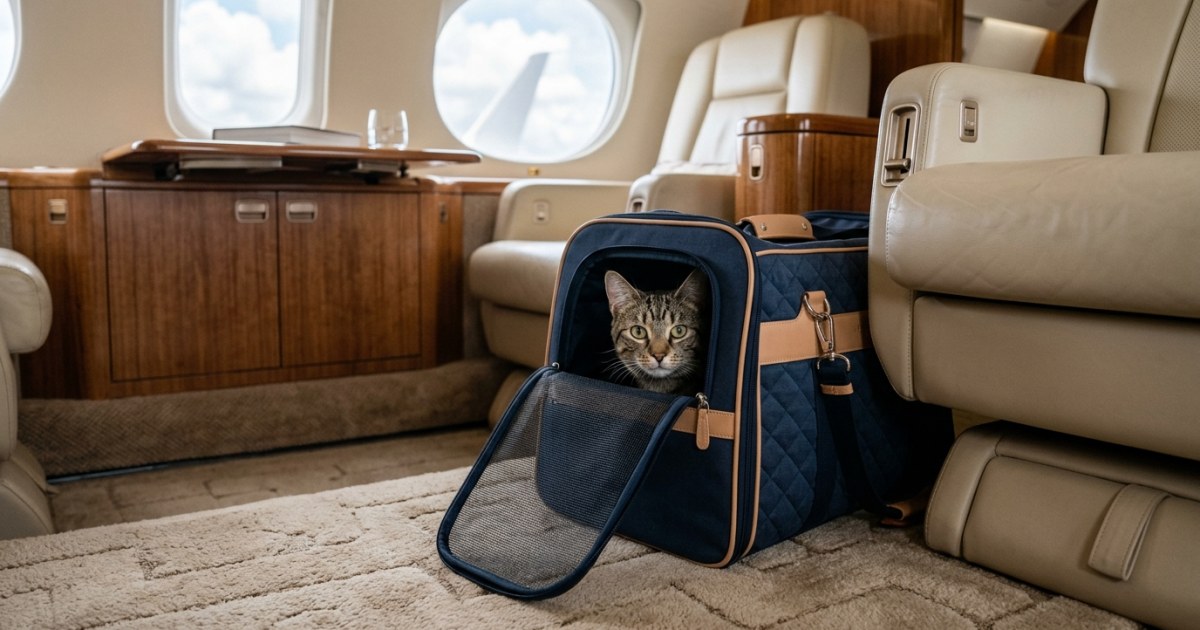
Carrier familiarisation: The carrier your cat travels in should be an established, positive part of their daily environment long before the journey. Leave it out with familiar bedding inside, feed meals near it or inside it, and allow the cat to sleep in it by choice. A cat who regards their carrier as a safe den will enter it voluntarily and settle significantly faster than one who only sees it as a precursor to the vet.
Choosing the right carrier for a private jet: The larger space of a private jet cabin means you have more flexibility on carrier size than you would on a commercial flight. For a cat travelling in-cabin on a private jet, a soft-sided carrier with mesh ventilation panels on at least three sides is generally preferable — it allows the cat to see and smell their environment without feeling exposed. For anxious cats, a partially covered hard-shell carrier with a covered top and a partial privacy cover may feel more den-like and secure. Whatever carrier you choose, ensure it is airline-approved to IATA standards — even on a private jet, the operator may require this.
Pro Tip
Feliway Classic spray applied to the inside of the carrier approximately 30 minutes before travel (not immediately before — allow it to dry) can meaningfully reduce anxiety for many cats. However, do not spray it while the cat is inside — the alcohol carrier is an irritant.
Veterinary consultation before travel: Book an appointment with your vet at least four to six weeks before the planned journey. This allows time to discuss whether sedation or anti-anxiety medication is appropriate for your cat, to ensure vaccinations are current, and to begin the AHC process if your vet is OV-accredited. If they are not, they can refer you to a local Official Veterinarian. Do not attempt to sedate a cat for travel using human medications or over-the-counter products — the appropriate agent for cats is gabapentin (off-label) or in some cases trazodone, both of which require veterinary prescription and a prior tolerance trial.
Trial runs: If your cat has never travelled by car, begin with short car journeys several weeks before the flight. Progress to longer journeys. The vibration, white noise, and motion of a car journey are broadly analogous to certain aspects of flight, and a cat who has habituated to car travel will cope with air travel considerably better. Some owners also use recordings of aircraft ambient noise — readily available on streaming platforms — to gradually accustom the cat to the soundscape.
Warning
Never administer a sedative to a cat for travel without a prior trial run at home under veterinary supervision. Some cats have paradoxical reactions to common sedatives — becoming more agitated rather than calmer — and discovering this at 35,000 feet over the North Atlantic is not an option.
The 48-hour window: In the 48 hours before travel, maintain your cat's routine as closely as possible. Avoid introducing new foods, new visitors, or significant changes to the home environment. Familiar scents and routines are a cat's primary source of security, and disrupting them before a journey adds unnecessary stress on top of the travel itself.
CELEBRITY CATS AND HIGH-PROFILE PRIVATE JET TRAVEL STORIES
The idea of cats travelling by private jet might seem extravagant, but it has been a quiet reality among the wealthy and famous for decades — and a handful of well-documented cases illustrate both the appeal and the practicalities involved.
Taylor Swift and her cats: Pop superstar Taylor Swift is among the most prominent cat owners in the world, and her cats — including the Scottish Folds Meredith Grey and Olivia Benson, and Ragdoll Benjamin Button — have been widely reported to travel with her on her private jets. Scottish Folds are among the breeds most restricted by commercial airlines, making private aviation not just a luxury but a practical necessity for long-distance travel. Swift's aircraft (she has operated both a Dassault Falcon and a Bombardier jet at various points) have been photographed boarding with visible cat carriers on numerous occasions.
High-value breeding cats: The pedigree cat world has its own tradition of private aviation, often less glamorous in motive but no less meticulous in execution. Championship breeding queens travelling between the United Kingdom and the United States — a route common in the Maine Coon and British Shorthair communities — have long been moved by chartered aircraft when the value of the animal and the cost of delay to a breeding programme justify the expense. In some cases, the cats travel escorted by a specialist feline guardian service rather than the owner, with a professional cat handler accompanying the animal throughout the journey.
Relocation of rescue and sanctuary animals: Perhaps less expected is the use of private aviation in the rescue world. Several high-profile animal rescues — including operations in conflict zones and natural disaster areas — have used chartered aircraft to move cats and other animals to safety when commercial routes were unavailable or too slow. Operation Baghdad Pups, which primarily focused on dogs and cats bonded to US service members in Iraq and Afghanistan, used chartered aircraft as part of its logistics chain. More recently, following the 2022 invasion of Ukraine, private aircraft were used to move animals from rescue organisations to safety in Western Europe.
Good to Know
Some private aviation companies — including VistaJet and NetJets — include pet travel as a named benefit on their membership cards and fractional ownership programmes. If you're a frequent private flyer, it's worth checking whether your existing membership already covers in-cabin cat travel without additional surcharges.
The social media effect: Instagram and TikTok have given rise to a new cohort of highly visible cat travellers — felines with their own social media followings whose owners document everything from the carrier chosen for the journey to the in-flight nap. While not all of these cats travel by private jet, the accounts of those who do have considerably normalised the concept for a wider audience. Search terms like "cat private jet" and "flying with cat first class" have seen consistent search growth over the past three years, reflecting genuine public interest in premium feline travel.
ALTERNATIVES TO PRIVATE JETS FOR LUXURY CAT TRAVEL
Private aviation is the gold standard of cat travel, but it is not the only option for owners who want to prioritise their cat's comfort and wellbeing above the average. Several alternatives exist at lower price points — each with genuine merit depending on the journey, the cat, and the destination.
First and business class on commercial airlines: A small number of commercial carriers allow cats to travel in the cabin in first or business class, and the experience — while not comparable to a private jet — is considerably better than economy. Qatar Airways, for instance, allows in-cabin pets on certain routes in all classes. The seats are larger, the service is attentive, and the ambient environment is somewhat less chaotic. The fundamental limitations remain, however: breed restrictions, carrier size rules, and the presence of 200 other passengers are all factors that private aviation eliminates entirely.
Specialist pet transport aircraft: A small number of companies operate dedicated animal transport flights — aircraft configured specifically for the safe movement of animals, with temperature-controlled holds, reduced noise levels, and trained animal handlers on board. These are distinct from cargo flights: the animals are monitored throughout and the conditions are materially better than standard commercial cargo. Companies like PetAirlines in the United States have operated in this space, though availability is route-dependent and less common in the UK market.
Cargo on prestige carriers: For cats who cannot travel in-cabin and for whom private aviation is not feasible, travel in the hold of a premium carrier with a strong animal welfare record is a reasonable option. Lufthansa, KLM, and Singapore Airlines all have established animal transport programmes with well-maintained temperature-controlled holds and clear handling protocols. This is not luxury travel by any stretch — but it is responsible travel, and for healthy, resilient cats on manageable routes, it is a legitimate choice.
Premium Cat Travel Options at a Glance
| Private jet charter | Maximum comfort, no cargo, total flexibility. Cost: very high. |
| Empty leg private charter | Same comfort, lower cost — but requires flexibility on dates and routes. |
| First/business class commercial | Better environment than economy, in-cabin on select airlines. Breed restrictions apply. |
| Dedicated pet aircraft | Good for high-value or large volumes of animals. Limited route availability. |
| Prestige carrier cargo | Regulated and relatively safe for healthy cats. Not suitable for brachycephalic breeds. |
Surface transport for shorter distances: It is worth noting that for many European journeys, private aviation is not actually the most appropriate solution. A cat being relocated from London to Paris, Amsterdam, or Brussels may be far better served by Eurostar (which does not currently permit cats in-cabin, but cross-channel ferry services do) or a private car journey through the Channel Tunnel. The Channel Tunnel is, in fact, one of the most genuinely stress-free ways to move a cat between the UK and Continental Europe — no altitude, no pressure changes, no flight anxiety. For any European journey under six hours by road, it's worth calculating whether the vehicle option is not simply better for the cat, regardless of budget.
Frequently Asked Questions
Can cats travel in the cabin on a private jet?
Yes — on private jets, cats travel in the main cabin with their owner as standard. There is no cargo hold requirement, which is one of the primary reasons owners choose private aviation for their cats. The cat can remain in a carrier at your feet, on a seat beside you, or in some cases move around the cabin freely once settled.
How much does it cost to fly a cat on a private jet?
The cost depends entirely on the aircraft type and route. Short European hops on a light jet may start from around £3,000–£6,000 for the full aircraft charter, while transatlantic routes on a large-cabin jet typically cost £60,000–£90,000 or more. Most operators also charge a pet cleaning surcharge of £150–£500. Empty leg flights can reduce costs by 50–75% if you have date flexibility.
Do cats still need health certificates and vaccinations for private jet travel?
Absolutely. Private jet travel does not exempt a cat from any international veterinary or customs requirements. An Animal Health Certificate issued by an Official Veterinarian is still required for EU travel from the UK, and all destination-country import requirements — including rabies titre tests, import permits, and quarantine — apply regardless of how the animal travelled.
Are flat-faced cats like Persians allowed on private jets?
Yes — this is one of the most significant advantages of private aviation for brachycephalic breeds. Most commercial airlines have banned flat-faced breeds such as Persians, Exotic Shorthairs, Scottish Folds, and Burmese from their cargo holds due to respiratory risk. Private jets carry no such restrictions, making them the only viable in-cabin option for long-distance international travel with these breeds.
Which private jet companies are best for travelling with cats?
Do cats need to be sedated for private jet travel?
Not necessarily — many cats manage private jet travel well without sedation, particularly in the quieter cabin environment. If your vet recommends sedation, gabapentin or trazodone are the most commonly used agents for cats, but both require a veterinary prescription and a prior tolerance trial at home. Never administer sedatives without veterinary guidance, and never try a new medication for the first time on the day of travel.
What documents do I need to fly my cat from the UK to the USA on a private jet?
You will need: an ISO-standard microchip, a current rabies vaccination, a USDA-endorsed health certificate issued within 10 days of travel, and compliance with any state-specific entry requirements at the US destination. The USDA endorsement process requires your UK vet to issue a certificate that is then certified by the relevant authority — your pet relocation agent can coordinate this. Import permits are not currently required for cats entering the USA from the UK.
Is there a litter tray on a private jet for cats?
Private jets don't come with built-in litter facilities, but the cabin is large enough to position a small covered travel tray discreetly, and many pet-experienced operators will accommodate this. The aircraft lavatory area is also often used for this purpose on longer flights. Discuss your requirements with the charter broker when booking — experienced operators will already have a protocol in place.